簡體 | 繁體
loading...
海外博客
    • 首頁
    • 新聞
    • 讀圖
    • 財經
    • 教育
    • 家居
    • 健康
    • 美食
    • 時尚
    • 旅遊
    • 影視
    • 博客
    • 群吧
    • 論壇
    • 電台
  • 熱點
  • 原創
  • 時政
  • 旅遊
  • 美食
  • 家居
  • 健康
  • 財經
  • 教育
  • 情感
  • 星座
  • 時尚
  • 娛樂
  • 曆史
  • 文化
  • 社區
  • 幫助
您的位置: 文學城 » 博客 »日本對進口汽車關稅為0,美國車賣不動的原因是 ...

日本對進口汽車關稅為0,美國車賣不動的原因是 ...

2018-04-10 07:34:34

basicenglish

basicenglish
首頁 文章頁 文章列表 博文目錄
給我悄悄話
打印 被閱讀次數

https://www.theatlantic.com/business/archive/2017/11/us-cars-japan/544991/

Why Aren’t U.S. Cars Popular in Japan?

American companies say protectionist policies keep them out. The reality is more complicated.
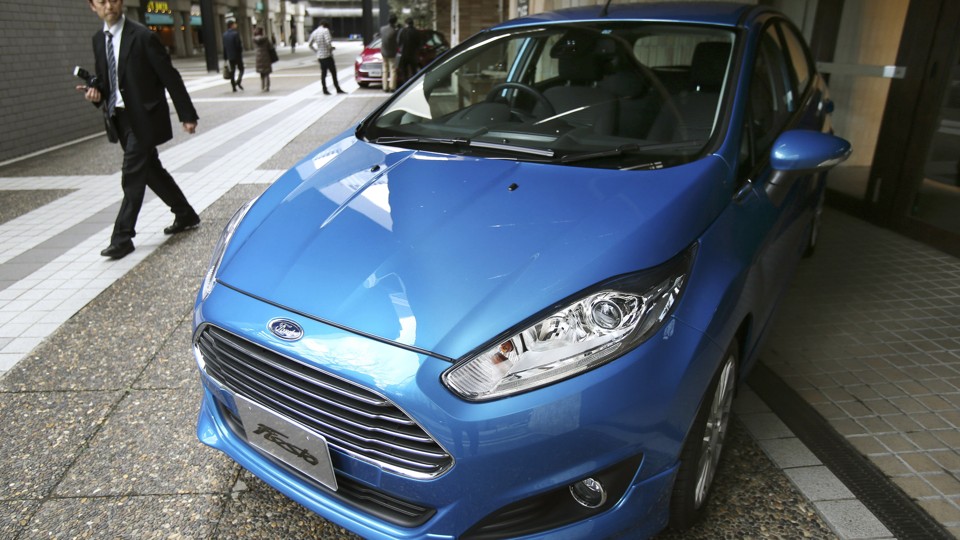
A man looks at a Ford compact car in Japan.Koi Sasahara / AP
  • ALANA SEMUELS
  •  
  •  NOV 6, 2017
  •  
  •  

TOKYO, Japan—The last time Shujiro Urata wanted to buy a new car in Japan, his phone happened to ring. It was the local Toyota dealer on the phone, asking him if he was thinking about buying a new car. When he replied in the affirmative, the dealer and a coworker showed up at Urata’s doorstep an hour later with two demo cars, which Urata and his wife test-drove around the neighborhood. The Uratas decided to buy a car from the dealer. The dealer also handles their car insurance, coming to their home whenever the insurance contract needed to be renewed. The Uratas bring in their car to the dealer every few weeks for a free car wash, where they hang out and talk to the employees, who have become their friends, about dog breeds and family birthdays.

The rapport may sound unusual to Americans, who are about as happy to voluntarily go to a car dealer as they are to get teeth pulled, but the relationship between customer and car dealer is a common one in Japan. “It may sound like a lot, but Japanese customers are used to this kind of service,” Urata, who is also an economics professor at Waseda University in Tokyo, told me. “It is a kind of custom that American dealers aren’t used to.”

This hospitality has helped Japanese automakers stay dominant in the Japanese market. Japanese brands account for about 90 percent of the domestic auto market in Japan, according to the Japanese Automobile Dealers Association. In the United States, by contrast, domestic brands have a much smaller share of the market. The Big Three—General Motors, Ford, and Fiat Chrysler—make up 45 percent of the market, while Japanese brands make up 39 percent, according toauto-sales data from The Wall Street Journal. The dynamic contributes in part to the trade imbalance between the United States and Japan. The U.S. trade deficit with Japan last year was $68.9 billion, and a large share of that surplus—$52.6 billion—came from vehicles and from automotive parts, according to the Department of Commerce.

This has long bothered politicians including President Trump, who this week is traveling to Japan and other parts of Asia, where one of his goals will be to “emphasize the importance of fair and reciprocal economic ties,” according to the White House. Earlier this year, when Japanese Prime Minister Shinzo Abe visited the U.S., Trump said that the Japanese “make it impossible to sell cars in Japan.” This is also the line being touted by American carmakers, which accuse Japan of protectionist policies in its automobile market. The American Automotive Policy Council says that historical practices like requiring lengthy car inspections of foreign-made vehicles and prohibiting existing car dealers from selling foreign cars have prevented foreign companies from gaining a large market share.

But protectionism is not the full explanation for why Japanese people don’t buy foreign cars. There are no import tariffs on cars, for example, while the U.S. and European Union impose 2.5 percent and 10 percent tariffs. And while Japanese cars are right-hand-drive, requiring manufacturing modifications before American cars can be sold there, this is no different from many other markets where foreign cars are prevalent.

Instead, the problem is in large part that American car dealers have been hesitant to invest in the kind of dealer network that consumers like Shujiro Urata have come to expect. “The way Japanese consumers buy cars is very different,” Deborah Elms, the executive director of the Asian Trade Center, told me. “Yet the Americans have not invested in a dealer network to break into the market.” Indeed, Ford pulled out of Japan, where it had sold only 5,000 cars annually, last year. General Motors only has 28 dealerships in Japan, and sold about 1,000 cars there in 2016.

Ford did not respond to requests for comment on this story. A General Motors spokeswoman told me that the company sold about 1,000 vehicles in Japan last year. It recently made a “strategic decision” to target niche segments, she said, and offer Japanese drivers left-hand-drive American vehicles including the Cadillac ATS.

Japanese customers also expect to receive services like free maintenance from their dealers after they buy their cars, Urata said. When their cars need a checkup, the dealer comes and picks them up, does work on them, and then returns them. American dealers don’t offer such services. “Developing this network is expensive, and maintaining it is expensive, and that’s one reason U.S. car makers decided to withdraw,” he told me.

RELATED STORY

Can Anything Stop Rural Decline?

I talked to a Japanese man named Hideo Ohashi, who has only bought Toyotas in Japan. He has considered buying a Mercedes-Benz, he told me, but he worried that it would be too expensive and lengthy to get new parts if his vehicle breaks down. A friend of Ohashi’s has a European car and it takes weeks to get parts from the maker, Ohashi said. What’s more, Toyota has a broad maintenance network, so it’s easy to get his car fixed if there are problems. Ohashi has know his Toyota dealer for 10 years, he told me, and they contact him at least once a quarter. “We have a person there who has taken care of our family for a long time,” he said.

It would seemingly be worth it for U.S. companies to spend the money to invest in a similar dealership network in Japan. The Japanese auto market is the third-largest in the world, behind the U.S. and China. And the Japanese economy is currently booming, meaning consumers have extra spending money for cars, especially luxury ones.

Of course, there are some historical reasons that made it initially hard for U.S. automakers to sell cars in Japan. U.S. companies set up shop in Japan in the first half of the 20th century, allowing Japanese carmakers to learn their technology. But during World War II, U.S. firms were banished from Japan and were not allowed to return. After World War II, Japan did protect its auto market, and its domestic brands grew and competed with each other, becoming very efficient. By the time Japan opened its market in the 1970s, Japanese people were accustomed to buying domestic cars.

But this alone should not have been enough to maintain Japan’s dominance in its domestic car market. U.S. companies have made inroads in countries like China that have more restrictive trade policies than Japan, in shorter amounts of time—General Motors now sells more cars in China than it does in the U.S., for example.(Although the market for cars in China is larger than it is in the U.S.) Japanese companies increased their presence in the U.S. market for decades, even after the U.S. asked Japan to impose voluntary export restraints, limiting its export of cars to the U.S., in 1981. (Those restraints led Japan to open up manufacturing facilities in the United States.) And foreign companies have begun to sell more cars in Japan, with few complaints about Japan’s trade policies. The number of imports of U.S. vehicles in Japan shrank 15 percent between 2013 and 2016, to 19,933, while imports from the European Union grew five percent in that time period, to 251,115, according to Urata. Brands like Mercedes-Benz and BMW saw sales grew 60 percent and 23 percent, respectively, between 2012 and 2016.

I visited a new BMW dealership in Tokyo to find out why European carmakers are doing better in Japan than U.S. automakers. The newly opened dealership is located in Tokyo Bay, near a planned 2020 Olympic park, and is 27,000 square meters. Walk into the dealership and you’ll encounter a separate coffee shop run by Nescafé where anyone, not just people interested in cars, can sit down at the many tables and order specialty coffee drinks and desserts from waiters. There are sleek cars and bicycles in a vast showroom, while another showroom sells car accessories and BMW memorabilia. The brand holds events on weekends, inviting children to come and play with remote-control cars on a track.“In Japan, everything is about hospitality,” Peter Kronschnabl, the CEO of BMW Group Japan and the chairperson of the European Business Council’s Automotive Committee and the Japan Automobile Importers Association, told me. “If you are not into this, it will be very difficult to succeed in the Japanese market.”

Kronschnabl said that BMW three years ago decided to redouble its efforts in the Japanese market. It’s spending 580 million Euros to refurbish its dealer network. Now, anyone who enters a BMW dealership will be met by a greeter and a “product genius,” who can tell them about the cars’ features—salesmen traditionally went too fast to a sales pitch for Japanese consumers’ tastes, he said. BMW is trying to change its processes so that its employees have more of a relationship with customers, he said. It delivers cars to customers who buy them, and has a “delivery bay” where customers who buy new cars can get them delivered in a new car ceremony that some Japanese customers request.

There are, of course, certain specifications that have to be changed for the Japanese market, he told me. Because Japan is such an urban society, cars are often stored in garages or in compact spots that require cars to be light and small. Door handles of the cars in the BMW 3 Series are made to be slightly narrower in Japan than in other countries, for example. But these aren’t trade barriers, they’re consumer preferences that brands can choose to adapt to or to ignore. BMW decided to adapt to these specifications because Japan is still one of the biggest markets in the world. Despite their complaints about trade barriers, U.S. companies haven’t made the same efforts.

登錄後才可評論.
  • 文學城簡介
  • 廣告服務
  • 聯係我們
  • 招聘信息
  • 注冊筆名
  • 申請版主
  • 收藏文學城

WENXUECITY.COM does not represent or guarantee the truthfulness, accuracy, or reliability of any of communications posted by other users.

Copyright ©1998-2026 wenxuecity.com All rights reserved. Privacy Statement & Terms of Use & User Privacy Protection Policy

今日熱點

  • 政治,原來也可以這樣玩溫歌
  • 中美關係迎來重大轉機!特朗普訪華落地,在美華人迎來5大實在紅利海納愚夫工作室
  • 人工智能將會徹底消滅無產階級yongbing1993
  • 黃河路“來天下”醉闔勿是“孔府家酒”!龍華六月雪
  • 男人在那方麵的哲學鈴蘭聽風
  • 我和地鼠的戰爭,大獲全勝!mychina
  • 2026 回國記:百年修得同船渡 - 佳木斯大姐cxyz
  • 錢財的存續大號螞蟻
  • “亡中國者,終為俄羅斯!”謝盛友
  • 特朗普訪華:國宴截圖揭示被所有媒體忽視的真相格致夫
  • 沒有美洲,我們吃啥?木子力_
  • 眼見為實的長壽之道:“東施效顰”或有可取之處Billzhou
  • 最近舊金山的“挖寶熱”:到底是咋回事?遠遠的霧
  • 夫妻之道(74) -- 我不要隻能接受我的優點的伴侶Oasisflying

一周熱點

  • 回國日記:胃老了,還是擋不住美食的誘惑遠遠的霧
  • 我兒子,我老師Lily2005
  • 回中國, 當優越感遇上‘粉紅’心BeijingGirl1
  • 美國人平均一生要繳多少稅?謙謙美君子
  • 健康長壽的說辭tugan
  • 在美國坐高鐵帕格尼尼
  • 北京,今夜無眠行者無疆1970
  • 價值1萬美元的寶藏撫琴的人
  • 成年孩子回家來住啦!佳美之地
  • 印鈔大國為什麽必須要收稅的根本糊塗邏輯矽穀工匠
  • 兩兔間人,時代的寵兒!朱頭山
  • 政治,原來也可以這樣玩溫歌
  • 黃昏戀14 個月, 結束了!kankanwo
  • 母親節 特別的餐館 特別的展菲兒天地
日本對進口汽車關稅為0,美國車賣不動的...
切換到網頁版
basicenglish

basicenglish

日本對進口汽車關稅為0,美國車賣不動的原因是 ...

basicenglish (2018-04-10 07:34:34) 評論 (0)

https://www.theatlantic.com/business/archive/2017/11/us-cars-japan/544991/

Why Aren’t U.S. Cars Popular in Japan?

American companies say protectionist policies keep them out. The reality is more complicated.

A man looks at a Ford compact car in Japan.Koi Sasahara / AP
  • ALANA SEMUELS
  •  
  •  NOV 6, 2017
  •  
  •  

TOKYO, Japan—The last time Shujiro Urata wanted to buy a new car in Japan, his phone happened to ring. It was the local Toyota dealer on the phone, asking him if he was thinking about buying a new car. When he replied in the affirmative, the dealer and a coworker showed up at Urata’s doorstep an hour later with two demo cars, which Urata and his wife test-drove around the neighborhood. The Uratas decided to buy a car from the dealer. The dealer also handles their car insurance, coming to their home whenever the insurance contract needed to be renewed. The Uratas bring in their car to the dealer every few weeks for a free car wash, where they hang out and talk to the employees, who have become their friends, about dog breeds and family birthdays.

The rapport may sound unusual to Americans, who are about as happy to voluntarily go to a car dealer as they are to get teeth pulled, but the relationship between customer and car dealer is a common one in Japan. “It may sound like a lot, but Japanese customers are used to this kind of service,” Urata, who is also an economics professor at Waseda University in Tokyo, told me. “It is a kind of custom that American dealers aren’t used to.”

This hospitality has helped Japanese automakers stay dominant in the Japanese market. Japanese brands account for about 90 percent of the domestic auto market in Japan, according to the Japanese Automobile Dealers Association. In the United States, by contrast, domestic brands have a much smaller share of the market. The Big Three—General Motors, Ford, and Fiat Chrysler—make up 45 percent of the market, while Japanese brands make up 39 percent, according toauto-sales data from The Wall Street Journal. The dynamic contributes in part to the trade imbalance between the United States and Japan. The U.S. trade deficit with Japan last year was $68.9 billion, and a large share of that surplus—$52.6 billion—came from vehicles and from automotive parts, according to the Department of Commerce.

This has long bothered politicians including President Trump, who this week is traveling to Japan and other parts of Asia, where one of his goals will be to “emphasize the importance of fair and reciprocal economic ties,” according to the White House. Earlier this year, when Japanese Prime Minister Shinzo Abe visited the U.S., Trump said that the Japanese “make it impossible to sell cars in Japan.” This is also the line being touted by American carmakers, which accuse Japan of protectionist policies in its automobile market. The American Automotive Policy Council says that historical practices like requiring lengthy car inspections of foreign-made vehicles and prohibiting existing car dealers from selling foreign cars have prevented foreign companies from gaining a large market share.

But protectionism is not the full explanation for why Japanese people don’t buy foreign cars. There are no import tariffs on cars, for example, while the U.S. and European Union impose 2.5 percent and 10 percent tariffs. And while Japanese cars are right-hand-drive, requiring manufacturing modifications before American cars can be sold there, this is no different from many other markets where foreign cars are prevalent.

Instead, the problem is in large part that American car dealers have been hesitant to invest in the kind of dealer network that consumers like Shujiro Urata have come to expect. “The way Japanese consumers buy cars is very different,” Deborah Elms, the executive director of the Asian Trade Center, told me. “Yet the Americans have not invested in a dealer network to break into the market.” Indeed, Ford pulled out of Japan, where it had sold only 5,000 cars annually, last year. General Motors only has 28 dealerships in Japan, and sold about 1,000 cars there in 2016.

Ford did not respond to requests for comment on this story. A General Motors spokeswoman told me that the company sold about 1,000 vehicles in Japan last year. It recently made a “strategic decision” to target niche segments, she said, and offer Japanese drivers left-hand-drive American vehicles including the Cadillac ATS.

Japanese customers also expect to receive services like free maintenance from their dealers after they buy their cars, Urata said. When their cars need a checkup, the dealer comes and picks them up, does work on them, and then returns them. American dealers don’t offer such services. “Developing this network is expensive, and maintaining it is expensive, and that’s one reason U.S. car makers decided to withdraw,” he told me.

RELATED STORY

Can Anything Stop Rural Decline?

I talked to a Japanese man named Hideo Ohashi, who has only bought Toyotas in Japan. He has considered buying a Mercedes-Benz, he told me, but he worried that it would be too expensive and lengthy to get new parts if his vehicle breaks down. A friend of Ohashi’s has a European car and it takes weeks to get parts from the maker, Ohashi said. What’s more, Toyota has a broad maintenance network, so it’s easy to get his car fixed if there are problems. Ohashi has know his Toyota dealer for 10 years, he told me, and they contact him at least once a quarter. “We have a person there who has taken care of our family for a long time,” he said.

It would seemingly be worth it for U.S. companies to spend the money to invest in a similar dealership network in Japan. The Japanese auto market is the third-largest in the world, behind the U.S. and China. And the Japanese economy is currently booming, meaning consumers have extra spending money for cars, especially luxury ones.

Of course, there are some historical reasons that made it initially hard for U.S. automakers to sell cars in Japan. U.S. companies set up shop in Japan in the first half of the 20th century, allowing Japanese carmakers to learn their technology. But during World War II, U.S. firms were banished from Japan and were not allowed to return. After World War II, Japan did protect its auto market, and its domestic brands grew and competed with each other, becoming very efficient. By the time Japan opened its market in the 1970s, Japanese people were accustomed to buying domestic cars.

But this alone should not have been enough to maintain Japan’s dominance in its domestic car market. U.S. companies have made inroads in countries like China that have more restrictive trade policies than Japan, in shorter amounts of time—General Motors now sells more cars in China than it does in the U.S., for example.(Although the market for cars in China is larger than it is in the U.S.) Japanese companies increased their presence in the U.S. market for decades, even after the U.S. asked Japan to impose voluntary export restraints, limiting its export of cars to the U.S., in 1981. (Those restraints led Japan to open up manufacturing facilities in the United States.) And foreign companies have begun to sell more cars in Japan, with few complaints about Japan’s trade policies. The number of imports of U.S. vehicles in Japan shrank 15 percent between 2013 and 2016, to 19,933, while imports from the European Union grew five percent in that time period, to 251,115, according to Urata. Brands like Mercedes-Benz and BMW saw sales grew 60 percent and 23 percent, respectively, between 2012 and 2016.

I visited a new BMW dealership in Tokyo to find out why European carmakers are doing better in Japan than U.S. automakers. The newly opened dealership is located in Tokyo Bay, near a planned 2020 Olympic park, and is 27,000 square meters. Walk into the dealership and you’ll encounter a separate coffee shop run by Nescafé where anyone, not just people interested in cars, can sit down at the many tables and order specialty coffee drinks and desserts from waiters. There are sleek cars and bicycles in a vast showroom, while another showroom sells car accessories and BMW memorabilia. The brand holds events on weekends, inviting children to come and play with remote-control cars on a track.“In Japan, everything is about hospitality,” Peter Kronschnabl, the CEO of BMW Group Japan and the chairperson of the European Business Council’s Automotive Committee and the Japan Automobile Importers Association, told me. “If you are not into this, it will be very difficult to succeed in the Japanese market.”

Kronschnabl said that BMW three years ago decided to redouble its efforts in the Japanese market. It’s spending 580 million Euros to refurbish its dealer network. Now, anyone who enters a BMW dealership will be met by a greeter and a “product genius,” who can tell them about the cars’ features—salesmen traditionally went too fast to a sales pitch for Japanese consumers’ tastes, he said. BMW is trying to change its processes so that its employees have more of a relationship with customers, he said. It delivers cars to customers who buy them, and has a “delivery bay” where customers who buy new cars can get them delivered in a new car ceremony that some Japanese customers request.

There are, of course, certain specifications that have to be changed for the Japanese market, he told me. Because Japan is such an urban society, cars are often stored in garages or in compact spots that require cars to be light and small. Door handles of the cars in the BMW 3 Series are made to be slightly narrower in Japan than in other countries, for example. But these aren’t trade barriers, they’re consumer preferences that brands can choose to adapt to or to ignore. BMW decided to adapt to these specifications because Japan is still one of the biggest markets in the world. Despite their complaints about trade barriers, U.S. companies haven’t made the same efforts.