「唉,又到了擺事實的時候了──不過不會講道理;別說,我是費了半天勁(50篇)。大家如果有興趣,翻翻2016大選文章。」
【3】拉美裔:拉美裔大多指來自拉丁美洲的非白人(土生美洲人),如克魯斯(Ted Cruz)的例子,祖籍雖是古巴,是白人,也分成白人(而非拉美裔)。
內容:
現狀
大趨勢
美國社會的態度
拉美裔公民
對經濟社會的影響;人口
思考
現狀
非法移民不僅僅來自拉美,但華裔關心的是拉美(中東穆斯林來的是合法移民,而不是非法),據【皮尤7】總的非法移民人數是:
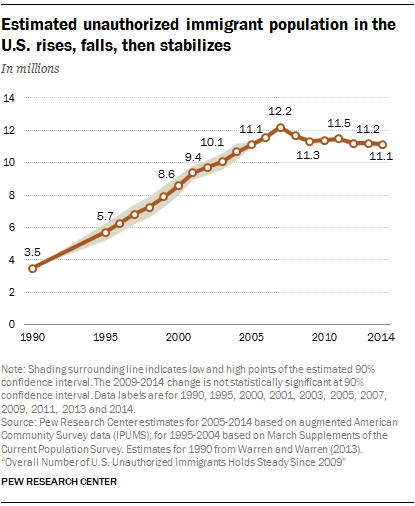
然而美國社會上爭論的“一千一百萬非法移民方案”確實包括所有非法移民。
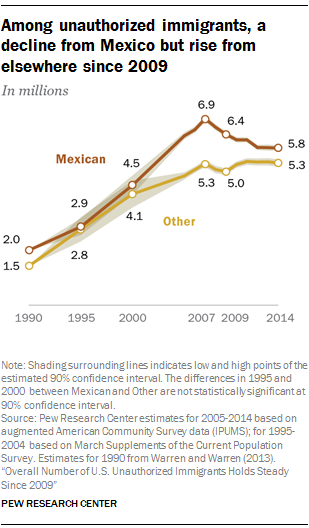
就最大的來源,墨西哥,【皮尤8】:

略微過半。
【皮尤9】,如上圖,2007-2008美國世界經濟大危機以來來自其它國家非法移民再升,而來自墨西哥的人口再降:
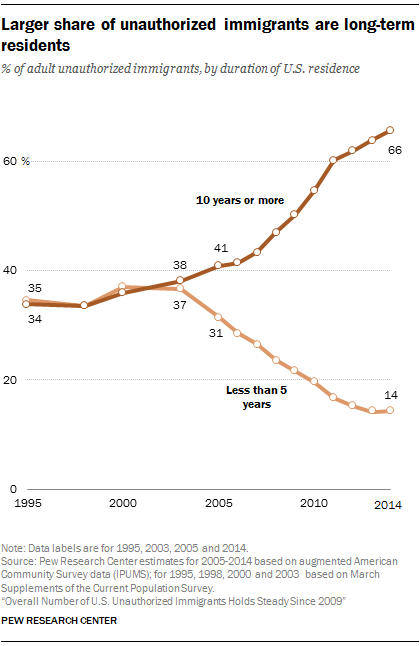
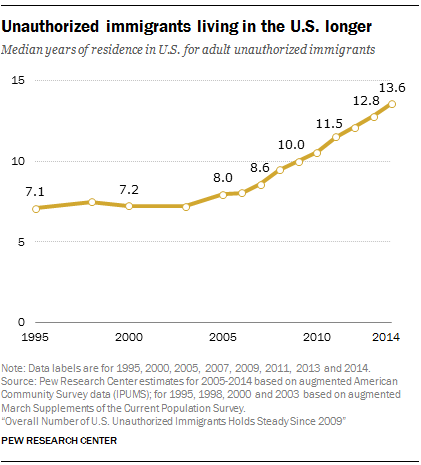
很多都是老油子了【皮尤11】:
被政府逮捕的非法移民人數,非墨西哥人首次超越墨西哥人【皮尤8】:

有孩子的【皮尤16】:

盡管這個數目大增,但總體逮捕到的墨西哥非法移民大降,【皮尤7】:

墨西哥非法移民的人數比例也穩定:

一般認為是美國世界經濟大危機的結果,大家找不到工作。
災區圖【皮尤5】:
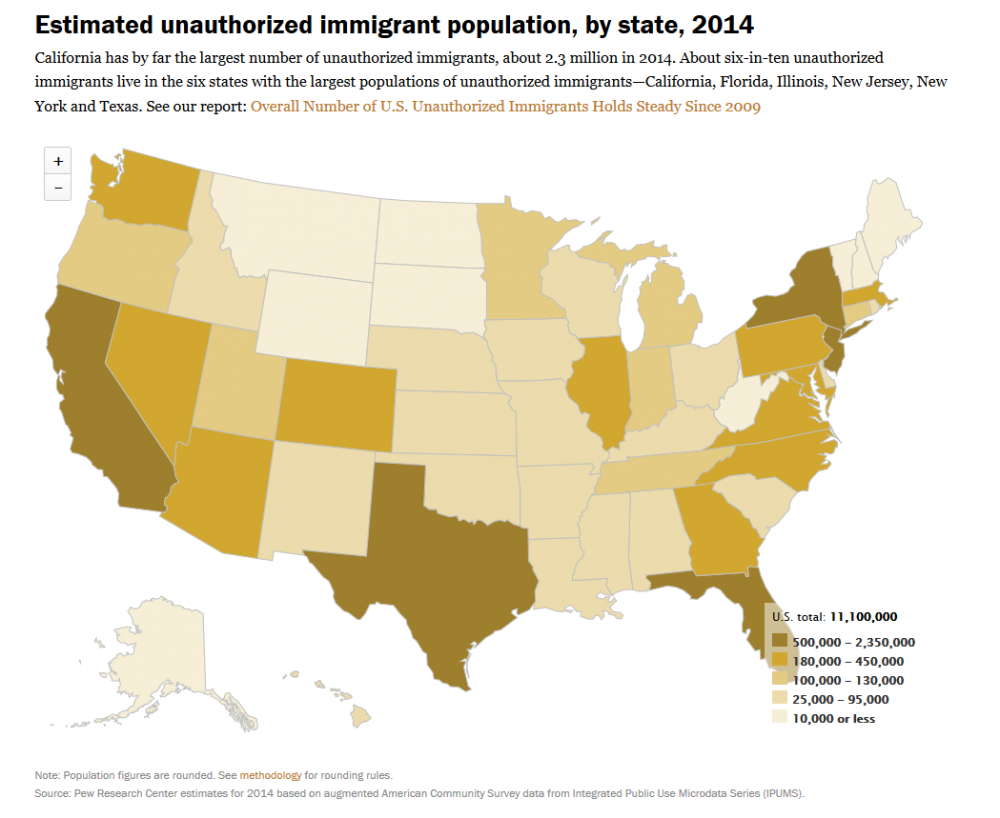
大家最擔心的,也許覺得最不公平的,是非法移民在美國生下的子女,自動成為美國公民,【皮尤6】:

我粗略估計了一下,1980年以來年均二十萬,到現在是五百萬(這不是拉美裔非法移民的子女,而是所有非法移民的),比美國華裔還多,占美國人口1.4%左右,然而因為非法移民生得多,下一代占的比例大幅提高,而這些第一代最能感受到父母的堅信,政治傾向很明確,成了華裔大罵的主要目標:變天了。
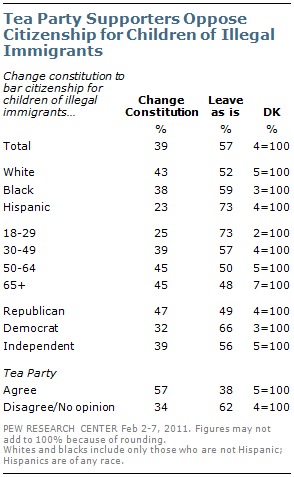
然而美國人,包括白人,雖然覺得有爭議,但不覺得是個問題【皮尤23】:
遣返【皮尤18】:
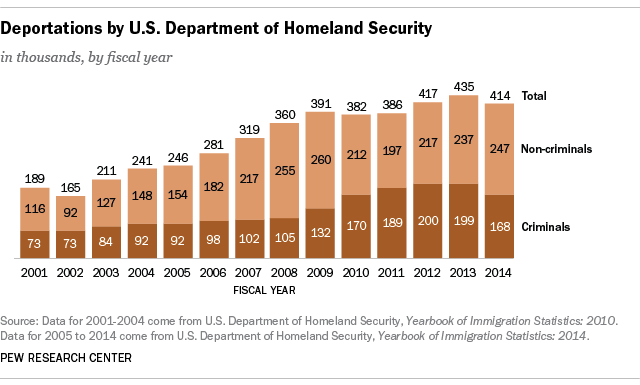
然而大家開始抱怨奧巴馬的“新政”《合眾社》【28】:“The Obama administration deported fewer immigrants over the past 12 months (2015) than at any time since 2006, according to government figures obtained by The Associated Press.”
大趨勢
【皮尤12】:

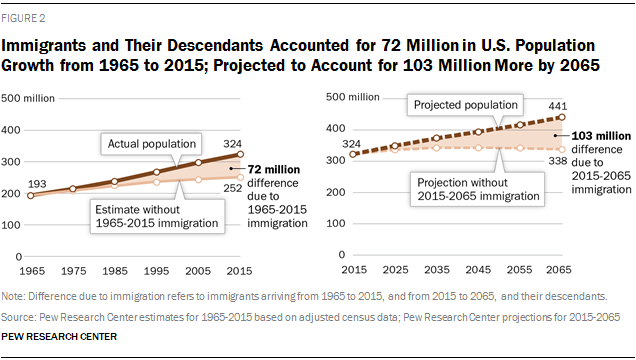
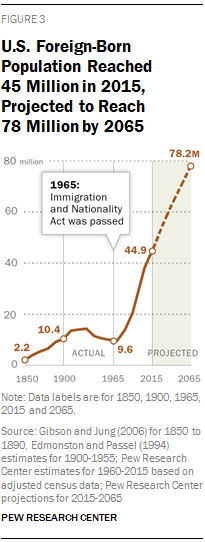
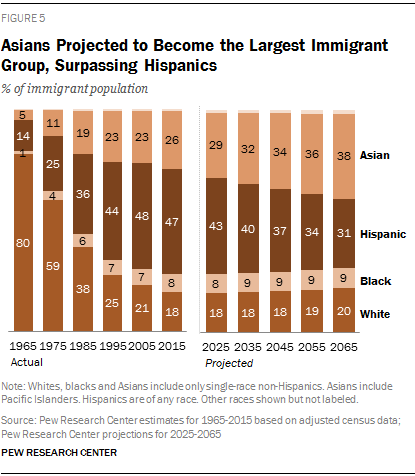
俗話說,“抵抗是徒勞的。”
【皮尤14】:
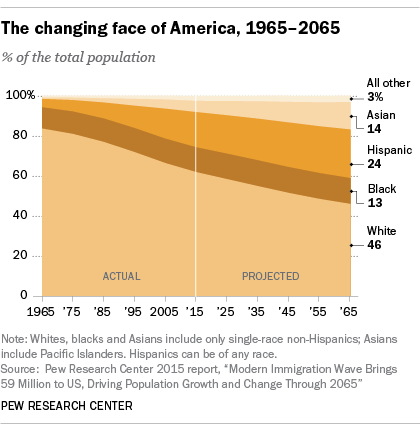
美國社會的態度
主流支持【皮尤22】:
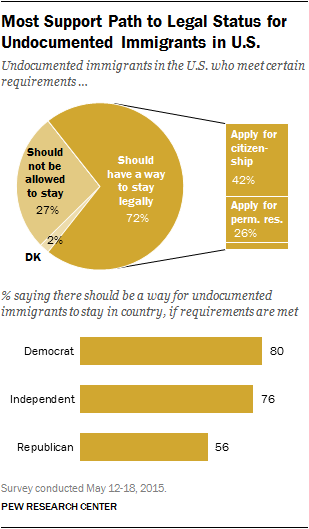
【蓋勒普23】:
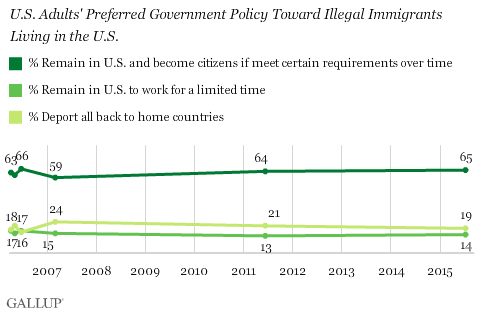
但黨派之分較大【皮尤21】

拉美裔公民
這是個現實。
【皮尤13】:
【皮尤19】:

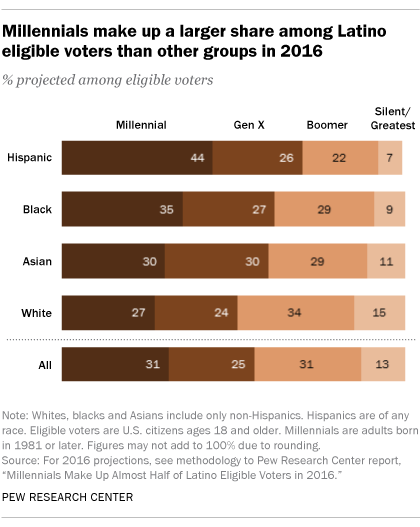
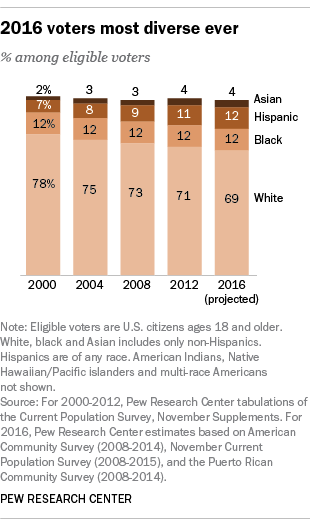
兩千八百萬有投票權的拉美裔公民,很年輕。
ola grande ESTÁ aquí: Bush lost latinos by 1 million in 04, McCain by 4 mil "08, Romney by 5.5 mil '12, Trump will lose by over 7 million.
— Matthew Dowd (@matthewjdowd) November 5, 2016
even if Trump gets the exact % of votes of whites, blacks & Asians as Bush in 2004, Trump would lose by 3 million votes due to Latinos.
— Matthew Dowd (@matthewjdowd) November 5, 2016
【皮尤20】(2012):拉美裔投票人數到2030年將翻番。這是為何共和黨正在自己給自己掘墳的原因。
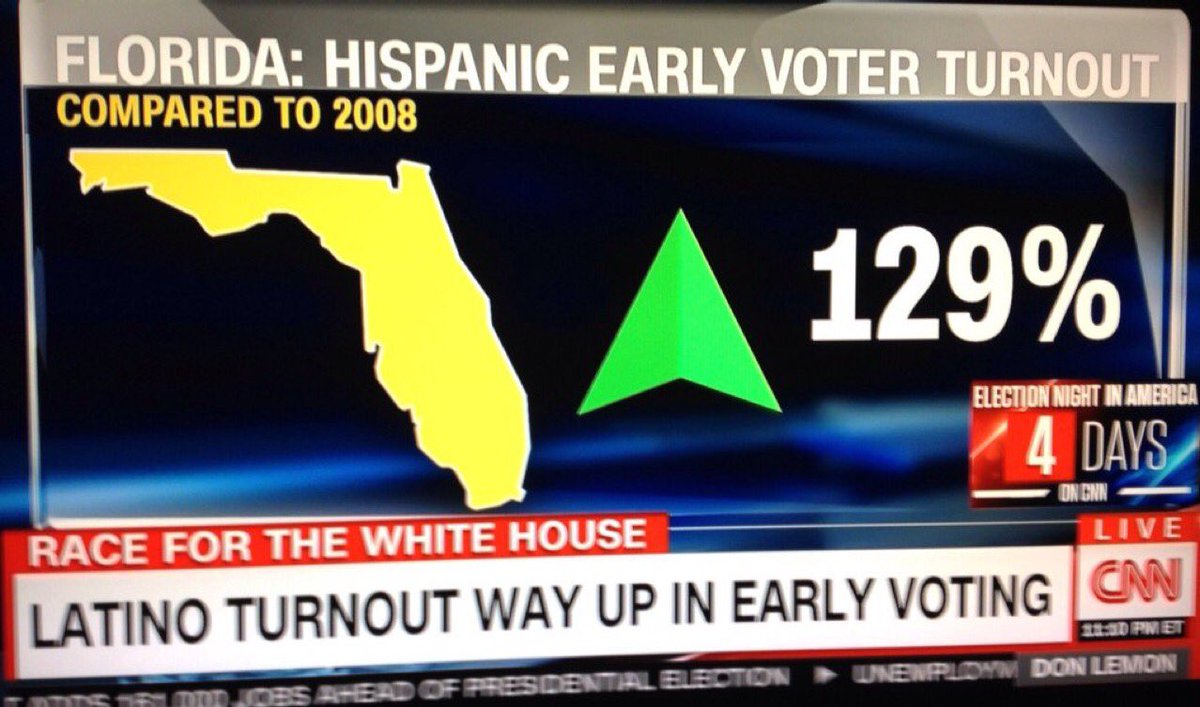
《狐狸新聞拉美裔台24》,《洛杉磯時報25》都報道今年拉美裔投票將創紀錄(一千六百萬),這是克林頓至勝的關鍵之一,雖然《留聲機26》大部分都廢了(因為在加州、德克薩斯,沒用),但在佛羅裏達和內華達足以扭轉局勢,而波多黎各的災難也在佛羅裏達幫了克林頓大忙《留聲機27》。
對經濟社會的影響;人口
對人口的影響主要在於在白人自己不願意生的情況下保持了人口年輕化,對一個國家的經濟實力和發展是個最關鍵的因素。當然合法移民最好,但非法移民是個現實,不過這是句插話。
治安;非法移民和販毒吸毒
大致的影響甚微,不過美國人還有有擔憂【《路透社》46】。
非法移民帶來的經濟增長是否能抵償政府福利負擔?
左媒【美國公共電視台(PBS)前沿紀錄片攝製組32】,【《國會山》(2014)33】,【《時報周刊》34】,【《美國新聞》(2016)35】,【《赫芬頓郵報》(2015)36】,【《美國進步研究中心》45】列舉的“非法移民合法化”的論點主要是:
(1)讓美國經濟更大,簡單,人口多了;(2)非法移民填補的美國經濟勞工缺陷的方麵,搶走的職位大多是美國不願意幹的。這是實話,即使是最悲慘的美國藍領也不願意幹髒活累活。這情形已經跟美國經濟交融在一體了,如【47】《華爾街日報》47】介紹的,反非法移民高漲的亞利桑那沒了非法移民還不知道咋辦;(3)非法移民也交稅,彌補了政府救濟;(4)合法化因為讓非法移民正正當當融入社會,會給國家每年減輕六千億美元($600B)的負擔;(5)對國家社保負擔不大(社保、醫保),國會預算辦也說影響不大;(6)對工資壓力甚微。布魯金斯學會甚至說會讓大家工資上升。
說法是非法移民沒那麽糟糕,合法化壞處沒那麽多,好處不少。
不過我覺得說服力不大。的的確確人口多了,經濟體就大了,經濟實力增加了,國家也更“強盛”了。但是老百姓日子好了嗎?真的沒負擔嗎?這是反對非法移民和反對合法化的陣營的主要論點,也是淳樸(Donald Trump)最有力的口號之一。“合法化因為讓非法移民正正當當融入社會,會給國家每年減輕六千億美元的負擔”本身就明示了“有負擔”。
反對陣營的觀點有【《移民研究中心》(2013)40】,【《移民研究中心》41】,【《美國傳統基金會》42】,【《草街日報》48】,【《移民改革聯盟》49】,我給你列舉些。
Illegal immigration costs U.S. taxpayers about $113 billion a year at the federal, state and local level. The bulk of the costs — some $84 billion — are absorbed by state and local governments.
The annual outlay that illegal aliens cost U.S. taxpayers is an average amount per native-headed household of $1,117. The fiscal impact per household varies considerably because the greatest share of the burden falls on state and local taxpayers whose burden depends on the size of the illegal alien population in that locality
Education for the children of illegal aliens constitutes the single largest cost to taxpayers, at an annual price tag of nearly $52 billion. Nearly all of those costs are absorbed by state and local governments
At the federal level, about one-third of outlays are matched by tax collections from illegal aliens. At the state and local level, an average of less than 5 percent of the public costs associated with illegal immigration is recouped through taxes collected from illegal aliens
Most illegal aliens do not pay income taxes. Among those who do, much of the revenues collected are refunded to the illegal aliens when they file tax returns. Many are also claiming tax credits resulting in payments from the U.S. Treasury
以及
Households headed by illegal aliens imposed more than $26.3 billion in costs on the federal government in 2002 and paid only $16 billion in taxes, creating a net fiscal deficit of almost $10.4 billion, or $2,700 per illegal household
Among the largest costs are Medicaid ($2.5 billion); treatment for the uninsured ($2.2 billion); food assistance programs such as food stamps, WIC, and free school lunches ($1.9 billion); the federal prison and court systems ($1.6 billion); and federal aid to schools ($1.4 billion)
With nearly two-thirds of illegal aliens lacking a high school degree, the primary reason they create a fiscal deficit is their low education levels and resulting low incomes and tax payments, not their legal status or heavy use of most social services
On average, the costs that illegal households impose on federal coffers are less than half that of other households, but their tax payments are only one-fourth that of other households
Many of the costs associated with illegals are due to their American-born children, who are awarded U.S. citizenship at birth. Thus, greater efforts at barring illegals from federal programs will not reduce costs because their citizen children can continue to access them
If illegal aliens were given amnesty and began to pay taxes and use services like households headed by legal immigrants with the same education levels, the estimated annual net fiscal deficit would increase from $2,700 per household to nearly $7,700, for a total net cost of $29 billion
Costs increase dramatically because unskilled immigrants with legal status -- what most illegal aliens would become -- can access government programs, but still tend to make very modest tax payments
Although legalization would increase average tax payments by 77 percent, average costs would rise by 118 percent
The fact that legal immigrants with few years of schooling are a large fiscal drain does not mean that legal immigrants overall are a net drain -- many legal immigrants are highly skilled
The vast majority of illegals hold jobs. Thus the fiscal deficit they create for the federal government is not the result of an unwillingness to work
(知道大家不會花時間閱讀,不過你如果碰巧想了解了解,【《財富雜誌》44】是個簡要地總結。)
說法是真正的負擔實在地方政府醫療和教育上,非法移民的貢獻遠遠不足彌補大家的負擔,每年達1130億,也就是說美國人民確實貼錢養著這些非法移民。
是否有水分,我見不到反擊的。
思考
沒有非法移民最好(如上所示,過幾十年後亞洲,而非拉美,將是美國移民第一大來源),不過一大堆,是個既成事實,不服也無奈,你要是不願意麵對現實,到天堂去。
你把他們都趕走?且不說實際上很難實行,一次性救濟打擊巨大,美國得花一代人的時間調整過來(美國經濟也比中國更小了),至少很多人在美國有子女,都是美國公民,子女沒法幫非法父母轉身份,但子女是不能動的,將過千萬的人家拆散,沒有一個國家下得了手,中國也不會。
連淳樸也沒說吧他們趕回去。
既然如此,還不如麵對現實,把這幫人融入社會,既消除了社會衝突的一個因素,讓不少人家庭團聚,還能保持經濟增長的動力,但是白人永遠至上的地位,就得變了。
就是你那些非法移民的噩夢。
再提提那句俗話說,“抵抗是徒勞的。”
【資料】
【1】亞裔要當民主黨
【皮尤民調】
【12】Modern Immigration Wave Brings 59 Million to U.S., Driving Population Growth and Change Through 2065
【28】《合眾社》(2015年10月)Fewer Immigrants Sent Home: Obama administration deports fewer immigrants during past 12 months than at any time since 2006
【29】《華盛頓郵報》(2014)7 charts that explain the undocumented immigrant population
【30】《紐約時報》(2013)The Face of America’s Illegal Immigration
【31】《紐約時報》(2013)Do Illegal Immigrants Actually Hurt the U.S. Economy?
【32】美國公共電視台(PBS)前沿紀錄片攝製組(Frontline)(2015)America’s Immigration Battle By the Numbers
【33】《國會山》(2014)Illegal immigrants benefit the U.S. economy
【35】《美國新聞》(2016)'Undocumented' Immigrants Pay Billions in Taxes
【37】《憲法教育基金(Constitutional Rights Foundation)》Unauthorized Immigration and the U.S. Economy
【39】《移民政策研究所》Frequently Requested Statistics on Immigrants and Immigration in the United States「中立/偏左」
【40】《移民研究中心》(2013)The Fiscal and Economic Impact of Immigration on the United States「移民研究中心(Center for Immigration Studies)是移民改革聯盟(Federation for American Immigration Reform,見下)分出來的子機構,都是保守反非法移民的智庫。」
【41】《移民研究中心》The High Cost of Cheap Labor
【45】《美國進步研究中心(Center for American Progress,克林頓智庫) 》National and State-by-State Economic Benefits of Immigration Reform
【47】《華爾街日報》The Thorny Economics of Illegal Immigration
【48】《草街日報》Sorry, But Illegal Aliens Cost The U.S. Plenty「此報紙是投資商務日本(Investor's Business Daily,IBD,是《華爾街日報》相仿的投資經濟商務報刊,競爭對手,但小很多,比《華爾街日報》保守。人稱華爾街為“花街”,我也開個玩笑,戲稱此報為“草街”。)」
【50】《赫芬頓郵報》Our Moment (“Nuestro Momento”)...
