夏嫿的天空
心素若簡 人淡如菊


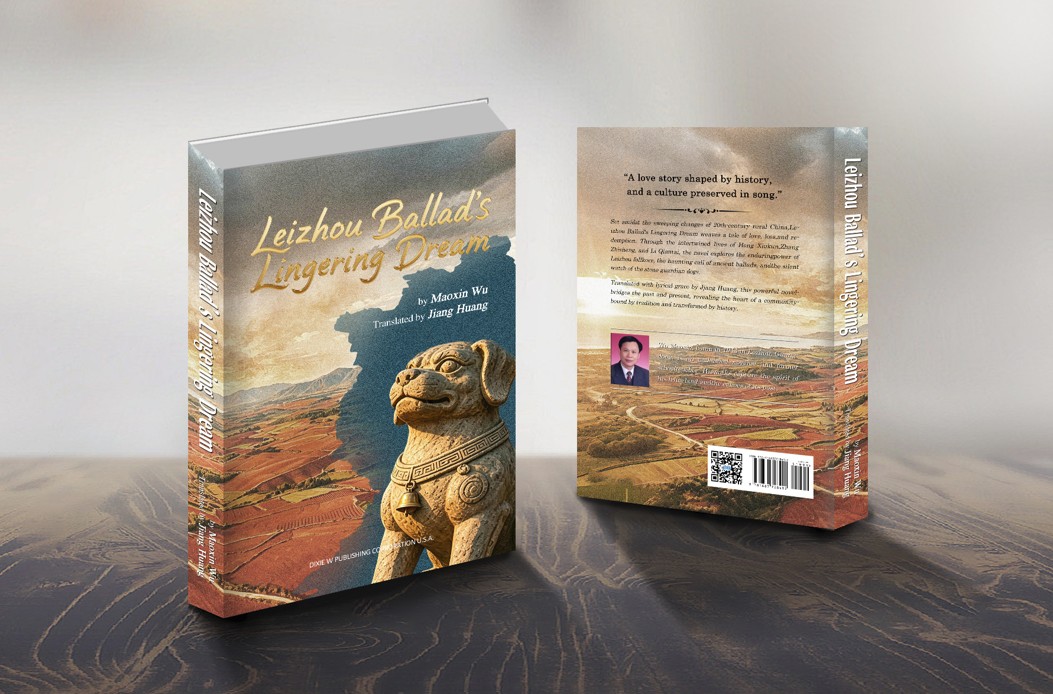
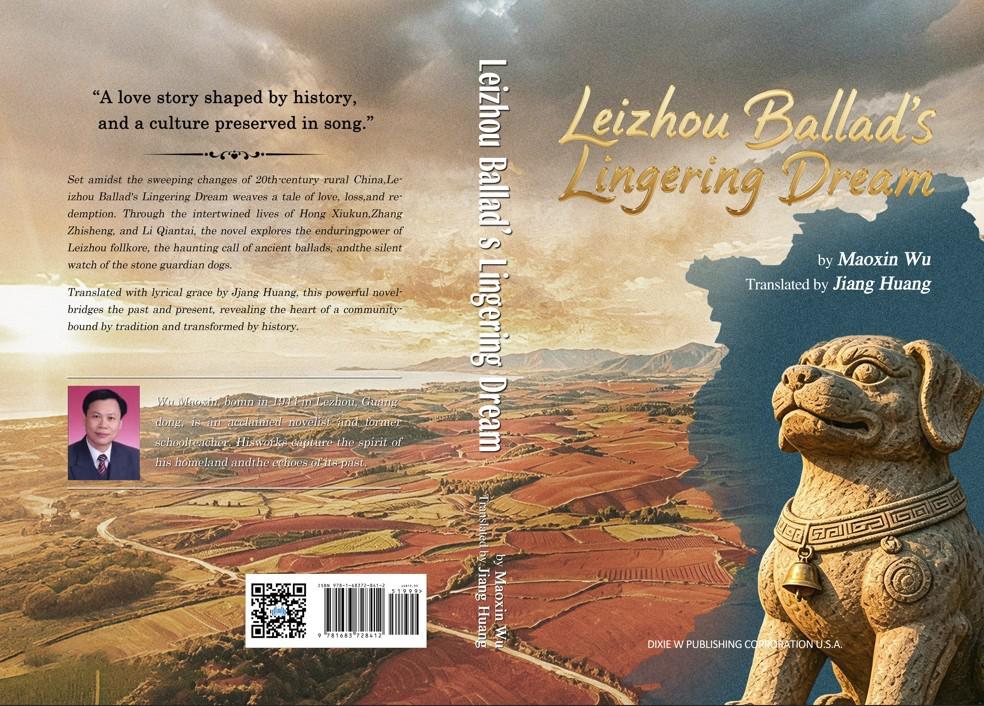
At its heart, the novel is both an intimate emotional journey and a cultural chronicle. The characters’ fates unfold within a vividly rendered rural world where Leizhou folk songs echo across fields, stone dog totems guard village thresholds, and deeply rooted traditions shape everyday life. As personal desires collide with political forces, enduring questions of justice, loyalty, and redemption emerge.
Blending historical depth with poetic storytelling, the narrative reveals how memory and truth can be obscured by time—and ultimately reclaimed. The gradual resolution of a decades-old injustice brings not only closure to the characters, but also a profound reflection on the human capacity for forgiveness and renewal.
Rich in regional detail yet universal in theme, Leizhou Ballad’s Lingering Dream offers international readers a rare glimpse into the soul of rural China, where love endures, culture persists, and history leaves its indelible mark on every life it touches.
Chapter 1: A Dream That Came Late
Section 1
Tap. Tap-tap.
A gentle knocking sounded at the door.
He’s here.
A small drum of anticipation began to beat instantly in Xiukun’s chest. Even though tonight was to be their wedding night, she had known he wouldn’t wait until then—if he possessed that kind of patience, would he still be Zhang Zhisheng?
She, Hong Xiukun, was someone who had walked in and out of the very gates of the underworld. Her heart, once still as a deep well, now rippled with movement. If he could remain calm, that would be the real surprise.
No sooner had the door bolt been drawn back than Zhisheng slipped inside like a gust of wind.
Xiukun opened her arms and pulled him into an embrace from behind, resting her head lightly on his shoulder. He felt the firm press of her chest against his back like two torches, searing him, igniting a blaze that surged through his whole body. He turned her in his arms, holding her tight, pressing his cheek to hers, his knees locking around her legs. She was fully aware of his potency; passion rose from her feet like molten lava. This magma, long buried and pressurized deep underground, could be contained no longer—ready to burst, to erupt, to melt them both.
She could feel him trembling, clearly as stirred as she was. Yet his attention never left her face. Slowly, his hands parted her hair to either side, and he gazed into her eyes with deep feeling.
Those eyes had witnessed countless seasons of wind, rain, and dust, yet they remained like two tranquil pools—deep and clear, free of the slightest speck of impurity, like twin glinting pearls. They held his focus utterly, leaving no room for distraction. Unconsciously, he tilted his face and gently pressed it against hers once more, losing himself in the comfort of her tenderness.
Xiukun’s passion still burned, but the initial wildness had ebbed. She understood she was his goddess, and she should let him enjoy to the fullest, let him take whatever he needed. Quietly, she leaned against his chest, accepting his caress.
Once more, Zhisheng moved his hands to gently stroke her face. He continued to gaze—this was a set of features and contours no painter, however gifted, could capture: clear and soft, enchanting yet utterly pure. True, this delicate frame could not wholly resist the harsh erosion of time. On her once-fresh, dewy cheeks, faint fine lines were beginning to show, which filled him with regret, even pain. The only comfort was that the marks of age on her face had not brought ruin or decay, but rather added a touch of mature allure. Unconsciously, he bent his head, opened his mouth, and pressed his lips to Xiukun’s.
Xiukun’s passion flared at once. “Sheng! Sheng!” she called softly, parting her lips to meet his. Their four warm, supple lips met, pressing and pulling, devouring one another.
This was what Xiukun had waited for through countless days and nights. Back in her springtime, when first love began to stir, she was like the unripe guava in the yard—bees and butterflies, impatient for ripeness, would swarm and sting, bump and bite, leaving their marks. Those frivolous men, with one excuse or another, would draw near, then use seemingly proper gestures to touch her, trying to take advantage. It made her seethe with anger, yet she could find no clear reason to lash out.
In those days, her body was changing. Her small, slowly swelling breasts would often feel taut, especially during her monthly flow, when the sensation grew stronger. The two little buds would itch unbearably, and she longed for someone close to touch them, to rub them, to knead them. But back then, she was a proud princess—she could never lower her guard. Zhisheng was always finding ways to please her, yet the closer he came, the more she recoiled. To be honest, if it hadn’t been for Qiantai, she would never have kept him at such a distance. Thinking of this, Xiukun felt a deep pang of guilt—she owed Zhisheng far too much. She wanted to make it all up to him, to let him kiss his fill, love his fill, to give herself to him completely!
What she hated was how the scene kept shifting. One moment she was in Zhisheng’s arms, and the next, the shadow of Li Qiantai—long erased from her mind—suddenly reappeared. Ah… it was something from a very, very distant past. As children, she, Li Qiantai, and Zhang Zhisheng were always together, getting into mischief. Of the two boys, she had preferred Qiantai. The adults in the village all called Qiantai’s father “Old San,” while the children called him “Third Uncle.” Though he was from another village, everyone knew him well. Every year, in the tenth lunar month when the late-season rice was harvested, he would join the threshing crowds that came to the village.
Third Uncle was the most sought-after hired hand in the area. It was said he cared little for wages and would work with all his might, so every household vied to employ him. He was a regular at Xiukun’s home, and whenever he came, he went straight to his old employer. Apart from his heqiang—a pointed carrying pole some called a “sharp yoke”—he owned nothing else. At that time, straw was precious. Most villagers lived in thatched cottages, and straw was needed for roofing. Moreover, for miles around, the land was flat rice fields, with no forests or grassy slopes for firewood, so straw was also used for fuel. Unlike other places where people harvested and threshed the rice in the field, leaving the straw behind to dry, here the cut rice was spread out in the field to dry, then bundled and carried home. After threshing the grain, the straw was tied up and stacked as hay for later use. The sharp yoke, tapered at both ends, was specially designed for carrying bundles of rice.
One year, when Third Uncle came to Tianxi Village for the October harvest, he had a child with him. He said to Xiukun’s father, “The boy’s mother is gone, so I have to bring him along. He’ll share my floor mat—no need for an extra bed. We’ll eat from the same portion—no need for the employer to give more. I won’t be a burden. If you think it’s too much trouble, boss, I’ll go elsewhere.”
Xiukun’s father hesitated a moment, then let Third Uncle stay.
When Father heard that Third Uncle’s son was called Qiantai, he immediately frowned. “He’ll have to change his name!”
Third Uncle replied, “Change it, then. If not ‘Tai,’ call him anything you say.”
“It’s not the last character—it’s the middle one, the qian in Qiantai,” Xiukun’s father said, his tone commanding and unyielding.
“That’s non-negotiable!” No one expected Third Uncle, who was always so meek and timid, to be as hard as basalt—the so-called “Gold-Silver Stone” in the local dialect—at this moment. “This is the seniority rank of our clan; I’ll die before I change it. If you don’t keep me here, I’ll go elsewhere.”
With that, Third Uncle began to move toward the door.
“Wait, wait! Forget it—you and I don’t share the same surname or clan anyway, so it’s your business what you’re called. You can still help us harvest the rice at my place.” With that, Xiukun’s father softened.
For some reason, Xiukun felt an instant closeness to Qiantai. The moment he stepped in with Third Uncle, she had hoped he would stay. Whenever her father’s face darkened, her heart would clench; now that he had agreed to let them stay, she let out a long breath of relief. And so, they became playmates. With someone to keep her company, naturally, she was delighted.
Only that day did Xiukun realize how many layers a name could hold. In the village, apart from her, other families named their daughters with little fuss: the eldest was Da Zhang, the second Er Zhang, the third San Zhang… In this context, the character "Zhang" in Leizhou means "girl," and there are girls with the same name all over the village. Xiukun’s great-grandfather had been a scholar, and that refinement had lasted three generations, making the family stand out. Moreover, although her father had taken two concubines, neither had borne a son—indeed, they had not even produced a single child. An only daughter, even more treasured than an only son, was given a name of rare elegance: Hong Xiukun.
As for “Heaven is Qian, Earth is Kun,” she only learned this saying after the argument over names. In the countryside, generation after generation, strict rules kept men and women from casual contact, so any matter involving the two sexes instantly became big news. A boy with qian in his name, a girl with kun in hers—Heaven and Earth, the ultimate pair—it would have been strange if gossip hadn’t exploded. Yet, oddly, nothing untoward happened. Since everyone only ever heard Third Uncle call his son “A’tai,” they followed suit, casually using “A’tai, A’tai,” and simply overlooked the generational qian in the name.
At home, discipline was strict—girls were generally not allowed to go out and play alone. In the past, it was always Zhang Zhisheng, the son of her father’s old friend, who came to take her out. But after Qiantai arrived, Xiukun, having found a companion, stopped going out. Instead, she pestered Qiantai to play with her. He wasn’t one to speak up on his own, but whatever Xiukun asked, he would answer in full. Her questions were simple: Which village do you live in? What’s in your village? Where do you usually go to play? Yet from A’tai’s answers, Xiukun came to know another world beyond her own village. She discovered that beyond the endless sea of rice, there were purplish-blue ridges rolling into the distance, forests alive with waves of green cloud, and the Shaxi Stream flowing down the slope from afar, babbling a cheerful song…
Zhisheng also tugged at Qiantai with questions, the one that mattered most to him being whether there were stone dogs in Qiantai’s village. Qiantai said yes, and that there were many. Zhisheng immediately perked up, firing question after question: Where are the stone dogs placed? What do they look like? What do the villagers think of them? He went on and on, taking up so much time that Xiukun grew impatient.
Although Xiukun now had Qiantai for company, Zhisheng still often came to ask her to play outside. Xiukun’s home was in the north of the village, while Zhisheng’s was in the south. Usually, children from the north and south didn’t play together, but their families were close, so Zhisheng would often go out of his way to find her. Whenever he came, he always brought something tasty or fun to share.
Xiukun gave Qiantai a tug. “Come on, let’s go play outside.”
Qiantai shook his head. “You two go ahead.”
Zhisheng had never really wanted Qiantai to tag along, but since Xiukun insisted she wouldn’t go without him, he had no choice but to pull at him. “Come on, what are you spacing out for?”
Qiantai still didn’t move. “I don’t have anything to bring.”
Oh—Xiukun understood. He was afraid of being looked down on because he was poor. She took all the things Zhisheng had brought, set them on the table, and said, “Let’s not take anything. The other kids won’t either. We’ll just play with whatever we find outside.”
With Xiukun on one side and Zhisheng on the other, tugging and pulling, they hauled Qiantai out the door.
With the new arrival, the group of children grew excited. There was something about Qiantai—hard to describe, yet easy to feel—that made the little brothers and sisters feel at ease with him. Especially his small hands: any toy that came into them seemed to level up in an instant. For example, there was a toy the others regarded as the most advanced, and Qiantai showed exactly what it could do. In Leizhou, children are called nongzai. In the countryside, nongzai have no idea there are toys in the world that need to be bought with money—everything is handmade. They would take a small bamboo stick, push a wild fruit pit into a small bamboo tube, then pull out the stick and forcefully push it into another pit. The compressed air created a blast, and with a pop! the first pit would be shot out. They called this toy the pipop gun.
Qiantai pointed to a pipop gun and said, “I can make this even more fun.”
He carved a small hole in the middle of the gun barrel, so the wild fruit pits could drop in there. Then he found a slightly larger section of bamboo, drilled two small holes opposite each other near the bottom, just the right size for the gun barrel to pass through. The small hole in the gun barrel ended up in the exact center of the larger tube. When the larger tube was filled with fruit pits, every time one was fired out, another would automatically fall into place, allowing the shooter to keep going! Pop! Pop!—like a machine gun. The children cheered and jumped for joy, the village lane bursting with excitement. In no time, Qiantai had become one of the nongzai of the host village.
Zhisheng, it seemed, was a little out of step. While the rest were obsessed with the big pipop guns, he kept going off to look for stone dogs. Perhaps it was fate. Across the seven towns and eight villages of Leizhou, stone dogs were everywhere you looked—in front of houses, at the edges of fields, on street corners, outside temples and shrines. They were sculptures of dogs, all carved from the local bluish-black basalt, and collectively known as shigou (stone dogs). So wherever Zhisheng went, he could find these silent companions. While the other children ran around with their pipop guns, playing at charging into battle, he did not look lonely or left out. Instead, in his own special way, he communicated with these stone creatures, finding his own kind of joy.
Thinking of the stone dogs, Xiukun’s heart was filled with a jumble of emotions, a mix of sweet, sour, bitter, and spicy. Back then, because of the Stone Dog, she looked at Zhisheng through a narrow lens and completely underestimated him. Now, it was all thanks to the stone dogs that Zhisheng’s status had risen, and Xiukun herself had gained a touch of reflected glory. It was all a matter of human perception!
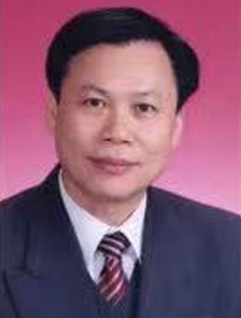
【 作者簡介】Wu Maoxin, male, born in 1944, is a native of Leizhou, Guangdong. Despite a turbulent childhood, he persevered through adversity with diligence and self-reliance. Over his career, he has served as a primary school teacher, a theatrical playwright, and a cultural center official.
《雷歌遺夢英文版》也隨著亞馬遜在全球發行(中國除外)
購買此上下卷請關注下麵鏈接或亞馬遜搜索書名:
http://www.dwpcbooks.com/product/html/?814.html
點擊下麵鏈接可閱讀上下卷更多精彩內容:
http://www.dixiewpublishing.com/doc/preview8412.pdf#toolbar=0

中國讀者購買本書可以掃描上麵微信碼查詢
美國南方出版社簡介:
“圓作者一個夢想,助作者美國出書”是美國南方出版社Dixie W Publishing Corporation,網站:http://www.dwpcbooks.com/)的出版宗旨。美國南方出版社2006年在美國Alabama州注冊成立,多年來為諸多作者出版圖書,銷售不斷攀升,是美國出版界的後起之秀,現正逐漸為各界熟悉。
美國南方出版社所出版的圖書通過自己的網站,美國最大連鎖書店巴諾書店(Barnes& Noble),以及亞馬遜(Amazon)等網上和實體書店在全球範圍內發行。美國國會及多所著名大學和地方圖書館均有收藏,美國南方出版社成功地把作者推向了更大更紛繁的世界舞台。