簡體 | 繁體
loading...
海外博客
    • 首頁
    • 新聞
    • 讀圖
    • 財經
    • 教育
    • 家居
    • 健康
    • 美食
    • 時尚
    • 旅遊
    • 影視
    • 博客
    • 群吧
    • 論壇
    • 電台
  • 熱點
  • 原創
  • 時政
  • 旅遊
  • 美食
  • 家居
  • 健康
  • 財經
  • 教育
  • 情感
  • 星座
  • 時尚
  • 娛樂
  • 曆史
  • 文化
  • 社區
  • 幫助
您的位置: 文學城 » 博客 »Terry Newman 卡尼,危機在哪兒?

Terry Newman 卡尼,危機在哪兒?

2025-12-04 15:25:02

風蕭蕭_Frank

風蕭蕭_Frank
以文會友
首頁 文章頁 文章列表 博文目錄
給我悄悄話
打印 被閱讀次數
特裏·紐曼:卡尼,危機在哪兒?

特裏·紐曼

https://www.msn.com/en-ca/news/politics/terry-newman-wheres-the-crisis-carney/ar-AA1FltzC

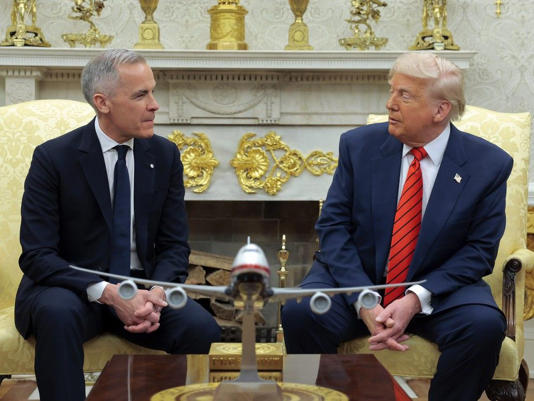
2025年5月6日,美國總統唐納德·特朗普在華盛頓特區白宮橢圓形辦公室會見加拿大總理馬克·卡尼。

2025年5月6日,美國總統唐納德·特朗普在華盛頓特區白宮橢圓形辦公室會見加拿大總理馬克·卡尼。

就在不久前的今年三月,剛剛贏得自由黨黨魁選舉的馬克·卡尼總理開始告訴加拿大人,他的政黨需要“強有力的授權”,因為加拿大人“正麵臨著我們一生中最嚴重的危機,這是由於唐納德·特朗普總統不合理的貿易行動以及他對我們主權的威脅造成的”。他堅持認為提前舉行大選至關重要,而且必須選出他這位自詡為“危機管理者”的人來應對危機。

現在選舉已經結束了。卡尼,危機在哪兒呢?

3月下旬,民調專家尼克·納諾斯發現,加拿大人最關心的是“唐納德·特朗普及其威脅加征關稅可能帶來的負麵影響”。但這種擔憂很快發生了轉變。到4月中旬,34.3%的受訪者將特朗普和美加關係列為最主要的問題。一個月後,到5月中旬,這一數字驟降至19.3%,就業和經濟問題占據了主導地位。

那麽,究竟發生了什麽?

卡尼是不是狠狠地給了特朗普一記“肘擊”,讓他屈服了?他是不是像莫爾森啤酒“我是加拿大人”廣告裏那樣,把特朗普的西裝外套套在了他的頭上?兩人之間是不是上演了一場史詩級的說唱對決?特朗普肩上扛著一隻雄鷹,卡尼背上馱著一隻海狸,卡尼憑借幾句犀利的diss最終獲勝?

當然不是。事實上,情況恰恰相反。

競選活動開始六天後,也就是3月28日,卡尼在電話中提前告知特朗普,他將在競選期間談論他。在同一通電話中,卡尼還奉承特朗普,稱他為“變革型總統”。當然,總理辦公室的新聞稿並沒有提及這些細節。畢竟,距離大選日還有四周的時間。

聽起來,所謂的“危機”似乎就此結束了。

否則,卡尼為何會如此放心地與特朗普分享他的競選策略?這可不是那種會亮給公開政治對手的底牌。政治人物隻會將這種信息透露給信任的人,因為它很容易適得其反。

卡尼讓加拿大人成了他和美國總統之間的一個玩笑對象。想象一下,這會讓特朗普多麽得意。

在這次友好的交談之後,卡尼繼續渲染危機論調。在四月中旬漢密爾頓的一次競選活動中,卡尼警告說,特朗普的“策略是摧毀我們,以便美國能夠控製我們”。據報道,這番話引來一片噓聲,人們普遍認為這些噓聲是針對美國總統的。

卡尼還暗示,加拿大與美國的關係將發生曆史性的變化,他反複聲稱“我們與美國過去那種基於經濟深度融合以及緊密安全和軍事合作的關係已經結束了”。

卡尼關於“我們過去的關係已經結束”的言論,很大程度上是基於這樣一種假設:特朗普真的想讓加拿大成為美國的第51個州。

“正如我幾個月來一直警告的那樣,美國想要我們的土地、資源、水源和國家。這些並非空穴來風。特朗普總統試圖分裂我們,以便美國能夠占有我們。這絕不可能發生,”他在勝選演講中說道。

但早在二月份的加美經濟峰會上,誇大其詞的跡象就已顯現,表明加拿大人不應該輕信這些言論。據加美商業理事會首席執行官貝絲·伯克 (Beth Burke) 稱,特朗普的言論“大多數美國人並不當真”。

伯克在峰會上告訴記者:“我認為(美國人)普遍不相信這是真的,或者說這是特朗普的真實意圖。相反,我認為我們更多地認為這隻是特朗普在談判中擺姿態,以此作為談判籌碼。”

這一威脅——曾一度鞏固了自由黨的支持——在選舉後便銷聲匿跡了。 5月6日卡尼訪問白宮期間,一位記者問及加拿大成為美國第51個州的問題,特朗普回應道:“我確實覺得這對加拿大更有利。但我們不會討論這個問題,除非有人想討論。”

這表明,吞並威脅或許從未像12月初“哦,加拿大”表情包傳播時那樣嚴重。在表情包中,特朗普身著全套商務西裝,站在阿爾卑斯山上,旁邊是加拿大國旗,他眺望著馬特洪峰——而馬特洪峰位於瑞士,而非加拿大。

無論如何,卡尼和特朗普的選後會麵並沒有像自由黨競選時“舉手投足間”的口號所暗示的那樣順利。

兩人之間的友好氣氛顯而易見。特朗普首先祝賀卡尼,並稱讚他

現在他開始競選了,我們知道他們在之前的電話中討論過這個問題。

當記者問他是否希望他的首個貿易協議是與加拿大簽署時,特朗普回答說:“我當然希望如此。我非常樂意。我很尊重這個人……我認為他競選做得非常出色。” 特朗普通常不會對攻擊他的人大加讚賞。他往往會把負麵評論看得非常重。

卡尼感謝特朗普的熱情款待和領導才能,稱他是一位“變革型總統”,並表示他也希望以同樣的方式改變加拿大。我想這就是為什麽他被拍到簽署那麽多美式行政命令的原因吧。

會議結束時,特朗普試圖安撫困惑的記者們,說道:“無論如何,我們都會和加拿大保持友好關係。”

美國駐加拿大大使皮特·霍克斯特拉也對橢圓形辦公室會晤發表了看法,他證實加美關係穩固,並告訴《國家郵報》的斯蒂芬妮·泰勒,過去的90天“已經過去了”。

當被問及卡尼和特朗普的會晤是否標誌著加美關係的重啟時,霍克斯特拉的表情似乎表明,這個問題本身就荒謬至極。

“重啟或重置?絕不可能!……我們是很好的朋友。我們一直是很好的朋友,而且已經很久了。你不可能改變這些私人關係。你不可能改變這些經濟關係、國家安全……在我看來,我認為總統也這麽認為,加美關係從未受到威脅。” 好吧,看來確實如此。

還有其他跡象表明,早在選舉日之前,兩國關係就已經有所改善。卡尼威脅要對特朗普征收報複性關稅的行動早在4月16日就已告吹。據彭博新聞社援引牛津經濟研究院的報告報道,當時正值競選期間,特朗普政府決定“暫停幾乎所有報複性關稅”,將其降至“接近於零”。

至於加拿大與美國的軍事和安全關係,雙方深化合作的時期似乎並未結束。有報道稱,特朗普表示加拿大希望加入他的“金穹頂”(Golden Dome)導彈防禦係統——該係統能夠識別並攔截來襲導彈,並在飛行途中將其摧毀——卡尼的辦公室也證實雙方正在進行磋商。

周三,當《環球報》記者麥肯齊·格雷就加美安全關係深化問題上明顯的180度大轉彎詢問卡尼時,卡尼含糊其辭地回應道:“我們現在的立場是,必要時合作,但不一定非要合作。”

現在,我們可以把所有這些危機應對策略的反複無常都歸功於卡尼高超的談判技巧,以及他為加拿大人挺身而出的立場,但問題在於他與特朗普在競選初期那通頗具政治色彩的電話。

3月下旬,卡尼告訴記者:“我以前也處理過危機。現在是積累經驗的時候,而不是做實驗的時候。”

他確實成功地“處理”了一件事——一場政治作秀的大師級表演。

tnewman@postmedia.com

X: @TLNewmanMTL

Jamie Sarkonak:看來法院實際上並沒有係統性的種族歧視

Jesse Kline:在“最重要的選舉”之後,卡尼開始了漫長的暑假

Terry Newman: Where's the 'crisis,' Carney?
Terry Newman
https://www.msn.com/en-ca/news/politics/terry-newman-wheres-the-crisis-carney/ar-AA1FltzC
 
U.S. President Donald Trump meets with Canadian Prime Minister Mark Carney in the Oval Office at the White House on May 6, 2025 in Washington, DC.
It was not that long ago, merely March, when Prime Minister Mark Carney, fresh off his Liberal party leadership win, began telling Canadians his party needed a “strong mandate” because Canadians were “facing the most significant crisis of our lifetimes because of President Donald Trump’s unjustified trade actions and his threats to our sovereignty.” He insisted a snap election was essential, as was electing him, the self-proclaimed “crisis manager,” to address it.

The election is over now. Where’s the “crisis,” Carney?

In late March, pollster Nik Nanos found that Canadians’ top concern was “the potential negative fallout of Donald Trump and the threatened tariffs.” That concern quickly shifted. By mid-April, 34.3 per cent of those polled ranked Trump and U.S. relations as the biggest issue. A month later, by mid-May, that number plummeted to 19.3 per cent, with jobs and the economy taking precedence.

So, what happened?

Did Carney give Trump the old “elbow’s up” so hard he submitted? Did he pull Trump’s blazer over his head, as if in a Molson’s “I am Canadian” commercial ? Did the two face off in an Epic Rap Battle , an eagle over Trump’s shoulder and a beaver on Carney’s back, with Carney emerging victoriously after some sick disses?

Hardly. Closer to the opposite, actually.

Six days into the campaign, on March 28, Carney gave Trump a heads up in a phone call that he’d be talking about him during the campaign. In that same call, Carney flattered Trump, calling him “ transformative president .” The PMO’s press statement , of course, did not mention these details. There were four more weeks until election day, after all.

Sounds like any “crisis” ended there.

Why else would Carney feel comfortable enough to share his campaign strategy with Trump? That’s not the kind of card one shows their professed political enemy. It’s something a politician would reveal only to someone they trust, as it could easily backfire.

Carney made Canadians the butt of an inside joke between himself and an American president. Imagine how powerful that would have made Trump feel.

After this cordial chat, Carney kept piling on the crisis rhetoric. At a mid-April Hamilton campaign event, Carney warned that Trump’s “strategy is to break us so America can own us.” This was reportedly met with boos, assumedly directed at the U.S. president.

Carney also suggested there was going to be a historic change in Canada’s relationship with the U.S., often repeating the claim that the “old relationship we had with the United States based on deepening integration of our economies and tight security and military co-operations is over.”

Much of Carney’s “our old relationship is over” rhetoric appeared to be based upon the idea that Trump was serious about making Canada the 51st state.

“As I’ve been warning for months, America wants our land, our resources, our water, our country. These are not idle threats. President Trump is trying to break us so America can own us. That will never … ever happen,” he said at his election victory speech.
But signs of exaggeration were clear as early as February, during the Canada-U.S. Economic Summit , signs that Canadians should not have bought into any of this. According to the CEO of the Canadian American Business Council, Beth Burke, Trump’s comments were something that “most Americans don’t take seriously.”

Burke told reporters at the summit: “I would say (Americans) don’t believe, generally, that that’s actually something that’s real, or in a real agenda. Instead, I think our perception is more that it is one from a position of negotiation and posturing and using it as leveraging in the conversation.”

This threat — which helped galvanize Liberal support — evaporated post-election. And when asked about Canada becoming the 51st state by a reporter during Carney’s visit to the White House on May 6, Trump responded, “I do feel it’s much better for Canada. But we’re not going to be discussing that. Unless somebody wants to discuss it.”
This suggests the annexation threat may have never been more serious than the “Oh, Canada,” meme which helped spread it in early December. In the meme, Trump stands on the alps, in full business suit attire, next to a Canadian flag, gazing over at Matterhorn, which is in Switzerland, not Canada.

Either way, the post-election meeting between Carney and Trump did not go as the Liberals’ “elbow’s up” campaign rhetoric suggested.

The warm feelings between the two were palpable. Trump opened by congratulating Carney, complimenting him on how he ran his race, which we know they discussed prior in that phone call.

When asked by a reporter whether he’d like to see his first trade deal be with Canada, Trump replied , “I would. I would love that. I have a lot of respect for this man… He ran a really great election, I thought.” Trump doesn’t usually gush over people who attack him. He tends to take negative comments quite personally.
Carney thanked Trump for his hospitality and his leadership, calling him a “transformational president,” saying he wanted to transform Canada much the same. I guess that’s why he’s been photographed signing all those fake American-style executive orders.

By the end of the meeting, Trump tried to reassure confused reporters that, “Regardless of anything, we’re going to be friends with Canada.”

Weighing in on the Oval Office meeting, the U.S. Ambassador to Canada, Pete Hoekstra, too, confirmed that Canada-U.S. relations were firm, telling National Post’s Stephanie Taylor that the last 90 days were “behind us.”

When asked whether Carney and Trump’s meeting was a restart for Canada-U.S. relations, Hoekstra’s face suggested that even the premise of the question was absurd.
“A restart or a reset? No way! … We are great friends. We have been great friends for such a long period of time. You’re not going to change those personal relationships. You’re not going to change those economic relationships, national security… The relationship, from my perspective, and, I think, the president’s perspective, was never in jeopardy.” Well, then.

There were other signs things had improved well before election day. Retaliatory tariffs Carney threatened to wage against Trump went elbows down as early as April 16, when his government — mid-election campaign — had decided, according to Bloomberg News, citing an Oxford Economics report, “ suspend almost all of its retaliatory tariffs ” dropping them to “ nearly zero. ”

As for Canada’s military and security relationship with the U.S., it appears the period of deepening integration is not, in fact, over. It’s been reported that Trump said Canada wants in on Trump’s Golden Dome — a missile defence shield that can identify and intercept incoming projectile threats and destroy them mid-flight — with Carney’s office confirming that discussions are ongoing.
Asked Wednesday by Global reporter MacKenzie Gray about this apparent about-face on deepening security relations with the U.S., Carney responded with gibberish,”We are in a position now where we cooperate when necessary, but not necessarily cooperate.”

Now, we could chalk all of these crisis flip-flops up to Carney’s superior negotiating skills in going to bat for Canadians, except for that little problem of that early campaign friendly phone call between himself and Trump.
In late March, Carney told reporters “I’ve managed crises before. This is the time for experience, not experiments.”

He’s managed something, alright — a masterclass in political theatre.

tnewman@postmedia.com

X: @TLNewmanMTL

  • Jamie Sarkonak: Looks like the courts aren't actually systemically racist
  • Jesse Kline: Following 'most consequential election,' Carney takes extended summer vacation
登錄後才可評論.
  • 文學城簡介
  • 廣告服務
  • 聯係我們
  • 招聘信息
  • 注冊筆名
  • 申請版主
  • 收藏文學城

WENXUECITY.COM does not represent or guarantee the truthfulness, accuracy, or reliability of any of communications posted by other users.

Copyright ©1998-2025 wenxuecity.com All rights reserved. Privacy Statement & Terms of Use & User Privacy Protection Policy

今日熱點

  • 為人講究有個心(3完)borisg
  • 詐騙記錄,手機設防菲兒天地
  • 好友的丈夫瘋了mayflower98
  • 2025年汽車品牌排行榜矽穀居士
  • 紅得發紫的一本書平等性
  • 身體胖的苦惱遠遠的霧
  • 法國總統馬克龍與妻子布麗吉特的法國式愛情一切美好源於夢想
  • 30年前一件事加拿大姥姥
  • 智利首都聖地亞哥初印象風城黑鷹
  • 二裏頭遺址中發掘出的“中華第一龍”長島退休客
  • 美國是世界抗擊新冠的最大貢獻國雅美之途
  • 退休,投資理財和其他(五十)望樸歸真
  • 平淡的日子:宗教laopika
  • 10段話總結2025我愛丁二酸鈉

一周熱點

  • 移民30年後,突然接到裁員通知……barberry
  • 國內養老故事四則沉湧科學路
  • 中國百姓, 急死政府BeijingGirl1
  • 醫路心語 (103)臨終關懷南山無言
  • 回國(一)暖冬cool夏
  • 美國的可負擔性危機Pilgrim1900
  • 中美在光刻機領域的戰爭朱頭山
  • 列治文啊列治文,中國人為什麽總打架?SUDreamers
  • 人在家中坐。麻煩從天上落poconodog
  • 南京大學旁邊的漢口路小吃部---阿要辣油?yangz
  • AI裁員,終於影響到我家京男
  • 人和人是很難溝通的wanmutrt
  • 天才,又悲劇的這位(圖)菲兒天地
  • 為人講究有個心(3完)borisg
Terry Newman 卡尼,危機在哪兒?
切換到網頁版
風蕭蕭_Frank

風蕭蕭_Frank

Terry Newman 卡尼,危機在哪兒?

風蕭蕭_Frank (2025-12-04 15:25:02) 評論 (0)
特裏·紐曼:卡尼,危機在哪兒?

特裏·紐曼

https://www.msn.com/en-ca/news/politics/terry-newman-wheres-the-crisis-carney/ar-AA1FltzC

2025年5月6日,美國總統唐納德·特朗普在華盛頓特區白宮橢圓形辦公室會見加拿大總理馬克·卡尼。

2025年5月6日,美國總統唐納德·特朗普在華盛頓特區白宮橢圓形辦公室會見加拿大總理馬克·卡尼。

就在不久前的今年三月,剛剛贏得自由黨黨魁選舉的馬克·卡尼總理開始告訴加拿大人,他的政黨需要“強有力的授權”,因為加拿大人“正麵臨著我們一生中最嚴重的危機,這是由於唐納德·特朗普總統不合理的貿易行動以及他對我們主權的威脅造成的”。他堅持認為提前舉行大選至關重要,而且必須選出他這位自詡為“危機管理者”的人來應對危機。

現在選舉已經結束了。卡尼,危機在哪兒呢?

3月下旬,民調專家尼克·納諾斯發現,加拿大人最關心的是“唐納德·特朗普及其威脅加征關稅可能帶來的負麵影響”。但這種擔憂很快發生了轉變。到4月中旬,34.3%的受訪者將特朗普和美加關係列為最主要的問題。一個月後,到5月中旬,這一數字驟降至19.3%,就業和經濟問題占據了主導地位。

那麽,究竟發生了什麽?

卡尼是不是狠狠地給了特朗普一記“肘擊”,讓他屈服了?他是不是像莫爾森啤酒“我是加拿大人”廣告裏那樣,把特朗普的西裝外套套在了他的頭上?兩人之間是不是上演了一場史詩級的說唱對決?特朗普肩上扛著一隻雄鷹,卡尼背上馱著一隻海狸,卡尼憑借幾句犀利的diss最終獲勝?

當然不是。事實上,情況恰恰相反。

競選活動開始六天後,也就是3月28日,卡尼在電話中提前告知特朗普,他將在競選期間談論他。在同一通電話中,卡尼還奉承特朗普,稱他為“變革型總統”。當然,總理辦公室的新聞稿並沒有提及這些細節。畢竟,距離大選日還有四周的時間。

聽起來,所謂的“危機”似乎就此結束了。

否則,卡尼為何會如此放心地與特朗普分享他的競選策略?這可不是那種會亮給公開政治對手的底牌。政治人物隻會將這種信息透露給信任的人,因為它很容易適得其反。

卡尼讓加拿大人成了他和美國總統之間的一個玩笑對象。想象一下,這會讓特朗普多麽得意。

在這次友好的交談之後,卡尼繼續渲染危機論調。在四月中旬漢密爾頓的一次競選活動中,卡尼警告說,特朗普的“策略是摧毀我們,以便美國能夠控製我們”。據報道,這番話引來一片噓聲,人們普遍認為這些噓聲是針對美國總統的。

卡尼還暗示,加拿大與美國的關係將發生曆史性的變化,他反複聲稱“我們與美國過去那種基於經濟深度融合以及緊密安全和軍事合作的關係已經結束了”。

卡尼關於“我們過去的關係已經結束”的言論,很大程度上是基於這樣一種假設:特朗普真的想讓加拿大成為美國的第51個州。

“正如我幾個月來一直警告的那樣,美國想要我們的土地、資源、水源和國家。這些並非空穴來風。特朗普總統試圖分裂我們,以便美國能夠占有我們。這絕不可能發生,”他在勝選演講中說道。

但早在二月份的加美經濟峰會上,誇大其詞的跡象就已顯現,表明加拿大人不應該輕信這些言論。據加美商業理事會首席執行官貝絲·伯克 (Beth Burke) 稱,特朗普的言論“大多數美國人並不當真”。

伯克在峰會上告訴記者:“我認為(美國人)普遍不相信這是真的,或者說這是特朗普的真實意圖。相反,我認為我們更多地認為這隻是特朗普在談判中擺姿態,以此作為談判籌碼。”

這一威脅——曾一度鞏固了自由黨的支持——在選舉後便銷聲匿跡了。 5月6日卡尼訪問白宮期間,一位記者問及加拿大成為美國第51個州的問題,特朗普回應道:“我確實覺得這對加拿大更有利。但我們不會討論這個問題,除非有人想討論。”

這表明,吞並威脅或許從未像12月初“哦,加拿大”表情包傳播時那樣嚴重。在表情包中,特朗普身著全套商務西裝,站在阿爾卑斯山上,旁邊是加拿大國旗,他眺望著馬特洪峰——而馬特洪峰位於瑞士,而非加拿大。

無論如何,卡尼和特朗普的選後會麵並沒有像自由黨競選時“舉手投足間”的口號所暗示的那樣順利。

兩人之間的友好氣氛顯而易見。特朗普首先祝賀卡尼,並稱讚他

現在他開始競選了,我們知道他們在之前的電話中討論過這個問題。

當記者問他是否希望他的首個貿易協議是與加拿大簽署時,特朗普回答說:“我當然希望如此。我非常樂意。我很尊重這個人……我認為他競選做得非常出色。” 特朗普通常不會對攻擊他的人大加讚賞。他往往會把負麵評論看得非常重。

卡尼感謝特朗普的熱情款待和領導才能,稱他是一位“變革型總統”,並表示他也希望以同樣的方式改變加拿大。我想這就是為什麽他被拍到簽署那麽多美式行政命令的原因吧。

會議結束時,特朗普試圖安撫困惑的記者們,說道:“無論如何,我們都會和加拿大保持友好關係。”

美國駐加拿大大使皮特·霍克斯特拉也對橢圓形辦公室會晤發表了看法,他證實加美關係穩固,並告訴《國家郵報》的斯蒂芬妮·泰勒,過去的90天“已經過去了”。

當被問及卡尼和特朗普的會晤是否標誌著加美關係的重啟時,霍克斯特拉的表情似乎表明,這個問題本身就荒謬至極。

“重啟或重置?絕不可能!……我們是很好的朋友。我們一直是很好的朋友,而且已經很久了。你不可能改變這些私人關係。你不可能改變這些經濟關係、國家安全……在我看來,我認為總統也這麽認為,加美關係從未受到威脅。” 好吧,看來確實如此。

還有其他跡象表明,早在選舉日之前,兩國關係就已經有所改善。卡尼威脅要對特朗普征收報複性關稅的行動早在4月16日就已告吹。據彭博新聞社援引牛津經濟研究院的報告報道,當時正值競選期間,特朗普政府決定“暫停幾乎所有報複性關稅”,將其降至“接近於零”。

至於加拿大與美國的軍事和安全關係,雙方深化合作的時期似乎並未結束。有報道稱,特朗普表示加拿大希望加入他的“金穹頂”(Golden Dome)導彈防禦係統——該係統能夠識別並攔截來襲導彈,並在飛行途中將其摧毀——卡尼的辦公室也證實雙方正在進行磋商。

周三,當《環球報》記者麥肯齊·格雷就加美安全關係深化問題上明顯的180度大轉彎詢問卡尼時,卡尼含糊其辭地回應道:“我們現在的立場是,必要時合作,但不一定非要合作。”

現在,我們可以把所有這些危機應對策略的反複無常都歸功於卡尼高超的談判技巧,以及他為加拿大人挺身而出的立場,但問題在於他與特朗普在競選初期那通頗具政治色彩的電話。

3月下旬,卡尼告訴記者:“我以前也處理過危機。現在是積累經驗的時候,而不是做實驗的時候。”

他確實成功地“處理”了一件事——一場政治作秀的大師級表演。

tnewman@postmedia.com

X: @TLNewmanMTL

Jamie Sarkonak:看來法院實際上並沒有係統性的種族歧視

Jesse Kline:在“最重要的選舉”之後,卡尼開始了漫長的暑假

Terry Newman: Where's the 'crisis,' Carney?

Terry Newman
https://www.msn.com/en-ca/news/politics/terry-newman-wheres-the-crisis-carney/ar-AA1FltzC
 
U.S. President Donald Trump meets with Canadian Prime Minister Mark Carney in the Oval Office at the White House on May 6, 2025 in Washington, DC.
It was not that long ago, merely March, when Prime Minister Mark Carney, fresh off his Liberal party leadership win, began telling Canadians his party needed a “strong mandate” because Canadians were “facing the most significant crisis of our lifetimes because of President Donald Trump’s unjustified trade actions and his threats to our sovereignty.” He insisted a snap election was essential, as was electing him, the self-proclaimed “crisis manager,” to address it.

The election is over now. Where’s the “crisis,” Carney?

In late March, pollster Nik Nanos found that Canadians’ top concern was “the potential negative fallout of Donald Trump and the threatened tariffs.” That concern quickly shifted. By mid-April, 34.3 per cent of those polled ranked Trump and U.S. relations as the biggest issue. A month later, by mid-May, that number plummeted to 19.3 per cent, with jobs and the economy taking precedence.

So, what happened?

Did Carney give Trump the old “elbow’s up” so hard he submitted? Did he pull Trump’s blazer over his head, as if in a Molson’s “I am Canadian” commercial ? Did the two face off in an Epic Rap Battle , an eagle over Trump’s shoulder and a beaver on Carney’s back, with Carney emerging victoriously after some sick disses?

Hardly. Closer to the opposite, actually.

Six days into the campaign, on March 28, Carney gave Trump a heads up in a phone call that he’d be talking about him during the campaign. In that same call, Carney flattered Trump, calling him “ transformative president .” The PMO’s press statement , of course, did not mention these details. There were four more weeks until election day, after all.

Sounds like any “crisis” ended there.

Why else would Carney feel comfortable enough to share his campaign strategy with Trump? That’s not the kind of card one shows their professed political enemy. It’s something a politician would reveal only to someone they trust, as it could easily backfire.

Carney made Canadians the butt of an inside joke between himself and an American president. Imagine how powerful that would have made Trump feel.

After this cordial chat, Carney kept piling on the crisis rhetoric. At a mid-April Hamilton campaign event, Carney warned that Trump’s “strategy is to break us so America can own us.” This was reportedly met with boos, assumedly directed at the U.S. president.

Carney also suggested there was going to be a historic change in Canada’s relationship with the U.S., often repeating the claim that the “old relationship we had with the United States based on deepening integration of our economies and tight security and military co-operations is over.”

Much of Carney’s “our old relationship is over” rhetoric appeared to be based upon the idea that Trump was serious about making Canada the 51st state.

“As I’ve been warning for months, America wants our land, our resources, our water, our country. These are not idle threats. President Trump is trying to break us so America can own us. That will never … ever happen,” he said at his election victory speech.
But signs of exaggeration were clear as early as February, during the Canada-U.S. Economic Summit , signs that Canadians should not have bought into any of this. According to the CEO of the Canadian American Business Council, Beth Burke, Trump’s comments were something that “most Americans don’t take seriously.”

Burke told reporters at the summit: “I would say (Americans) don’t believe, generally, that that’s actually something that’s real, or in a real agenda. Instead, I think our perception is more that it is one from a position of negotiation and posturing and using it as leveraging in the conversation.”

This threat — which helped galvanize Liberal support — evaporated post-election. And when asked about Canada becoming the 51st state by a reporter during Carney’s visit to the White House on May 6, Trump responded, “I do feel it’s much better for Canada. But we’re not going to be discussing that. Unless somebody wants to discuss it.”
This suggests the annexation threat may have never been more serious than the “Oh, Canada,” meme which helped spread it in early December. In the meme, Trump stands on the alps, in full business suit attire, next to a Canadian flag, gazing over at Matterhorn, which is in Switzerland, not Canada.

Either way, the post-election meeting between Carney and Trump did not go as the Liberals’ “elbow’s up” campaign rhetoric suggested.

The warm feelings between the two were palpable. Trump opened by congratulating Carney, complimenting him on how he ran his race, which we know they discussed prior in that phone call.

When asked by a reporter whether he’d like to see his first trade deal be with Canada, Trump replied , “I would. I would love that. I have a lot of respect for this man… He ran a really great election, I thought.” Trump doesn’t usually gush over people who attack him. He tends to take negative comments quite personally.
Carney thanked Trump for his hospitality and his leadership, calling him a “transformational president,” saying he wanted to transform Canada much the same. I guess that’s why he’s been photographed signing all those fake American-style executive orders.

By the end of the meeting, Trump tried to reassure confused reporters that, “Regardless of anything, we’re going to be friends with Canada.”

Weighing in on the Oval Office meeting, the U.S. Ambassador to Canada, Pete Hoekstra, too, confirmed that Canada-U.S. relations were firm, telling National Post’s Stephanie Taylor that the last 90 days were “behind us.”

When asked whether Carney and Trump’s meeting was a restart for Canada-U.S. relations, Hoekstra’s face suggested that even the premise of the question was absurd.
“A restart or a reset? No way! … We are great friends. We have been great friends for such a long period of time. You’re not going to change those personal relationships. You’re not going to change those economic relationships, national security… The relationship, from my perspective, and, I think, the president’s perspective, was never in jeopardy.” Well, then.

There were other signs things had improved well before election day. Retaliatory tariffs Carney threatened to wage against Trump went elbows down as early as April 16, when his government — mid-election campaign — had decided, according to Bloomberg News, citing an Oxford Economics report, “ suspend almost all of its retaliatory tariffs ” dropping them to “ nearly zero. ”

As for Canada’s military and security relationship with the U.S., it appears the period of deepening integration is not, in fact, over. It’s been reported that Trump said Canada wants in on Trump’s Golden Dome — a missile defence shield that can identify and intercept incoming projectile threats and destroy them mid-flight — with Carney’s office confirming that discussions are ongoing.
Asked Wednesday by Global reporter MacKenzie Gray about this apparent about-face on deepening security relations with the U.S., Carney responded with gibberish,”We are in a position now where we cooperate when necessary, but not necessarily cooperate.”

Now, we could chalk all of these crisis flip-flops up to Carney’s superior negotiating skills in going to bat for Canadians, except for that little problem of that early campaign friendly phone call between himself and Trump.
In late March, Carney told reporters “I’ve managed crises before. This is the time for experience, not experiments.”

He’s managed something, alright — a masterclass in political theatre.

tnewman@postmedia.com

X: @TLNewmanMTL

  • Jamie Sarkonak: Looks like the courts aren't actually systemically racist
  • Jesse Kline: Following 'most consequential election,' Carney takes extended summer vacation