風蕭蕭_Frank
以文會友



華鐵盧地區清理露營地的計劃再次被裁定違憲
作者:Matt Hutcheson 2026年5月22日
圖為維多利亞街100號露營地的告示牌照片。(圖片由滑鐵盧地區社區法律服務處提供。)
如果滑鐵盧地區希望合法清理位於基奇納市維多利亞街100號的無家可歸者營地,它還有很多工作要做。
安大略省高等法院法官邁克爾·吉布森(Michael Gibson)於周四裁定,該地區針對該地點的具體地方法規及其修正案侵犯了居民的憲章權利,因此無法執行。此前約一個月,吉布森法官在庭審結束後保留??了判決,以便有時間充分考慮此案。
該地區已對這塊土地關注多年。在國王街和維多利亞街交匯處的基奇納中心交通樞紐建設期間,該地塊將用於存放設備和物資。
建設預計將於今年晚些時候開始。
這份長達88頁的裁決書詳細闡述了吉布森法官做出此項決定的理由。
基奇納中心交通樞紐的概念設計圖。(滑鐵盧地區)
歸根結底,問題在於根本沒有足夠的庇護場所來安置居民。此外,地方法規禁止在區域土地上露營,一旦被驅逐,部分居民將無處可去。
滑鐵盧地區社區法律服務中心執行主任阿什利·舒伊特瑪告訴570新聞廣播電台,這項裁決開創了一個新的先例。
“法官認為,現在是時候承認無家可歸是《憲章》第15條規定的受保護權利之一了。這意味著政府不得因人們無家可歸而歧視他們。”
舒伊特瑪表示,事實上,這項裁決對該地區來說並不意外。
“這已經是法院第三次告訴他們應該怎麽做了。我希望該地區能夠真正聽取法院的建議,找到一個以人權為基礎、尊重營地居民權利的解決方案。”
相關報道:
“停止鬧劇”:基奇納營地引發區域交通樞紐緊張局勢
法院推遲區域清理基奇納營地的計劃
關於區域清理基奇納營地條例的法庭聽證會定於2月舉行
關於區域營地驅逐條例的聽證會日期已定
2023年,邁克爾·瓦倫特法官也裁定該條例違憲。
舒伊特瑪表示,雖然這一裁決對居民來說是個好消息,讓他們暫時安心,但區域政府並非沒有其他選擇。
“法官下令區域政府可以清理這塊地,並按照他們的意願和計劃推進交通樞紐的建設,但他們首先需要做一些事情,”舒伊特瑪說。
“為了做到這一點,他們需要製定一套安全的帳篷營地管理規程,或者為營地提供替代地點,”她補充道。
倫敦市和桑德貝市都已製定了類似的規程。吉布森法官的裁決建議該地區可以從這些社區中汲取經驗。
位於維多利亞街100號的營地是該地區最大的營地之一。(喬什·皮爾西/570新聞廣播電台)
但裁決接著指出,一旦確定了替代地點或方案,市政當局可以向法院申請恢複營地。屆時,吉布森法官將主持審理。
福特稱營地裁決“荒謬至極”
周五,安大略省省長道格·福特被問及該裁決。他表示,昨晚他與地區主席凱倫·雷德曼以及“幾位市長”通了電話。
“他居然提出這種荒謬的想法,說要阻礙公共交通,就為了區區30個人?他們要耽誤數百萬乘客、社區以及一切,”福特在蘇聖瑪麗市一場與此無關的新聞發布會上說道。
“法官說我們要停工停產,”他說道。“我真想拿到那家夥的地址,在他家後院搭50個帳篷,看看他作何感想。”
滑鐵盧地區政府向570新聞廣播電台發表聲明稱:
“滑鐵盧地區政府已收到安大略省高等法院關於維多利亞街100號帳篷事件的裁決。我們正在審查吉布森法官的裁決,並將在未來幾天內確定下一步措施。我們將繼續致力於為本地區無家可歸者提供援助和支持。”
Region's plans to clear encampment ruled unconstitutional — again
By Matt Hutcheson May 22, 2026
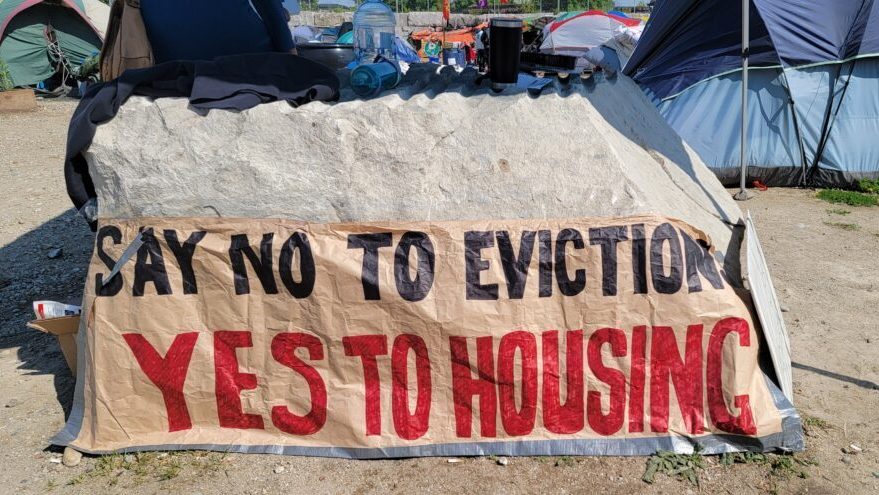 Photo of sign taken at 100 Victoria St. encampment. (Courtesy of Waterloo Region Community Legal Services.)
The Region of Waterloo will have some work to do if it hopes to lawfully clear the homeless encampment at 100 Victoria St., in Kitchener.
Ontario Superior Court Justice Michael Gibson, on Thursday, ruled the region’s site-specific bylaw and its amendments violated the charter rights of the residents, and therefore could not be enforced. The ruling comes about a month after court proceedings concluded with Justice Gibson reserving his decision to allow him time to fully consider the case.
The region has had its sights on the parcel of land for several years. It will be used to store equipment and supplies during the construction of the Kitchener Central Transit Hub at King and Victoria.
Construction is supposed to begin later this year.
The 88-page ruling detailed the reasoning behind Justice Gibson’s decision.
 Concept designs of the Kitchener Central Transit Hub. (Region of Waterloo)
It boiled down to the fact that there simply isn’t adequate shelter space to accommodate the residents. That, coupled with bylaws that prevent camping on regional property, once evicted, some of the residents would have nowhere to go.
Ashley Schuitema, executive director of Waterloo Region Community Legal Services, told 570 NewsRadio this decision sets a new precedent.
“The judge found that it’s time to recognize homelessness as an analogous, charter-protected ground under Section 15. So, that means the governments are not allowed to discriminate against people because of their status of experiencing homelessness.”
Schuitema said really, this ruling shouldn’t have come as a surprise to the region.
“This is the third time the courts have told them what they need to do. I hope that the region will actually follow the advice of the courts and come up with a solution that’s human rights-based and respects the rights of the encampment residents.”
In 2023, Justice Michael Valente also ruled the bylaw unconstitutional.
Schuitema said while the ruling is welcome news for the residents, giving them some peace of mind for the time being, the region isn’t without options.
“The judge ordered the region can clear this property and can move forward with the construction of the transit hub as they want, as they intended, but there are things they need to do first,” said Schuitema.
“In order to be able to do that, they need to establish either a safe tenting protocol or they need to provide an alternative site for an encampment,” she added.
The cities of London and Thunder Bay have both established similar protocols. Judge Gibson’s ruling suggested the region take inspiration from those communities.
 The encampment located at 100 Victoria St. is one of the largest in the region. (Josh Piercy/570 NewsRadio)
But the ruling went on to say that once an alternative site or protocol is established, the municipality could request a return before the courts. And it would be Justice Gibson on the proceedings.
Ford calls encampment ruling ‘cockamamie’
On Friday, Ontario Premier Doug Ford was asked about the ruling. He said he was on the phone late last night with Regional Chair, Karen Redman and “a couple of mayors up there.”
“He comes out with this cockamamie idea that they’re gonna hold up transit, so for what, 30 people, they’re going to hold up millions and millions of riders, communities and everything,” said Ford at an unrelated press conference in Sault Ste. Marie.
“The judge is saying that we got to hold up projects and everything,” he said. “I wish I could get that guy’s address, I’ll send 50 encampments in his backyard and see how he likes it.”
A statement to 570 NewsRadio from the Region of Waterloo reads:
“The Region has received the decision of the Ontario Superior Court regarding the 100 Victoria Street encampment. We are reviewing Justice Gibson’s ruling and will determine next steps in the coming days. We remain committed to providing outreach and supports to those experiencing homelessness across the region.”