Call Price vs: Stock Price: Understanding the Link update - FasterCapital

Option Price vs. Stock Price - AskMen
Intrinsic Value vs. Time Value: The intrinsic value is the difference between the underlying stock price and the exercise price. The time value is a premium allocated to the value of the option for its duration period. The total value of the option is the sum of the intrinsic value and the time value. Once it expires, the value of the option is only the intrinsic value.
- At-the-Money: Term used to explain that the option is neutral. This means the exercise price is equal to the underlying stock price for a call option, or that the exercise price is equal to the underlying stock price for a put option.
- In-the-Money: Term used to explain that the option is profitable. This means the exercise price is lower than the underlying stock price for a call option, or that the exercise price is higher than the underlying stock price for a put option.
- Out-of-the-Money: Term used to explain that the option is not profitable. This means the exercise price is higher than the underlying stock price for a call option, or that the exercise price is lower than the underlying stock price for a put option.

An option's price is the result of properties that belong to both the underlying stock and the terms set out in the option. The major factors are: - The market price of the underlying stock: If the stock price is far below or far above the striking price, the other factors have little influence. On expiration day, only the stock price and the striking price of the option determine the option's value. At this time, an option is worth only its intrinsic value.
- Striking Price of the Option itself: The closer the strike price is to the underlying stock price, the higher the value of the option, because your chances of making money are greater than if the strike price is far from the underlying price.
- Time remaining until the expiration of the option: The more time remaining until maturity, the higher the value of the option, because you have a longer period of time for the option to be in-the-money.
- Volatility of the underlying stock: High volatility means the stock's price fluctuates in high movements. More volatile underlying stocks have higher option prices because the large fluctuations increase the chance of the option being in-the-money.
- The current risk-free interest rate (90 Treasury bills): Higher interest rates imply slightly higher option premiums, while lower rates imply lower premiums.
I hope that I clarified options a little better for the average investor. As you can see, options are not that complicated. Anyone with half a brain can use options to increase the value of their portfolio. Now all you have to do is read up a little more on options, and soon you'll be buying your first Ferrari.
特別讚同“一切都是有原因的”,期權定價很公平,貴有貴
的原因
還有一種情況是周五快收盤時,如果OTM期權還沒歸零,多半是盤後要有大動作,大漲
或大跌,可以根據FA或news提前做一些準備。我在crwd和pltr宣布要加入sp 500那2個
周五遇到過。
期權的價格貴不貴,不能隻看絕對值,而是要看iv和iv percentile(或iv rank),更講究
一點還要關注iv skew。 所以我自己做了個iv percentile排行榜小工具 (
在 http://iv.ipie.me ),每個周末掃一眼iv特別高的或異常的,為下周找機會或避坑。
 Sym  HV20  HV50 HV100    CurIV  Pcntile   IV:HV     Close    Date
 ATOM    96   114   102   164.98      100    1.72     14.27   12-27
 NPWR    65    87    72   149.88      100    2.31     10.33   12-27
 SLDP   128   108   103    191.6      100     1.5      2.13   12-27
  ZWS    21    22    25    92.17      100    4.39     37.71   12-27
 QTUM    51    37    31    45.91       99     0.9     83.51   12-27
 AXSM    34    38    37   119.92       98    3.53      86.7   12-27
 MITK    62    50    65    83.45       98    1.35     11.35   12-27
 MRNA    54    60    56    80.14       97    1.48     40.13   12-27
 NVTS   153   129   113   124.72       97    0.82      4.03   12-27
 RGTI   288   241   195   211.51       97    0.73     17.08   12-27
  WBA    73    58    57    73.27       97       1      9.62   12-27
 ACHR   166   138   109   127.28       96    0.77     11.18   12-27
 ANGO    83    66    61     86.5       96    1.04      8.91   12-27
  DAL    30    33    34    50.12       96    1.67     61.26   12-27
  FHI    16    19    18    85.85       96    5.37     41.42   12-27
 IONQ   160   145   121   131.64       96    0.82     45.48   12-27
  RUM   242   171   127   138.52       96    0.57     15.23   12-27
 QBTS   269   227   186   211.02       95    0.78      9.91   12-27
 VUZI   120   170   139   152.75       95    1.27      5.25   12-27
 AEHR   110    94    87   106.21       94    0.97     16.51   12-27
 MBLY    66    76    76    91.34       94    1.38     20.03   12-27
 AISP   161   152   132   173.59       93    1.08      5.61   12-27
 TSAT    81    73    79   100.24       93    1.24     16.37   12-27
 RXRX   136   104    89   109.11       92     0.8      7.39   12-27
  UAL    40    39    43    53.41       92    1.34     99.65   12-27
  UNH    43    35    30    30.33       92    0.71    509.99   12-27
不客氣。希望大家25年都能更好跟市場相處:)。榜單每周六早上更新
因為我的數據也是來源於網絡,它就是每周更新的。
如果要每日更新的,在https://www.barchart.com/options/iv-rank-percentile/stocks?viewName=main&orderBy=optionsImpliedVolatilityRank1y&orderDir=desc 上有,
不過它的full list是收費的。
" "
"
如果margin要求太高,可以賣put spread
spread的資金利用率高很多。
例如賣下周五的410-390的put spread, 消耗margin 2000,credit 8左右。 可以用賣一個
410P的margin賣多組這樣的put spreads (不過還是不要一下子賣太多,不要讓可能的max
loss成為負擔)。
再來看資金利用率, 如果下周五收410以上,spread 無價值過期, 相當於單周收益率 4%
(=800/2000)。
如果下跌到390以下, max loss是1200 (當然會有後手,不會讓max loss這麽直接發生,
最簡單的就是在合適時機往後roll, 爭取net even or small debit/credit,時間換空間),
不過這時你的CC就救回來了 :)。
最近tsla IV 比較高, iv rank和iv percentile都在高位,賣有保護的期權其實還是比較劃算的,
相應的賣naked就會很危險。 我現在倉位就有不少短期的short call和short put spreads,
再加一些長期leap calls。這樣漲跌都高興。
牛市看漲價差 (spread):策略和優勢 | Skilling
牛市看漲價差 (spread):策略和優勢
 Skilling Writers Team

- 教育
- 交易


在本文中,我們將解釋什麽是牛市看漲價差 (spread),提供詳細的示例,討論其優點
和缺點,並回答一些常見問題。
什麽是牛市看漲價差 (spread)?
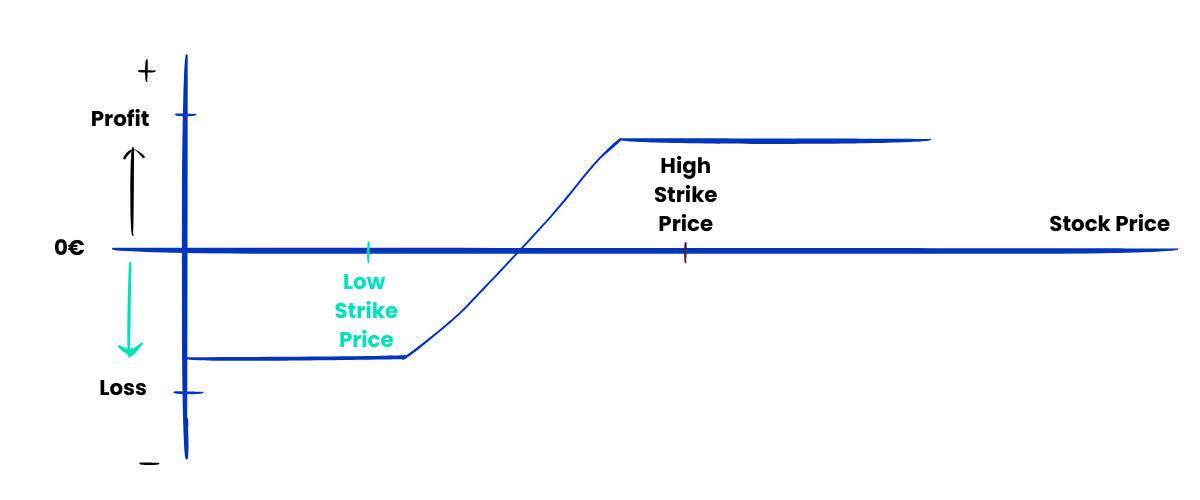
牛市看漲價差 (spread)是一種期權交易策略,旨在從標的資產價格適度上漲中利潤。
該策略涉及以較低的執行價格購買 看漲期權 ,同時以較高的執行價格出售另一份到
期日相同的看漲期權。主要目標是減少支付的淨溢價,從而降低交易成本。
牛市價差 (spread)限製了潛在利潤和潛在損失,最大利潤為執行價格減去淨支付的
權利金後的差額,最大損失則限製在淨支付的權利金以內。
牛市看漲價差 (spread)示例
為了更好地理解牛市看漲價差 (spread)的工作原理,讓我們考慮一個例子:
假設交易者認為 XYZ 公司的股票(目前交易價為 50 美元)近期將升至 60 美元。
交易者可以按如下方式實施牛市看漲價差 (spread):
- 購買執行價格為 50 美元的看漲期權,每股支付 5 美元的溢價。
- 出售看漲期權,執行價格為 60 美元,每股溢價 2 美元。
支付的淨溢價為每股 3 美元(支付 5 美元 - 收到 2 美元)。由於每個期權合約通常
代表 100 股,因此支付的淨溢價總額為 300 美元。
場景:
- 股票價格上漲至 60 美元以上: 兩種期權均被行使,交易者獲得最大利
- 潤。最大利潤為 700 美元 [(執行價差 10 美元 x 100 股)- 支付的淨
- 溢價 300 美元]。
- 股價保持在 50 美元至 60 美元之間: 買入的看漲期權升值,而賣出的
- 看漲期權抵消部分收益。如果股價超過 53 美元,利潤將低於最大值但
- 大於零。
- 股票價格仍低於 50 美元: 兩種期權均到期作廢,交易者損失已支付
- 的淨溢價,即 300 美元。
牛市價差 (spread)的優缺點
了解牛市看漲價差 (spread)的優點和局限性可以幫助交易者決定何時使用該策略。
| 優點 | 缺點 |
|---|---|
| 有限風險: 潛在損失僅限於預先知道的淨支付保費。 |
有限利潤: 最高利潤上限為執 行價格減去支付的淨溢價之間 的差額。 |
| 成本更低: 與購買單個看漲期權相比,賣出看漲期權可降低交易的總成本。 |
複雜性: 比簡單地買入或賣 出單一期權更複雜。 |
| 從適度上漲中利潤: 允許交易者從標的資產價格適度上漲中利潤。 |
保證金要求: 由於看漲期權 的風險,這可能需要大量的保證金。 |
概括
對於預期標的資產價格溫和上漲的交易者來說,牛市看漲價差 (spread)是一種有用的策略。通過了
解如何實施和管理這一策略,交易者可以限製風險,同時從市場上漲中獲利。將牛市看漲
價差與其他期權策略例如熊市看漲價差進行比較,有助於交易者根據其市場前景選擇最合
適的策略。
常見問題解答
1. 什麽是牛市看漲價差 (spread)?
牛市看漲價差 (spread)是一種期權策略,涉及以較低的執行價格買入看漲期權並以較高
的執行價格賣出另一個看漲期權,以從標的資產價格適度上漲中利潤。
2. 牛市看漲價差 (spread)如何運作?
該策略要求支付淨溢價來建立交易,最大利潤為執行價格減去支付的淨溢價之間的差額。
最大損失僅限於支付的淨溢價。
3. 牛市價差 (spread)的優點和缺點是什麽?
優點包括風險有限、與購買單個看漲期權相比成本較低,以及能夠從適度的價格上漲中
利潤。缺點包括利潤有限、複雜性和潛在的保證金要求。
4. 為何要用Skilling交易期權?
Skilling 中的 交易期權 提供高級工具、低費用和教育資源,以增強您的交易策略。了解
有關使用 Skilling 進行 CFD 交易的更多信息,以多樣化您的交易機會。例如,了解 鉑
金價格 可以幫助您在交易 商品 時做出戰略交易決策。但是,過去的表現並不代表未來
的結果,交易也存在風險。
"
Today's Stock Option Quotes and Volatility - Barchart.com

To buy a call option on a uptrend stock, you can:
- Choose a strike price and expiration date.
- Pay more for an in-the-money (ITM) call option if you want some intrinsic value.
- Buy an out-of-the-money (OTM) option for a cheaper price if you are feeling extra bullish12.
Buy stocks which are already in an uptrend to improve your performance.
• 炒股都炒了好多年了,仍然覺得不得力。 覺得要在買底低賣頂高上下功夫才能更上一層樓。
無論炒股炒匯炒期權都是這樣 - GuestNewBoy - ♂ 
 (0 bytes) (677 reads) 01/05/2025 09:52:47
• 很多都是無用功, 早點明白早點換賽道 就對了 - 大頭山 - ♂ (0 bytes) (13 reads) 01/05/2025 10:05:35
• 我也覺得自己屬於那95%的類,抄底逃頂誰都想,問題是隻有少於5%的人能做到。 - 與牛熊共舞 - ♂ (0 bytes) (3 reads) 01/05/2025 10:18:03
• 辦法很簡單,集中精力和財力對著一隻實力股,比如:VST,APP,GOOG,FNGU等
分期分批抄底,然後分期分批地逃頂。 - 京城老炮1950 - ♀ (0 bytes) (1 reads) 01/05/2025 12:03:47
本周終於看到的價值貼。級別,記住自己操作的級別... - 此惡要吾持久 - ♂ (0 bytes) (29 reads) 01/05/2025 19:35:22
所謂操作級別,實質上包含著二層含義,一是時間周期,二是走勢空間。 時間同期是指操作的時間,如1分、5分、30、一小時、四小時、日線、周線等等;走勢空間是指該時間周期行情走勢的一筆。 如30分周期的一筆走勢就是該周期的操作級別。 明白了操作級別的概念後,在實戰交易過程中,如果你是做30分操作級別的,那麽出現五分級別的回調,你是不應該輕易平倉的,而是等待走完30分鍾一筆,即五分走勢類型出現背馳,才會平倉。 假如五分鍾走勢類型沒有背馳,那麽,表明30分一筆沒有結束,等待五分鍾最終出現背馳終結。 如果你是做五分鍾級別的,那麽當五分鍾一筆結束就應該平倉了結。
生於安逸,死於憂患
憂愁的人早死,快樂的人晚死。因此“生於安逸,死於憂患”。不能在此刻快樂的人,
也未必能在未來快樂。能在此刻快樂的人,反而可能會影響自己和客觀世界,有利於在
將來快樂。何況有沒有將來,有多長,誰也說不準。因此能夠在目前快樂是邏輯上最完
美的選擇。
但這不就與古語“生於憂患,死於安樂”矛盾嗎?究竟誰是對的?
其實並不矛盾。與世界打交道用正邏輯。根據客觀世界的規律,有可能要對一些事情未雨
綢繆,提前防備。如果忽略了,將被自然規律懲罰。例如忽略即將倒塌的房屋,漏水的
船,患病的風險,等等。不憂患,毋寧死。
而與自己打交道則采用負邏輯,或任何自定義的邏輯。能夠在任何困難的條件下享受快
樂,是超凡的力量,強者的邏輯。前提是這種享受並不違背客觀世界的規律。
