風蕭蕭_Frank
以文會友



內部人士稱,HS2注定會失敗——因為“英國國內存在問題”。
HS2 was doomed to be a mess, say insiders - because of a 'problem in this country'
https://www.bbc.com/news/articles/cx2l8kq52y8o
凱特·蘭布爾(Kate Lamble)個人簡介 凱特·蘭布爾,《脫軌:HS2的故事》節目主持人
“我現在無法回答這些問題,”彼得·亨迪勳爵說道。自修建一條沿著英格蘭西海岸延伸的高速鐵路的構想首次公布以來,已經過去了15年多。我向鐵路部長詢問,這條鐵路何時才能完工?以及至關重要的,它的成本是多少?
但他明確表示,沒有人知道英國這項最大的基礎設施項目的最終費用會是多少。
我問道,政府在如此巨大的不確定性下仍然堅持修建這條鐵路,這是否讓他感到擔憂? “哦,是啊,我們對此非常不滿。當然你們會這麽想……”
公共賬目委員會將高速鐵路二號線(HS2)描述為大型項目管理失敗的典型案例。該項目目前預算超支數百億英鎊,工期也落後了近十年。
由交通部成立的HS2有限公司承認,其未能控製成本。
有報道稱,目前縮短後的伯明翰至倫敦線路可能耗資810億英鎊。考慮到通貨膨脹因素,這意味著至少要花費1000億英鎊,但最終隻建成了135英裏的鐵路。
現在,許多相關人士——從公務員、部長、公司內部人士到HS2的最初設計者——都向我講述了事情究竟出了多大的差錯。
當然,該項目飽受管理不善、盲目樂觀以及在處理沿線居民房屋糾紛方麵的失敗之苦。
但一位近十年來一直質疑HS2項目的特許測量師提出了另一點。他認為,這遠非僅僅是決策失誤造成的,背後可能還有更深層次的原因。
這位測量師說:“在這個國家,任何建設項目的成本一直都是個根本性的問題,因為我們生活在一個麵積小、人口眾多、擁有大量房產的民主島嶼上。”
這就引出了一個問題:HS2項目是否注定會因為英國的地理環境和政治體製而遭遇重大困難?如果真是如此,HS2項目的未來又將何去何從?
速度需求帶來的問題
HS2項目最初的構想是為了提升西海岸幹線的運力;這條連接倫敦和格拉斯哥的鐵路線長達700英裏,錯綜複雜,是由維多利亞時代的幾位企業家各自為政、拚湊而成。
高速鐵路二號線(HS2)的早期工程師們提出了一個未來願景,旨在使HS2能夠運行世界上速度最快、班次最頻繁的列車。
與國際上的其他方案相比,該計劃令人印象深刻:在法國,高速列車的時速為200英裏;而HS2的設計目標是能夠承受250英裏/小時的速度。在日本,東京和大阪之間每小時有12趟列車運行;而HS2在同一時間內能夠以每小時18趟的速度往返於倫敦尤斯頓車站。這意味著每三分鍾就有一趟列車。
HS2有限公司 HS2列車效果圖 HS2的設計目標是能夠承受250英裏/小時的速度
然而,為了實現這一目標,鐵路必須盡可能地筆直。在村莊、林地或運河附近減速轉彎是不可行的。更快的列車也需要更複雜的道岔和更堅固的板式軌道。
但政府審查報告顯示,這一雄心壯誌產生了潛移默化的文化影響——建造最佳線路的願景“推動了項目規模的擴大,並大幅增加了成本”。
“這也使項目偏離了最初提高網絡容量的前提。”
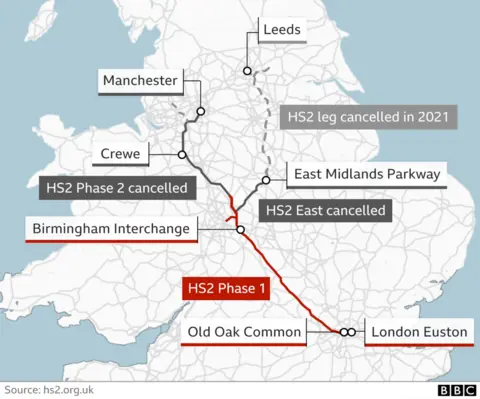
圖示:HS2鐵路線路及已取消路段
安德魯·米尼是谘詢公司Oxera的交通運輸主管,他曾為2020年向政府提交的HS2項目奧克維審查報告提供谘詢。
安德魯指出,當時並未進行任何分析,來比較如果列車以歐洲之星在英格蘭南部提供的較慢速度運行,將會節省多少成本。
“我認為應該對這些方麵進行非常詳細的評估,並就這些權衡取舍展開公開討論。”
來自法國的警告
但與HS2的最初設計者交談後發現,這一宏偉目標背後有著清晰的戰略。
HS2的首任技術總監安德魯·麥克諾頓回憶起他參加的一次會議…… 2009年,法國鐵路運營商主席紀堯姆·佩皮發出警告。
他的警告是:“不要犯建造過時鐵路的錯誤。”隨著標準的不斷發展,法國高速列車的速度已經遠遠超過了現有軌道的承載能力。
既然如此,何必費力建造一條在竣工之時就已經過時的鐵路呢?
麥克諾頓先生決定為英國的鐵路項目選擇一種能夠適應未來更高速度列車的方案,以確保其麵向未來。
他明白這將使成本增加約10%,但他相信這是值得的。
“你們讓我們損失慘重。”
又一億英鎊
當政客們著手爭取批準高鐵二號線快速直達時,他們又遇到了另一個障礙。
這條線路的大部分路段都穿過農村選區,這些選區大多由保守黨議員代表。這些議員明確告訴時任首相戴維·卡梅倫,他們希望該項目獲得批準,但需要進行認真的談判和妥協。
為了促成此事,部長們選擇了一種不同尋常的方案:一項混合法案,這是自1992年以來頒布的第三項此類法案。
這類法案允許議員們投票決定某項基礎設施項目是否應該啟動,但同時也賦予了直接受影響的人們反對該項目並要求修改細節的權利。
路透社/托比·梅爾維爾 一名行人走過HS2高速鐵路的宣傳廣告牌。HS2高鐵項目必須途經保守黨控製的鄉村選區,許多議員告訴戴維·卡梅倫,他們隻有在做出重大妥協的情況下才會支持該項目。
各地方議會、企業和個人在政府委員會麵前陳述訴求,要求修建隔音屏障,並為失去綠地的社區提供經濟補償。最後一刻的談判往往在委員會外的走廊進行。
這種做法使得法案具有一定的靈活性,但批評人士認為,法案也過於複雜且成本高昂。
傑弗裏·克利夫頓·布朗爵士是保守黨議員,也是負責聽取請願書的委員會成員之一。“我清楚地記得,一位交通大臣在下午的會議結束後說:‘幹得好,傑弗裏,你今天下午又讓我們損失了幾億英鎊。’”
西卡莫爾峽穀那棵樹的命運揭示了一個更深層次的問題
特朗普的關稅政策正給英國僅存的鋼鐵城鎮帶來巨大壓力
非法香煙的銷售表明英國商業街存在更深層次的問題
一份電子表格顯示,由此產生了數千項額外支出——其中包括:為一座教堂安裝隔熱層,撥款25萬英鎊;新建一座公園,撥款50萬英鎊(此外還為社區基金額外撥款1000萬英鎊);以及為一座列入保護名錄的飲水噴泉翻新,撥款1萬英鎊。
巨額成本的增加是為了避免或彌補個人的不便。
PA媒體 首條已完工的高鐵隧道一英裏長路段的內部照片 隧道和隔音屏障是高鐵二號線(HS2)中最昂貴的部分
這些措施中最昂貴的部分之一就是隧道。經過公眾谘詢和混合法案的製定,如今的設計方案中包含了大量的護欄——以及隔音屏障和地下軌道鋪設路段——以至於從倫敦到伯明翰的49分鍾旅程中,乘客隻有9分鍾的時間可以欣賞到鄉村景色。
由交通部成立的HS2有限公司承認未能控製總體成本,並表示交付成果並未達到其所稱的早期不切實際的預期。
英國的規劃體係是否應該為此負責?
然而,談判和妥協最終奏效。2013年10月,倫敦至伯明翰HS2第一段的最終投票以超過350票的優勢獲得通過。該法案得到了各主要政黨的支持,部長們也意識到HS2的未來一片光明。
“我當時被告知,(這項法案)基本上算是批準了規劃,”帕特裏克·麥克勞克林說道,他曾在2012年至2016年擔任交通大臣。
“當然,後來證明並非如此。”
PA Media 一名HS2工作人員站在老橡樹公地車站的隧道前。議員們在保守黨、工黨和自由民主黨議員的支持下,批準了HS2的第一階段工程。
實際上,這項混合法案隻提供了“推定規劃許可”——HS2表示,他們此後還需要從地方議會和其他機構獲得8000多項許可。
而且,許可並非總是能夠獲得批準。
以白金漢郡的杜賓斯巷為例。今年4月,當地議會審議了HS2的規劃許可申請,該申請旨在升級一條通往附近田地的農場小路。這項工程是為了建造一個地下監測箱,用於監測地下水位,而這又是附近山丘隧道挖掘的必要條件。 HS2警告稱,如果沒有這項措施,延誤可能會造成數千萬英鎊的損失。
但由於施工期間道路交通量將暫時增加,超過800名當地居民簽署了一份反對該工程的請願書:在12周的施工期間,將有60輛貨車需要抵達工地。
此外,規劃許可申請也被駁回——這又增加了一項潛在的成本。
NurPhoto via Getty Images 愛德華·利斯特(Edward Lister)曾任倫敦副市長,後擔任鮑裏斯·約翰遜首相的幕僚長,他認為規劃體係存在問題。
愛德華·利斯特於2011年至2016年擔任倫敦副市長,後擔任首相鮑裏斯·約翰遜的幕僚長,他認為英國的規劃體係存在缺陷。
“必須打破這種僵局,”他辯稱。“如果這些是你們的大型項目,那麽它們就必須獲得批準。”
他希望改革司法審查製度,使阻撓此類項目變得更加困難。
就像HS2項目一樣,一路走來,官司纏身。
亟待解決的重大問題
這一切都提醒我們,在英國進行建設一直以來都麵臨著其獨特的挑戰。例如,法國擁有超過1000英裏的高速鐵路,但它也擁有更大的國土麵積,可以穿越更多開闊的鄉村地區。
與此同時,中國擁有近30000英裏的高速鐵路,但它也擁有集中化的權力體係和更少的抗議權利。
這不禁讓人想起那位特許測量師的觀察:“我們生活在一個人口眾多、擁有產權的小型民主島嶼上。”
這本身就帶來了挑戰——這意味著,如果英國想要建設“大型”項目——無論是核電站、水庫還是鐵路,我們作為一個社會都需要麵對一些重大問題。我們究竟在多大程度上願意為了國家利益而讓個人生活受到影響?我們應該如何評估長達一個世紀的基礎設施投資?這些問題決定著我們製度的運作方式。
“我們現有的流程太陳舊、成本太高、太複雜了。肯定有更快捷的方法,”這位特許測量師說道。
蓋蒂圖片社 戴著白帽子、穿著橙色夾克的工人們在HS2高鐵工地旁工作。安德魯·麥克諾頓樂觀地表示:“等它開通的時候……我仍然相信人們會說,‘哦,天哪,我們趕緊把剩下的工程也建完吧。’”
安德魯·米尼認為,一個根本問題在於政客與公眾的溝通方式。
“我們沒有足夠的信心說,‘好了,這就是我們要建的東西,我們趕緊把它建好吧。’”他辯稱,“我們往往會改變主意,迎合民意。”
而對另一些人來說,所有這些關乎存亡的問題都比不上他們認為HS2本身就是一個錯誤的項目。 “你必須選擇正確的項目,”曾擔任鮑裏斯·約翰遜和裏希·蘇納克特別顧問的安德魯·吉利根說道,“而這個項目從一開始就選錯了。”
“解決我們交通危機的辦法是做很多不起眼的小事,比如修建公交專用道、有軌電車係統和新建車站,”他繼續說道,“而不是搞一個實際上隻會惠及全國少數人的大型項目。”
如果未來的政府真的決定采取小規模的方案,那麽同樣需要協商和妥協的根本問題依然存在。如果沒有解決方案,HS2高鐵項目最終隻會淪為又一個被政治現實扼殺的項目。
題圖來源:Christopher Furlong via Getty
完整的十集係列節目《脫軌:HS2的故事》現已在BBC Sounds上線,由Whistledown為BBC Radio 4製作。
BBC InDepth是BBC網站和應用程序上最佳分析的聚集地,提供挑戰固有觀念的全新視角和對時事熱點的深度報道。我們還會展示來自BBC Sounds和iPlayer的引人深思的內容。您可以通過點擊下方按鈕向我們發送您對InDepth版塊的反饋。
HS2 was doomed to be a mess, say insiders - because of a 'problem in this country'
https://www.bbc.com/news/articles/cx2l8kq52y8o
 Kate Lamble Presenter, Derailed: The story of HS2
"I can't answer those questions currently," says Lord Peter Hendy. More than 15 years have passed since the idea to build a high-speed railway up the west coast of England was first announced, and I am asking the rail minister when it will be finished. And, crucially, how much it will cost.
Only he is making it very clear that nobody knows what the final bill for Britain's biggest infrastructure project might be.
Does it concern him that the government remains committed to the railway despite this deep uncertainty? I ask. "Oh yeah, we're dead bothered by that. Of course you would be..."
The Public Accounts Committee describes High Speed 2 (HS2) as a casebook example of how not to run a major project. It is currently tens of billions of pounds over budget and around a decade behind schedule.
HS2 Ltd, the company created by the Department for Transport, accepts it failed to keep costs under control
Reports state that the now-shortened line between Birmingham and London could cost £81bn. Accounting for inflation, that would mean at least £100bn will be spent, but only 135 miles of railway built.
Now, many people involved - from civil servants, ministers and company insiders to HS2's original designers - have told me just how badly things went wrong.
Certainly, the project has suffered from mismanagement, misplaced optimism and failures when dealing with homeowners whose properties were in its path.
But one chartered surveyor, who has been challenging HS2 for almost a decade, brought up another point. One that suggests that - far from this solely being down to poor decision-making - something greater was at play all along.
"There has always been a fundamental problem in this country with the cost of building anything," the surveyor says, "because we live on a small, highly populated, property-owning, democratic island."
Which begs the question, was HS2 predestined to encounter major problems simply on the basis of the UK's geography and political system? And if that is the case, where should HS2 go from here?
Problems with the need for speed
HS2 was initially conceived as a way to increase capacity on the West Coast Mainline; a tangled 700 miles of track between London and Glasgow, which was built in a patchwork fashion by competing Victorian entrepreneurs.
High Speed 2's early engineers proposed a vision of the future, making HS2 capable of running the fastest, most frequent trains in the world.
Sized up alongside the international alternatives, the plan was impressive: in France, high-speed trains run at 200 miles per hour; HS2 was to be built to withstand 250mph. In Japan, 12 trains run between Tokyo and Osaka every hour; HS2 would be capable of running 18 trains an hour going in and out of London Euston in that time. That's one every three minutes.
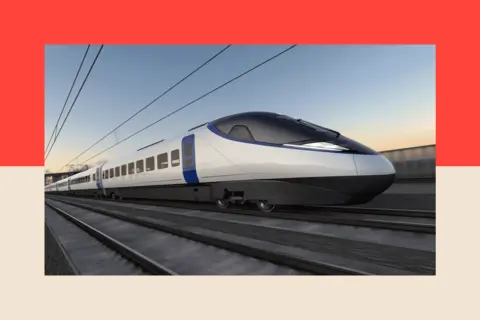 HS2 was to be built to withstand speeds of 250mph
To have any chance of doing this, however, the railway had to be as straight as possible. Slowing down to take bends around villages, woodland or canals wasn't an option. Faster trains also required more sophisticated junctions, and stronger slab track.
But government reviews now suggest this ambition had an insidious cultural impact - and that the vision to build the best possible line is what "drove the scope and dramatically increased cost.
"It also took the project away from the initial premise of increasing network capacity."
Andrew Meaney is head of transport at the consultancy Oxera and advised the Oakervee review of HS2 that reported to government in 2020.
Andrew suggests no analysis was done to set out comparisons of what the savings would be if trains ran at the slower speeds of Eurostar services in the south of England.
"I think those sorts of things should have been assessed in quite a lot of detail and a public conversation had about those trade-offs."
A warning from the French
But talking to HS2's original designers, there was a clear strategy behind this vaulting ambition.
Andrew McNaughton, HS2's first technical director, remembers being at a conference in 2009 and hearing the chair of the French railway operator, Guillaume Pepy, deliver a warning.
That is: "don't make the mistake of building yesterday's railway", with standards evolving, French high-speed trains could now go much faster than their tracks would allow.
Why bother building something that would already be out of date at the moment of completion?
Mr McNaughton decided to future-proof the UK work by selecting an option that appeared capable of handling faster trains further into the future.
He understood that this would add roughly 10% to costs - and believed it would be worth it.
'You've cost us another hundred million'
As politicians set about trying to get approval to make HS2 run straight and fast, they came across another obstacle.
Much of the route cut through rural constituencies, represented mostly by Conservative MPs, who made it clear to then-Prime Minister David Cameron that their approval for the project would require serious negotiation and compromise.
Ministers picked something unusual to make it happen: a hybrid bill, only the third of its kind enacted since 1992.
These allow MPs to vote on whether a piece of infrastructure should go ahead, but those directly affected are given the right to petition against it and ask for details to be changed.
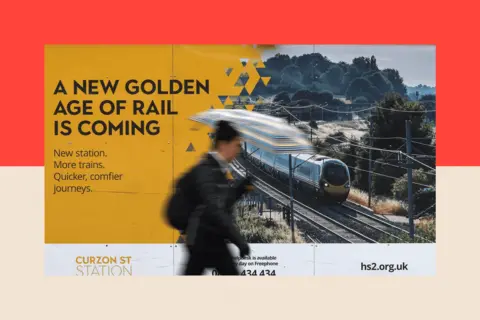 HS2 had to run through mostly Conservative rural constituencies, where many MPs told David Cameron they'd only support it if major compromises were made
Councils, businesses and individuals made their case in front of a government committee asking for everything from noise barriers to financial compensation for communities losing green space. Last-minute negotiations often took place in the corridors outside.
The approach meant the bill was flexible - but critics have argued it was also needlessly complex and expensive.
Sir Geoffrey Clifton Brown was a Conservative MP and was one of the committee members who heard out petitions. "I remember very clearly one of the Secretaries of State for Transport, after an afternoon session, say, well done, Geoffrey, you've just cost us another couple of hundred million this afternoon."
A spreadsheet shows the thousands of assurances which were added as a result - among them, £250,000 to insulate a church, £500,000 for a new park (on top of an extra £10m for a community fund), as well as £10,000 to renovate a listed drinking fountain.
Vast cost was added in order to avoid or compensate for individual inconvenience.
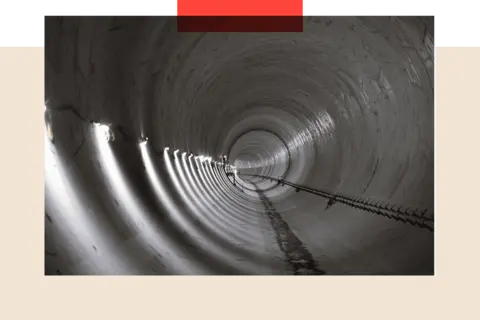 Tunnels and noise barriers were the most expensive parts of HS2
One of the most expensive parts of these measures were the tunnels. Through public consultation and the hybrid bill, the design now features so many of them - along with noise barriers and cuttings, where track is laid below ground level - that on a 49-minute journey from London to Birmingham passengers will only have a view of the countryside for nine.
HS2 Ltd, the company created by the Department for Transport, accepts it failed to keep overall costs under control and says delivery has not matched what it describes as the unrealistic early expectations.
Is the UK planning system to blame?
Negotiation and compromise however, worked. The final vote for the first leg of HS2 between London and Birmingham was won by more than 350 votes in October 2013. The bill was supported across the main parties, and ministers understood HS2 had a clear road ahead.
"I was told that [the bill] basically gave the planning approval," says Patrick McLoughlin, who was the Transport Secretary between 2012 and 2016.
"Of course, it subsequently turns out that that was not the case."
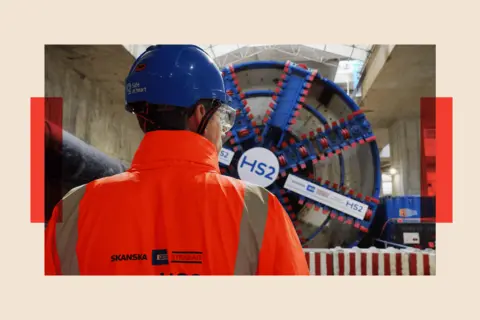 MPs backed the first part of HS2 with cross-bench support from Conservatives, Labour and Lib Dems
In reality, the hybrid bill only offered "deemed planning permission" - HS2 say they have since needed to acquire more than 8,000 further permissions from councils and other agencies.
It hasn't always been given.
Take the case of Dobbins Lane in Buckinghamshire. In April, the local council considered planning permission for HS2 to upgrade a farm track running into a nearby field. This work was needed in order to build an underground box to monitor groundwater levels, which in turn was a requirement of a tunnel being dug through the nearby hills. Without it, HS2 warned, delays could cost tens of millions.
But more than 800 local residents signed a petition against works because of a temporary increase in road traffic: 60 lorries would need to reach the site during a 12 week period.
And the request for planning permission was rejected - another potential cost added.
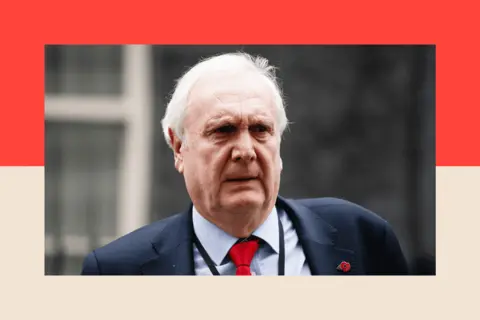 Ed Lister, who worked as Deputy Mayor of London and later as Boris Johnson's chief of staff, says the planning system is to blame
Ed Lister, who was Deputy Mayor of London between 2011 and 2016 and later served as Chief of Staff to Prime Minister Boris Johnson, blames the UK's planning system.
"You've got to break that log-jam," he argues. "If these are your big projects, then they have to go through."
He wants changes to the judicial review system to make it harder to frustrate projects such as HS2 through the courts.
Big questions to be confronted
All of this is a reminder that building in Britain has always had its own unique challenges. France, for example, has more than 1,000 miles of high-speed rail - but it also has a greater land mass, with much more open empty countryside to sweep through.
China, meanwhile, has nearly 30,000 miles of high-speed rail - but it also has a centralised power system and fewer protest rights.
Which brings it back to the chartered surveyor who observed, "We live on a small, highly populated, property-owning, democratic island".
That in itself poses challenges - meaning that if Britain wants to build 'big' - whether it's a nuclear power station, reservoir or railway, we need to confront big questions as a society. How deep is our appetite for individuals to have their lives impacted in the name of national interest? How should we value century long investment in infrastructure? These are the questions that govern how our system works.
"The processes that we've got are so archaic and too costly and too complicated. There's surely got to be a quicker way of doing it," says the chartered surveyor.
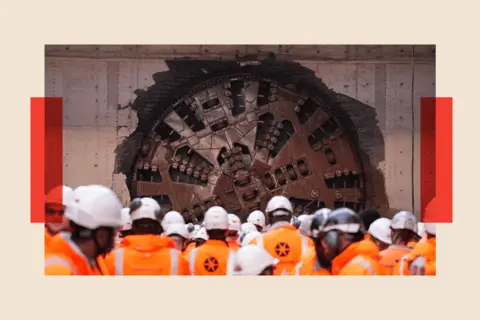 Andrew McNaughton is optimistic: "When it's opened… I still believe that people will go, oh, for heaven's sake, let's just get on with the rest of it"
For Andrew Meaney, a fundamental problem is the way politicians communicate with the public.
"We don't have the confidence to say, right, this is what we're building and let's just go and get on and build it," he argues. "We tend to change our mind and we sort of bend with public opinion."
For others, all these existential questions will always be secondary to the fact they think HS2 was simply the wrong project. "You've got to choose the right projects," argues Andrew Gilligan, who acted as a special advisor to Boris Johnson and Rishi Sunak. "And this was the wrong project right from the start."
"The answer to our transport crisis is lots of boring little things like bus lanes and tram systems and new stations," he continues, "and not one grand mega-project that is in fact only going to touch a handful of people in the country."
If future governments did decide that small was the way forwards, the same fundamental issues of consent and compromise would still be ever present. Without answers HS2 will remain simply the latest project to be undone by political reality.
Top image credit: Christopher Furlong via Getty
The full 10-part series "Derailed: The Story of HS2" available now on BBC Sounds is a Whistledown production for BBC Radio 4.
BBC InDepth is the home on the website and app for the best analysis, with fresh perspectives that challenge assumptions and deep reporting on the biggest issues of the day. And we showcase thought-provoking content from across BBC Sounds and iPlayer too. You can send us your feedback on the InDepth section by clicking on the button below.