



In Mykolaiv, Russian Terror Looms Even When Everything Seems Normal
By: Giorgio Provinciali
Live from Ukraine ????????
Mykolaiv As often happens, the air raid warning sounded while we werefilmingdowntown. Not long afterward, Ukrainian anti-aircraft guns shot down a Russian drone, then another, clearly visible on the horizon, so much so that we could feel the pressure wave generated by its explosion even while inside our car. Soon after, another Russian UAV with high explosive potential fell into a large civilian area in the Voskresenk community, injuring about ten people: a 40-year-old woman and two girls aged 13 and 15 were seriously hurt, and six children sustained moderate injuries. A fourth drone shook the buildings in Mykolaivs regional center once again, similarly to what wedescribedon February 26th.
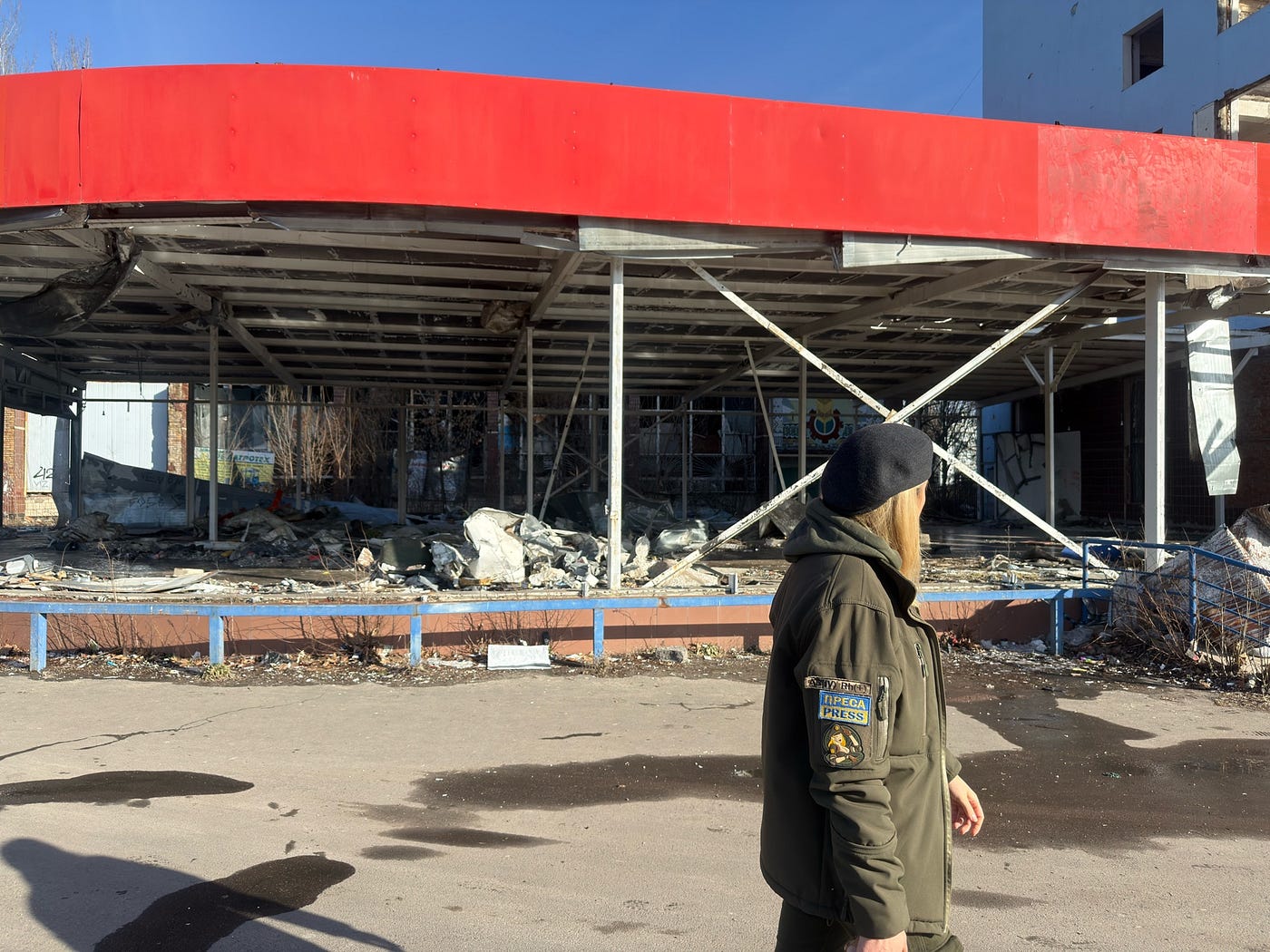
After the alarm ended, the streets of Mykolaiv started to fill up again, carried by a spring breeze tinged with the sharp, chemical, and metallic smell of burning plastic on the sheet metal, kerosene, and gunpowder.
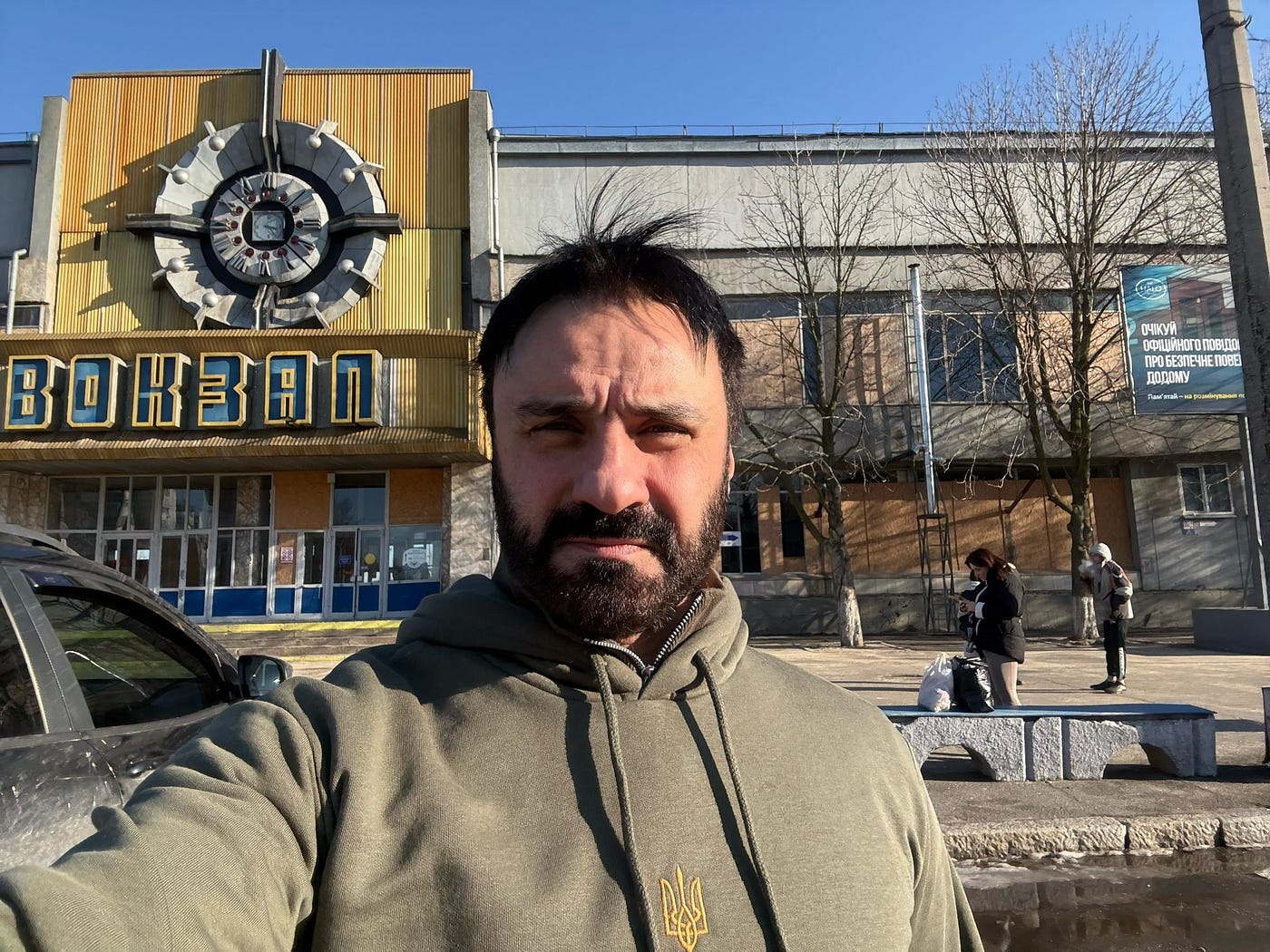
All the squares returned to life, except the one in front of the train station. Another Russian drone aimed directly at an empty train under repair, injuring a worker from Ukrzaliznytsia who had come to maintain it. The night before, the Russians had tried to attack a passenger train on the Dnipro-Kovel route with a drone, and then targeted a locomotive on a train headed for Kherson, shattering the stations windows and temporarily disrupting the line. When we arrived, Ukrainian workers had already replaced the broken windows with large plywood panels, and the monitors displayed the next train to the Ukrainian capital closest to the Russian occupiers, but the station was still empty. Soon after, sirens began wailing again.
Amid a contrast between apparent normalcy and ongoing violence, Russian terror still cast a heavy shadow even as everything seemed to be returning to normal.
This was true all day, not only in Mykolaiv but also in Nikopol, Marhanets, Hrushkivka, Synelnykove, Petropavlivka, and other communities in neighboring Dnipropetrovsk oblast, where Russian drones and aerial bombs appeared nearly 20 times in less than 24 hours.
Setting a new macabre record compared to previous attacks, in the past week alone, the Russian Federation has launched over 3,000 high-explosive drones, approximately 40 other missiles of various types, and used more than 1,450 glide bombs against Ukraine.
In March, Ukrainian defenses downed well over 30,000 Russian long-range missiles, while those deployed on the front numbered over 220,000: an increase of over 20% compared to February.
This representsan unprecedented density of drone-centric firepower.
Deputy Commander of the Ukrainian Air Defense Forces, Pavlo Yelizarov,explainedthatabout half of the enemys long-range unmanned vehicles are destroyed either at the border with Russia or within the Ukrainian territories it illegally occupies. He alsomentionedthat to break through the ППОs defenses, the Russians are changing their tactics:They attack with large groups of Shahed/Geran, launching them like a pack of wild boars.
Clearly, they are stress-testing the lock-on and recharge times of Ukrainian batteries. This is why Yelizarovrevealedthatthe military command is preparing a response on such a large scale that in size alone it will make the Israeli Iron Dome look like a small smudge.
An interesting but technically complex hyperbole, comparing two different systems that each aim to fulfill what the other lacks: the Iron Dome is optimized for short-range ballistic parabolic trajectories, while the Ukrainian system is a multi-layered setup for loitering drones with low radar signatures and guided glide bombs that have very different flight profiles.
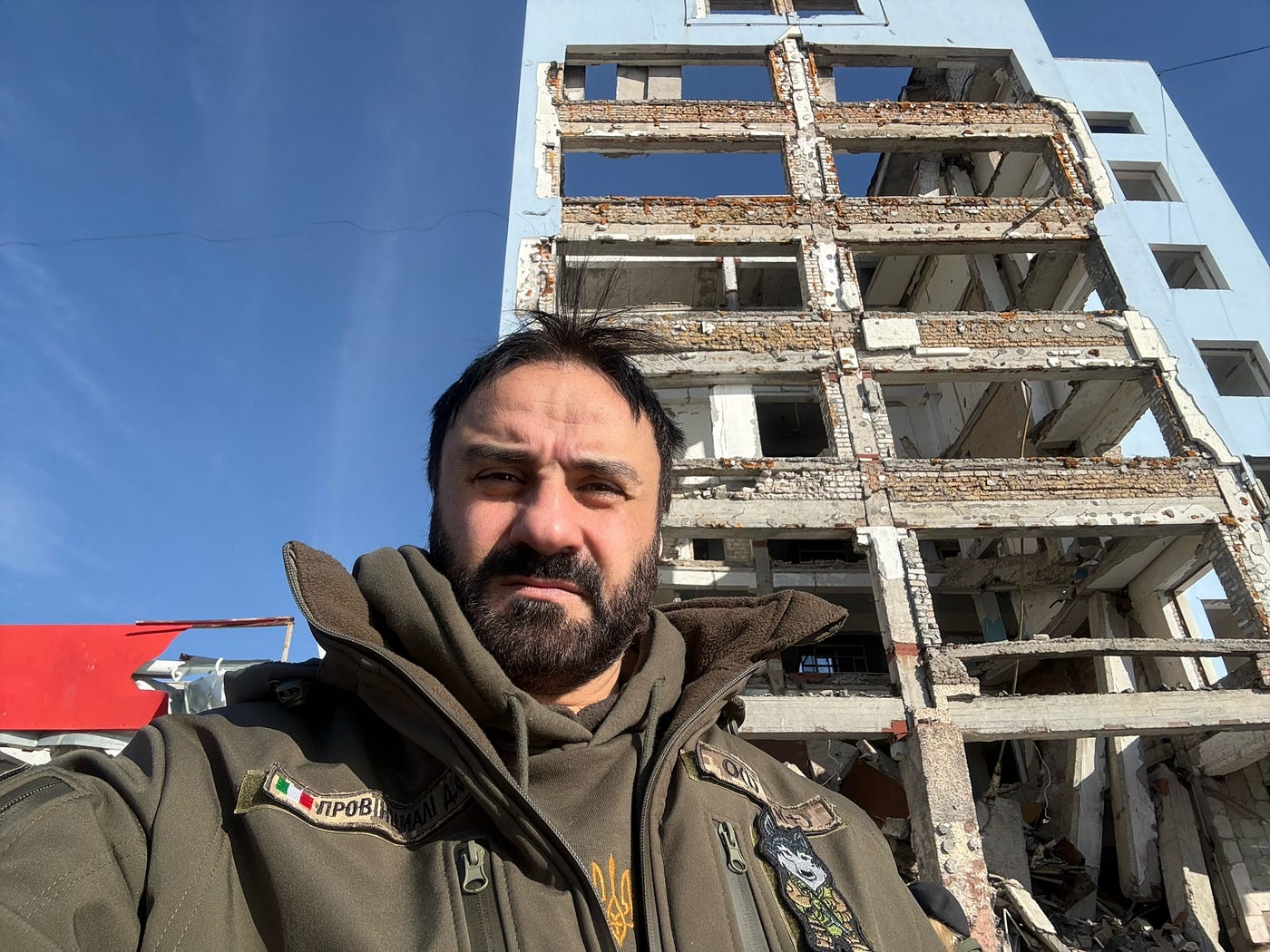
Drone warfare not only destroys things but leaves a psychological scar that extends the impact well beyond the moment of impact.
Windows are replaced, services are reactivated, butthe perception of danger remains.
This persistent pressure on societys organizational structure ultimately pollutes daily life, shaping new times and habits that not everyone can adapt to.
That is why three more women were injured yesterday in Zaporizhzhia during an attack on 41 settlements in the region, where the Russians carpet-bombed them with 780 missiles, including 440 drones.
Four years ago, we would have typically explained that each of those targets like the others mentioned in this article representsa systematic violation of International Humanitarian Law, especially the principle of distinguishing between civilian and military objectives (Article 52 of Additional Protocol I to the Geneva Conventions), with the added factor ofthe intentional psychological harmas a breach of the customary norm that prohibits acts or threats of violence primarily meant to spread terror among civilians.
Since all this is now just a memory, we find it more useful to remind the West of the importance of supporting the defense of those who are still being attacked.

We are doing our best to provide genuine, first-hand reports from zones where almost no press dares to go. This means living constantly in a kill zone. We take the risk, but without your invaluable support, our voices would remain unheard and silent. Without brave people sharing our articles from afar, they would remain unread. Our reports would go unseen, and our efforts would be lost. Theres still a lot of work to do here, as the people around us are also in no better situation.
Were renewing our fundraising campaign and thanking everyone who joins us in helping to restore what Russia is destroying. Moving forward with only a small reimbursement for each article from a brave newspaper that believes in us is extremely challenging. Thats why we are grateful to all the kind people who support us and trust in our mission.
Even a small donation helps.
Well keep you updated on developments.
Thank you all, dear friends ????????
尼古拉耶夫:即使一切看似正常,俄國恐怖仍然籠罩
作者:Giorgio Provinciali
翻譯:旺財球球
烏克蘭前線報道????????
尼古拉耶夫像往常一樣,我們正在市中心拍攝時響起了空襲警報。不久之後,烏克蘭防空火炮擊落了一架俄羅斯無人機,隨後又擊落了另一架,地平線上清晰可見,以致我們即便在車內也能感受到其爆炸產生的衝擊波。緊接著,又有一架具有高爆威力的俄無人機墜落在沃斯克雷森克社區的一型居民區內,造成約十人受傷:一名40歲婦女和兩名分別為13歲與15歲的女孩重傷,另有六名兒童中度受傷。第四架無人機再次震動了尼古拉耶夫地區中心的建築,情況與我們在2月26日所描述的類似。
(圖:Alla與我一同在烏克蘭尼古拉耶夫報道????????版權所有,Giorgio Provinciali)
警報解除後,尼古拉耶夫的街道又逐漸恢複人流,春風裏夾雜著板金上燒融塑料、煤油與火藥混合後的刺鼻的化學與金屬氣味。
所有廣場都恢複了生機,唯獨火車站前的廣場例外。另一架俄無人機直接襲擊了一列正在維修的空置列車,一名前來檢修的烏克蘭鐵路工人因此受傷。前一晚,俄方曾試圖用無人機攻擊第聶伯科威爾線上的一列客車,隨後又攻擊了開往赫爾鬆方向的一列機車,震碎了車站的玻璃並導致線路短暫中斷。我們抵達時,烏克蘭工人已用大片膠合板替換了破碎的窗戶,顯示屏顯示下一班開往最接近俄方占領區域的烏克蘭首都的列車,但車站仍空無一人。不久,警報再次響起。
在表麵回歸常態與持續暴力並存的反差中,俄國的恐怖即便在一切看似恢複正常時,仍投下沉重陰影。
(圖:Alla與我在烏克蘭尼古拉耶夫拍攝了這些影像版權所有,Giorgio Provinciali)
整天都如此,不僅在尼古拉耶夫,還有尼科波爾、馬爾哈涅茨、赫魯什奇夫卡、西內利尼科韋、彼得羅帕夫利夫卡以及鄰近第聶伯羅彼得羅夫斯克州的其他社區,在不到24小時內,俄方無人機與航空炸彈幾乎出現了近20次。
僅過去一周,俄聯邦對烏克蘭投放了逾3000架高爆無人機,約40枚其他類型導彈,並使用了超過1450枚滑翔炸彈,再次刷新死亡紀錄。
在3月,烏克蘭防空擊落了遠超3萬枚俄遠程導彈,而前線部署的導彈總數已逾22萬枚:比二月增長超過20%。
這是一種前所未有的、以無人機為核心的火力密度。
(圖:我與Alla在尼古拉耶夫火車站報道版權所有,Giorgio Provinciali)
烏克蘭防空部隊副司令帕夫洛葉利紮羅夫解釋稱,約一半的敵方遠程無人機要麽在俄邊境被摧毀,要麽在俄方非法占領的烏克蘭領土上被擊落。他還提到,為突破烏克蘭防空係統的防禦,俄方正在改變戰術:他們用成群的沙赫德/格蘭無人機發動攻擊,像一群野豬一樣撲來。顯然,他們在對烏克蘭電池的鎖定與充能時間進行壓力測試。因此,葉利紮羅夫透露軍方正在準備一項規模巨大的反製措施,從規模上看足以使以色列鐵穹顯得微不足道。
這是一種有趣但技術上複雜的誇張類比,將兩種各自試圖彌補對方短板的不同係統進行對比:鐵穹針對短程彈道拋物線軌跡進行了優化,而烏克蘭的多層防禦體係則是麵向低雷達特征的徘徊式無人機與製導滑翔炸彈,它們的飛行特性完全不同。
(圖:我與Alla從被俄聯邦摧毀的尼古拉耶夫市中心一棟民用建築報道版權所有,Giorgio Provinciali)
無人機戰爭不僅摧毀實物,更留下心理創傷,其影響遠超爆炸瞬間。
窗戶可以被更換,服務可以恢複,但危險感依舊存在。
對社會組織結構的持續壓力最終滲透進日常生活,重塑節奏和習慣,但並非人人都能適應。
這也是為什麽昨天在紮波羅熱又有三名婦女受傷,當天俄軍對該地區41個定居點進行了地毯式轟炸,使用了780枚導彈,其中440架為無人機,。
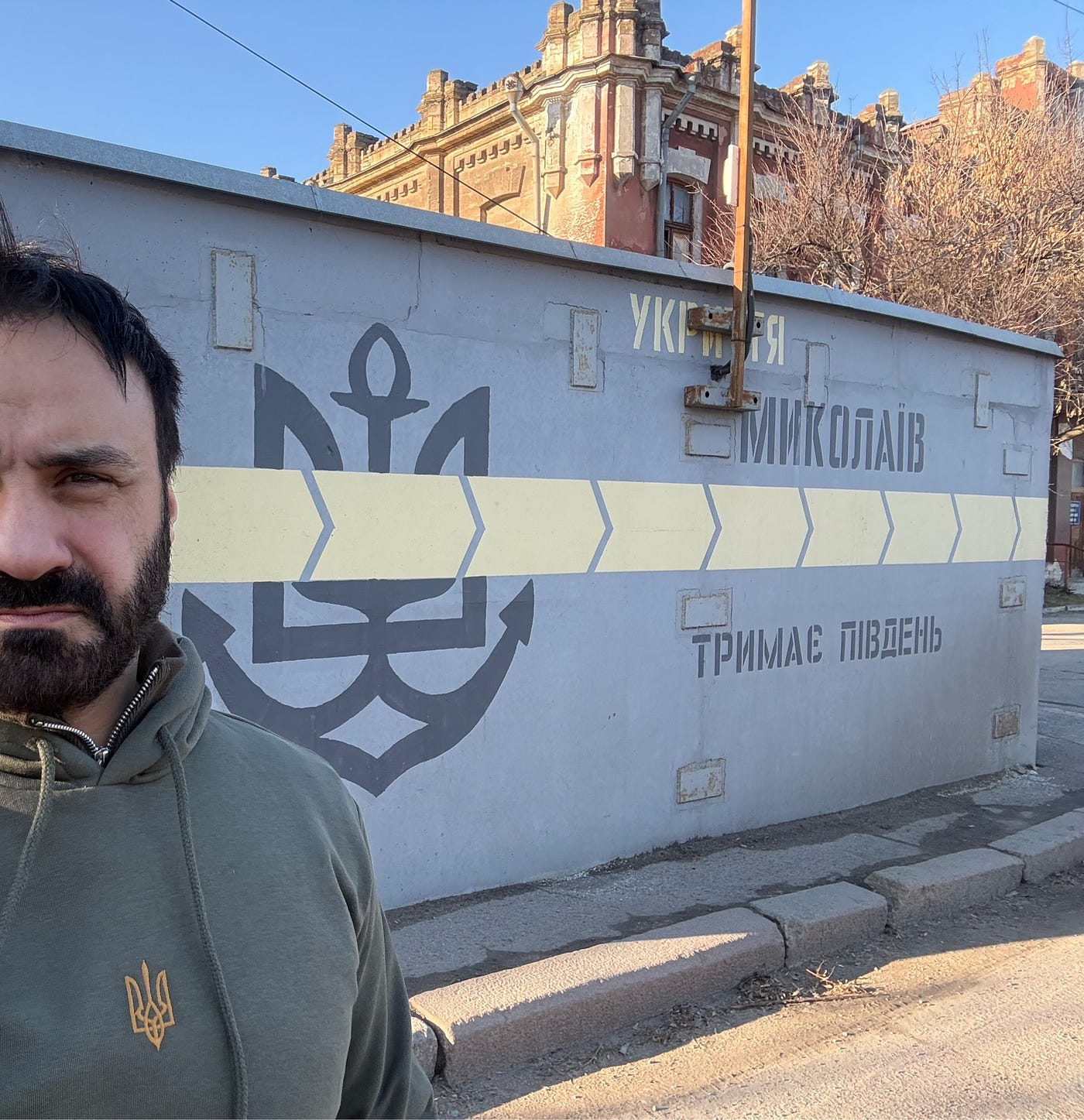
(圖:我身後是位於尼古拉耶夫中心的一處掩體版權所有,Giorgio Provinciali)
四年前,我們通常會強調,每一個攻擊目標以及本文提到的其他目標都構成對國際人道法的係統性侵犯,尤其是關於區分平民與軍事目標的《日內瓦公約》第一附加議定書第52條,並因故意造成心理傷害而違背了禁止以散布恐怖為主要目的的暴力行為或威脅的習慣法規範。
但如今,這些已成為記憶,我們認為更有意義的是提醒西方:支持那些仍在遭受攻擊的烏克蘭防禦力量。
(圖:我與Alla在舍甫琴科韋的殺傷區報道,該鎮位於赫爾鬆與尼古拉耶夫州交界????????版權所有,Giorgio Provinciali)
***
我們盡最大努力從幾乎沒有媒體敢進入的地帶進行真實的一手報道,這意味著我們長期生活在殺傷區。我們承擔風險,但若沒有你們寶貴的支持,我們的聲音將無從傳出。若沒有遠方的勇敢的人們轉發分享我們的文章,它們將無人問津。我們的報道會被忽視,我們的努力將付諸流水。這裏還有大量工作要做,周圍的人們境況同樣艱難。
我們正在更新籌款活動,感謝每一位加入我們、幫助修複俄羅斯破壞的人們。僅靠一家勇敢的報紙為我們每篇文章支付微薄稿酬以維持前線報道極為困難。因此,我們感激所有支持並信任我們使命的善良人們。
哪怕是小小的捐助也有助益。
我們會持續為你們更新事態進展。
謝謝大家,親愛的朋友們????????
如果你認可我們的工作,請支持我們????????
在過去三年裏,自烏克蘭大規模戰爭爆發以來,作為自由撰稿人,我們一直在烏克蘭戰爭的所有前線進行報道
Paypal捐款鏈接:https://www.paypal.com/pools/c/9nxoMcbYLF