



Ukraines Anti-ballistic Defenses Are Vital, And Stressing For Patriots Is Not The Right European Choice
By:Giorgio Provinciali
Live from Ukraine ????????
Chernihiv More than Kyivs structural weaknesses, the Russian Federations recent, devastating attack on Ukraines energy infrastructure has exposed the political, industrial, and strategic weaknesses of its partners, along with the accompanying hypocrisy.
On Sunday, Defense Express analystsestimatedthat to neutralize an average of 61 Russian ballistic missiles per month which require interception by Patriot or Samp/T systems Ukraine would need between 122 and 244 PAC-3 MSE interceptors in the former case (at least half the US standard, which requires 24 Patriot launchers per ballistic threat). Theynotedthat Ukrainian defense forces often deploy only one per threat, unable to afford anything better.
Their calculation is based on the estimate that Ukraine has 10 Patriot systems, each with 6 launchers (compared with the standard setup of 8), similar to those typically deployed by the US military.
This led them toconcludethatUkraines minimum requirement is at least 60 PAC-3 MSE interceptors per month.
This rate is unsustainable for Lockheed Martin, which, despiteannouncinga tripling of production, hasproduced620 units (51.6 per month) in 2025 and must supply all Patriot operators, with the US as the top priority.With a unit cost of $4.97 million per interceptor, the minimum necessary outlay would be $300 million per month.
This figure for reasons already extensivelydiscussedin these pages tends to double due to fees, certifications, and export tariffs.
It should also be clarified that even this worst-case scenario is optimistic, because given unfulfilled promises from its partners and partially damaged systems Ukraine could have fewer operational systems, with a conservative estimate of eight Patriot batteries not always in the six-launcher configuration and two Samp/T systems.
Furthermore,not all Patriot systemsdestinedfor Ukraine are in the PAC-3 MSE configuration. The decommissioned Israeli systems that should be delivered via the United States are, in fact, the previous and technically inferior PAC-2 iteration, with no guarantee of upgradeability.
Even exacerbating the worst-case scenario, it remains clear thatRussias firepower exceeds its ability to supply Ukraine with modern interceptors.
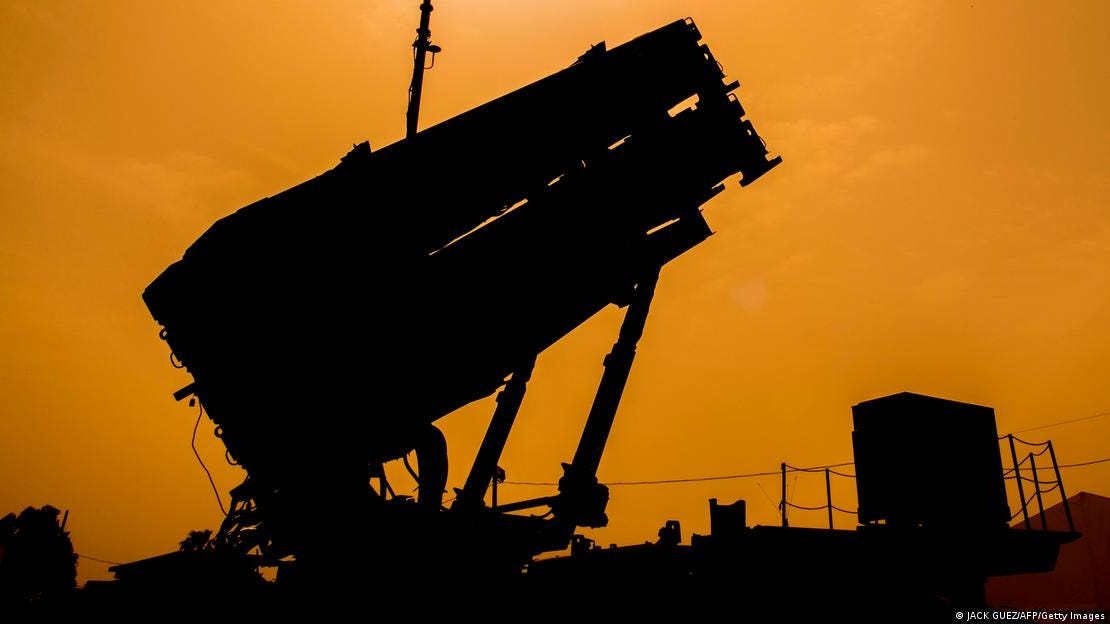
Paradoxically, after 12 years of sanctions against a country with a GDPcomparableto Italys but a territory 56 times larger, this is exactly what is happening.None of the restrictions imposed on Moscow so far have affected its core business; indeed,the European countries currently engaged in discussions about a 20th package of smaller measures remain the main buyers of Russian LNG and gas. A recent analysis ofKplerdatapublishedby the NGO Urgewald highlights this hypocrisy: from 2022 to the end of 2025, the EU allocated over 216 billion to Russia and approximately 167 billion to Ukraines defense. Despite a slight decline in global volumes, in 2025 the EUs share of shipments related to the Yamal project Russias main export route to Europe rose to 76.1%, up from 75.4% the previous year, which was already a record.
While European ports serve as a logistical hub for Russias largest LNG terminal,North Korean ports continue to see ships carrying weapons,includingKN-23 and similar ballistic missiles, sail toward the Russian Federation: 250 from 2023 to date, according to a studypublishedFriday by NK Pro. This number is already presumably greater than the number of PAC-3 MSE interceptors Ukraine has received to date.
Moscow also maintainslarge stockpiles of missiles for the S-300 and S-400 air defense systems,adaptedto attack ground targets by exploiting operational caveats and incompatible with international law that were imposed on Kyiv by Western partners, which prevented Kyiv from conducting deep-sea strikes from those launchers, thereby increasing the burden on each interceptor.
This political paradox has produced a deliberate asymmetric advantage at the technical and operational levels, further exacerbated byChinese support, which hasprovidedcrucial technologies, components, and assistance to sustain andexpandRussian missile production.

In the nextarticle, I will examine how, at a strictly technical level, Patriot and Samp/T are not antagonistic but rather parallel implementations of the same conceptual architecture.
Today, however, it is important to draw a logical conclusion before any engineering argument:continued insistence on an American supply of PAC-3 MSEs will lead to nothing.
Although the Pentagon does not publicly disclose the levels of operational stockpiles in the War Reserves and Prepositioned Stocks, cross-referencing Lockheed Martin productiondatawith the US Department of Defensebudgetallows us to estimate that2,2002,500 PAC-3s of all variants have been produced since 2001, of which 1,2001,400 PAC-3 MSEs have been produced since 2015. 4050% of these have been exported or contractually pre-assigned.
The available US stockpile of the most modern version could therefore be between 450 and 600 interceptors. This estimate includes strategic reserves and convertible training stocks but excludes those already allocated to the Indo-Pacific, the Middle East, and continental defense. According to the cited operational standards,in a high-intensity conflict, half of the US strategic reserve could be consumed in a few weeks. Even if exports were eliminated and existing contracts violated,the industrial bottleneck would not yield better results.
Americas reluctance to deliver additional PAC-3 MSEs is therefore understandable.
As things stand,the US does not have enough modern interceptors to defend itself, prepare for a conflict in the Pacific, and support Ukraine at the same time.
Diversification toward the SAMP/T is therefore not ideological but a mathematical necessity.
Added to this isa European political and industrial duty: a paradigm shift.The United States is not supplying Ukraine with a sufficient number of Patriot systems and interceptors, for questionable but coherent reasons. At the same time, it is not funding Russias ability to strike it.
The European Union, on the other hand, claims to be on Ukraines side, but in reality continues to channel more financial resources to its aggressor.
If the EU truly intends to support the continents defense, it must begin treating it as an integrated industrial system: autonomous production, diversified systems, resilient supply chains, and the immediate cessation of any mechanism that finances the Russian war machine. This is no more and no less than what Mario Draghiindicatedfour years ago.
Until this happens, the problem will not be a shortage of Patriots but the EUs structural incoherence.

The ongoing blackouts severely damaged our houses heating system in Western Ukraine while we were in the Donbas.
Without electricity, the pump couldnt circulate the liquid while the fire was lit. As a result, the system caught fire, and the whole house was at risk of burning. Fortunately, it did not, but the whole system needs to be changed, and the house needs to be restored. Tubes are all bent, walls are blackened by haze, and the heating system doesnt work, requiring an entirely new system.
We are doing our best since Allas parents live there, but theres still a lot to work on here, too, as the people around us are in no better situation.
Were renewing our fundraising campaign and thanking everyone who joins us in helping us restore what Russia is destroying. Even a small donation helps. Well keep you updated on developments.
Thank you all, friends ????????
烏克蘭的反彈道防禦至關重要,但過度倚重愛國者並非歐洲的正確選擇
作者:Giorgio Provinciali
翻譯:旺財球球
烏克蘭前線報道????????
切爾尼戈夫與基輔的結構性弱點相比,俄羅斯聯邦最近對烏克蘭能源基礎設施的毀滅性襲擊更揭示了其夥伴的政治、工業與戰略脆弱性及隨之而來的虛偽。
周日,Defense Express的分析人士估算,為了每月攔截平均61枚俄羅斯彈道導彈這些導彈需要由愛國者(Patriot)或SAMP/T係統攔截烏克蘭在第一種情況(使用愛國者攔截器攔截)下需配備122到244枚PAC-3 MSE攔截彈(至少相當於美國標準的一半,美國標準要求對每一枚彈道威脅配備24個愛國者發射架)。他們指出,烏克蘭防空部隊通常每枚威脅隻部署一個發射架,難以承受更多配置。
他們的計算基於烏克蘭擁有10套愛國者係統的估計,每套配6個發射器(而標準配置為8個),與美軍常用的部署相似。
基於此,他們得出結論:烏克蘭最低需求為每月至少60枚PAC-3 MSE攔截彈。
這一速度對洛克希德馬丁來說不可持續,盡管其宣布產量將增加三倍,但在2025年隻生產了620枚(每月51.6枚),且必須為所有愛國者係統使用國供貨,美國為最高優先級。以每枚攔截彈497萬美元的單價計算,最低必要支出約為每月3億美元。
正如此前在本欄內已廣泛討論的那樣,由於費用、認證和出口關稅等原因,這一數字往往會翻倍。
還需澄清的是,即便按最壞情形估算也偏樂觀:鑒於夥伴國未兌現承諾與係統部分損壞,烏克蘭實際可用係統可能更少,保守估計為八個愛國者電池(並非均為六發發射器配置)和兩套SAMP/T係統。
此外,並非所有交付烏克蘭的愛國者係統都為PAC-3 MSE配置。通過美國交付的以色列退役係統實際上是技術上較落後的PAC-2版本,且不保證可升級。
即便把最壞情形放大也顯而易見:俄羅斯的火力已超過西方向烏克蘭提供現代攔截彈的能力。
(圖:以色列的一套愛國者係統圖片來源:JACK GUEZ/AFP/Getty Images)
具有諷刺意味的是,這情況正是對一個國土麵積是意大利56倍但GDP與意大利相當的國家實施12年製裁之後的結果。迄今對莫斯科實施的限製並未觸及其核心業務;事實上,目前仍在討論第20輪較小製裁方案的歐洲國家,仍是俄羅斯LNG與天然氣的主要買家。非政府組織Urgewald基於Kpler數據的最新分析凸顯了這一偽善:自2022年至2025年底,歐盟向俄羅斯支付了超2160億歐元,同時對烏克蘭防務投入約1670億歐元。盡管全球貨運量略有下降,但2025年歐盟在俄羅斯主要對歐出口通道亞馬爾項目相關發運量中的比重上升到76.1%,高於前一年的75.4%,而前一年已創紀錄。
當歐洲港口仍作為俄羅斯最大LNG終端的物流樞紐之時,朝鮮港口仍不斷有運載武器(包括KN-23及類似彈道導彈)的船隻駛向俄羅斯:據NK Pro周五發布的一項研究,自2023年以來已有約250艘此類船隻離港。這個數字很可能已超過迄今烏克蘭收到的PAC-3 MSE攔截彈數量。
莫斯科還囤積了大量用於S-300和S-400防空係統的導彈,這些導彈經過改裝可用於打擊地麵目標,利用了西方夥伴強加給基輔的作戰限製性條款這些條款與國際法相悖從而阻止基輔利用這些發射器實施遠程深度打擊,進而增加了每枚攔截彈的負擔。
這一政治悖論在技術與作戰層麵造成了故意的不對稱優勢,而中國的支持進一步加劇了這一點:其提供了關鍵技術、零部件與援助,維持並擴大了俄羅斯的導彈生產能力。
(圖:朝俄邊境鐵路交通的衛星影像圖片來源:Airbus衛星圖像/SIA SuperX)
在下一篇文章中,我將從嚴格技術層麵探討愛國者與SAMP/T並非對立,而是同一概念架構的並行實現。
但在今天,在任何工程論證之前,有一個邏輯結論必須指出:繼續堅持依賴美國提供PAC-3 MSE將無果而終。
雖然五角大樓未公開戰爭儲備和預置庫存的作戰儲備量,但通過將洛克希德馬丁的產量數據與美國國防預算交叉比對,我們估算自2001年以來各型號PAC-3的產量為2,2002,500枚,其中自2015年以來生產的PAC-3 MSE為1,2001,400枚;其中40%50%已被出口或合同預分配。
因此,美國可動用的最新型攔截彈庫存估計在450600枚之間。該估計包含戰略儲備與可轉換訓練庫存,但不包括已分配至印太地區、中東與大陸防禦的部分。按照所引用的作戰標準,在高強度衝突中,美國一半的戰略儲備可能在數周內消耗殆盡。即便取消出口並違約現有合同,產業瓶頸也無法帶來更好結果。
因此,美國不願意再交付額外的PAC-3 MSE是可以理解的。
依現狀,美國沒有足夠的現代攔截彈自衛、為太平洋可能的衝突做準備並支援烏克蘭幾者兼顧。
因此,向SAMP/T多元化並非意識形態問題,而是數學上的必然。
除此之外,還有歐洲在政治和工業層麵的責任:範式轉變。
美國沒有向烏克蘭提供足夠數量的愛國者係統和攔截彈,動機雖成問題但邏輯自洽;同時,美國也不資助俄羅斯的打擊能力。
而歐盟則自稱站在烏克蘭一邊,但實際上卻繼續向其侵略者輸送更多資金。
若歐盟真心想維護歐洲防務,就必須開始把它當作一個整體的工業體係來對待:自主生產、係統多元化、供應鏈彈性,以及立即終止任何為俄羅斯戰爭機器提供資金的機製。這正是四年前馬裏奧德拉吉所指示的方向,既不過分也不不足。
在此之前,問題不在於愛國者的短缺,而在於歐盟的結構性不連貫。
(圖:我在烏克蘭切爾尼戈夫,於提交此文前的瞬間????????版權所有,Giorgio Provinciali)
***
持續的停電嚴重損壞了我們在烏克蘭西部的家中的供暖係統,而我們當時就在頓巴斯。
沒有電,點著的爐火無法通過水泵循環熱水。結果,係統起火,整個房子麵臨著燒毀的風險。幸而未被燒毀,但整個係統需要更換,房子也需要修複。管道都是歪的,牆壁被煙霧熏黑,供暖係統無法正常工作,需要徹底更換。
我們正在盡最大努力,因為Alla的父母住在那裏,但這裏還有許多工作要做,周圍的人處境也好不到哪兒去。
我們正在重啟籌款活動,感謝每一位支持我們修複被俄羅斯摧毀一切的朋友。即使是小額捐款也有幫助。我們會及時更新進展。
感謝大家,朋友們。
????????如果你相信我們的工作,請支持我們????????????
在過去的三年裏,我們一直在烏克蘭戰爭的各個前線進行報道
https://www.paypal.com/pools/c/9lP2mIk7Nk