What Russia Broke In Chornobyl
By: Giorgio Provinciali
Live from Ukraine
Kherson — When the sky above Chornobyl turned red on April 26, 1986, 400 times more radioactive material entered the Earth’s atmosphere than was released at Hiroshima and Nagasaki combined. This was just 5% of the total released in a catastrophe materialized by a Soviet technological posture radically different from that of the West, which the culture of power and obsession with secrecy allowed to escape human control.
Efforts focused on containing the remaining 95% of radioactive material: 170 tons of irradiated uranium that fused at over 1,200°C with control rods, zirconium, graphite, and sand into an incandescent mass that perforated every floor of the building, seeped into the loops, and then cooled in the ground into a then-unknown material that scientists called “Corium.”
Initially extremely hard, this ceramic-metallic material continued to mutate and deteriorate, eventually turning to dust through spontaneous vitrification and radiolytic disintegration.
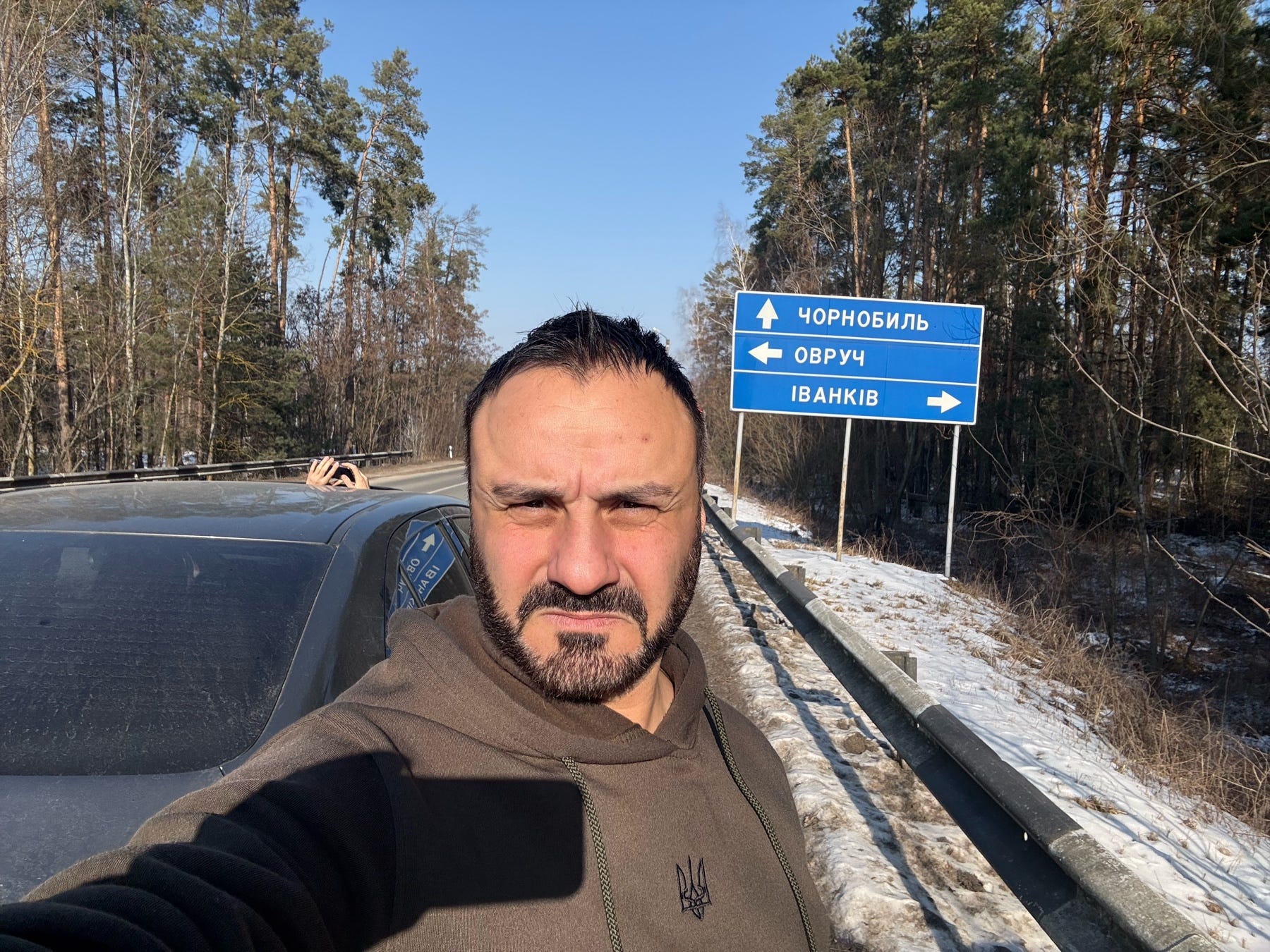
An initial containment sarcophagus was built around the structure thanks to the sacrifice of hundreds of thousands of workers called “liquidators,” each of whom performed a single operation in about forty seconds before returning, after having absorbed a radiation dose equal to the maximum a human being can tolerate in a year.
In the late 1990s, that shell deteriorated, creating the risk that the constantly changing radioactive dust — which emits 300 to 800 roentgens per hour, lethal within just a few dozen minutes — could escape.
Thanks to the joint efforts of 40 nations, at a cost of approximately two billion euros (plus twice the estimated cost of disposing of the material), a steel arch designed to last a century was built.
The world’s finest engineering expertise had allowed humanity to catch its breath because the “New Safe Confinement” was not a roof. It was time.
One hundred years to contain the destroyed reactor, control humidity, prevent the dispersion of radioactive dust, and dismantle the previous Soviet sarcophagus, which had become unstable.
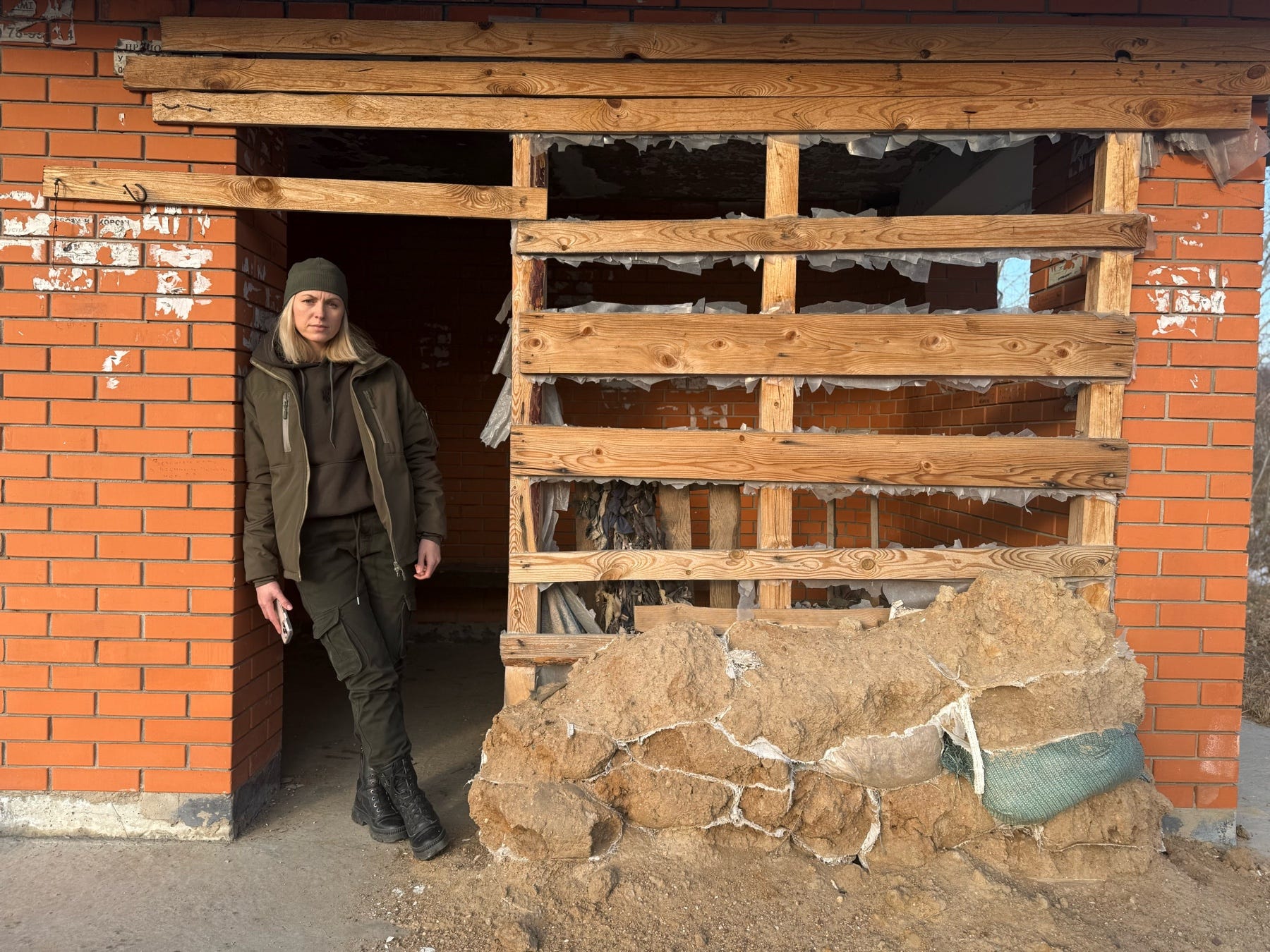
It was soon realized, however, that the lack of humidity due to the nearly hermetic covering accelerated a self-sustaining chain reaction (in a thermal-neutron system, water acts as a moderator, slowing neutrons through thermalization) known as criticality. In room 305/2 of the Chornobyl power plant, where more than half of the Corium is located, sensors detected radiation levels too high even for drones and robots. Attempts to vaporize various substances were made, but they found that both excess or sudden removal of vapor altered the neutron multiplication factor. Various engineering interventions were employed to find the balance, leading to a dramatic realization: the timeline for containing the catastrophe was much shorter than a century.
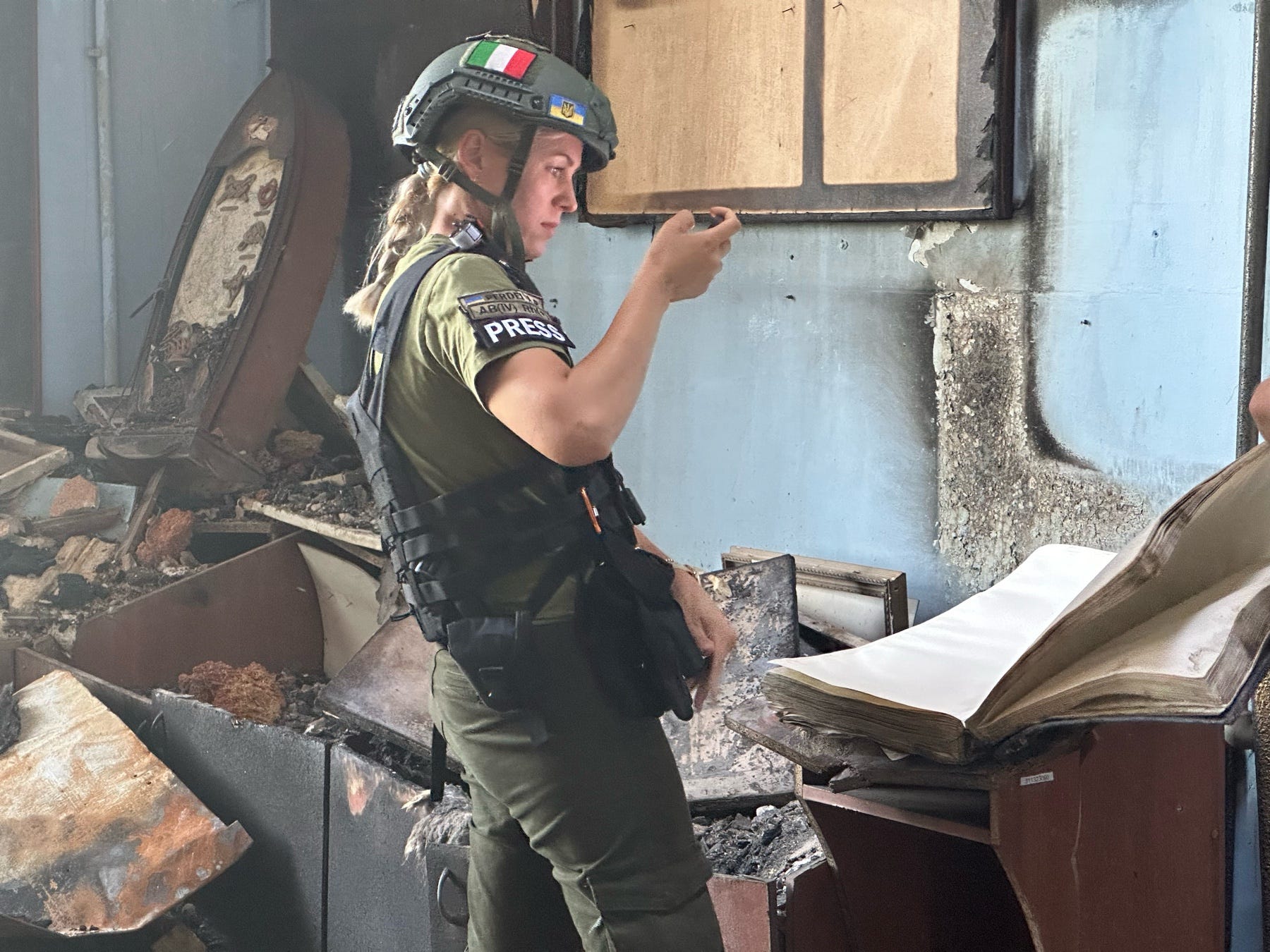
By violating what had become a global security laboratory, the Russian army desecrated the zone where humanity had confined the worst mistake produced up to that point by the Moscow regime, occupying the Chornobyl power plant in 2022.
Convoys of heavy and tracked vehicles heading for Kyiv raised radioactive dust, and occupiers who dug trenches raised even more, using the plant’s protective shell as a shield from which to attack without being attacked. Following the same (il)logic of hostage-taking, applied not to a building but to six VVER-100 reactors, their spent fuel, power lines, auxiliary systems, and the cooling basin, subsequently altered by the destruction of the Nova Kakhovka dam, Moscow occupied another Ukrainian nuclear power plant — the largest in Europe — in Zaporizhzhia, attempting to turn it into a shield as well.
In complete disregard for forty years of science, international public money, the memory of the liquidators, and responsibility toward the entire continent, on February 14, 2025, the Russian military bombed the protective shield built around the Chornobyl nuclear power plant.
A high-explosive drone created a six-meter hole through which water leaked, once again altering the already precarious equilibrium within the structure. The dome's exposed insulation burned for two weeks, and that disaster — intentionally caused — further shortened the times that depend not on politics but on the isotopes. Cesium-137 and Strontium-90 have half-lives of approximately thirty years. Plutonium-239, on the other hand, has a half-life of 24,000 years. Americium-241 is even more insidious from a historical perspective because it arises from the decay of plutonium-241: its environmental activity will continue to grow, reaching a critical threshold around mid-century, and it has a half-life of approximately 432 years. This means that within about 400 years, its activity will be halved.
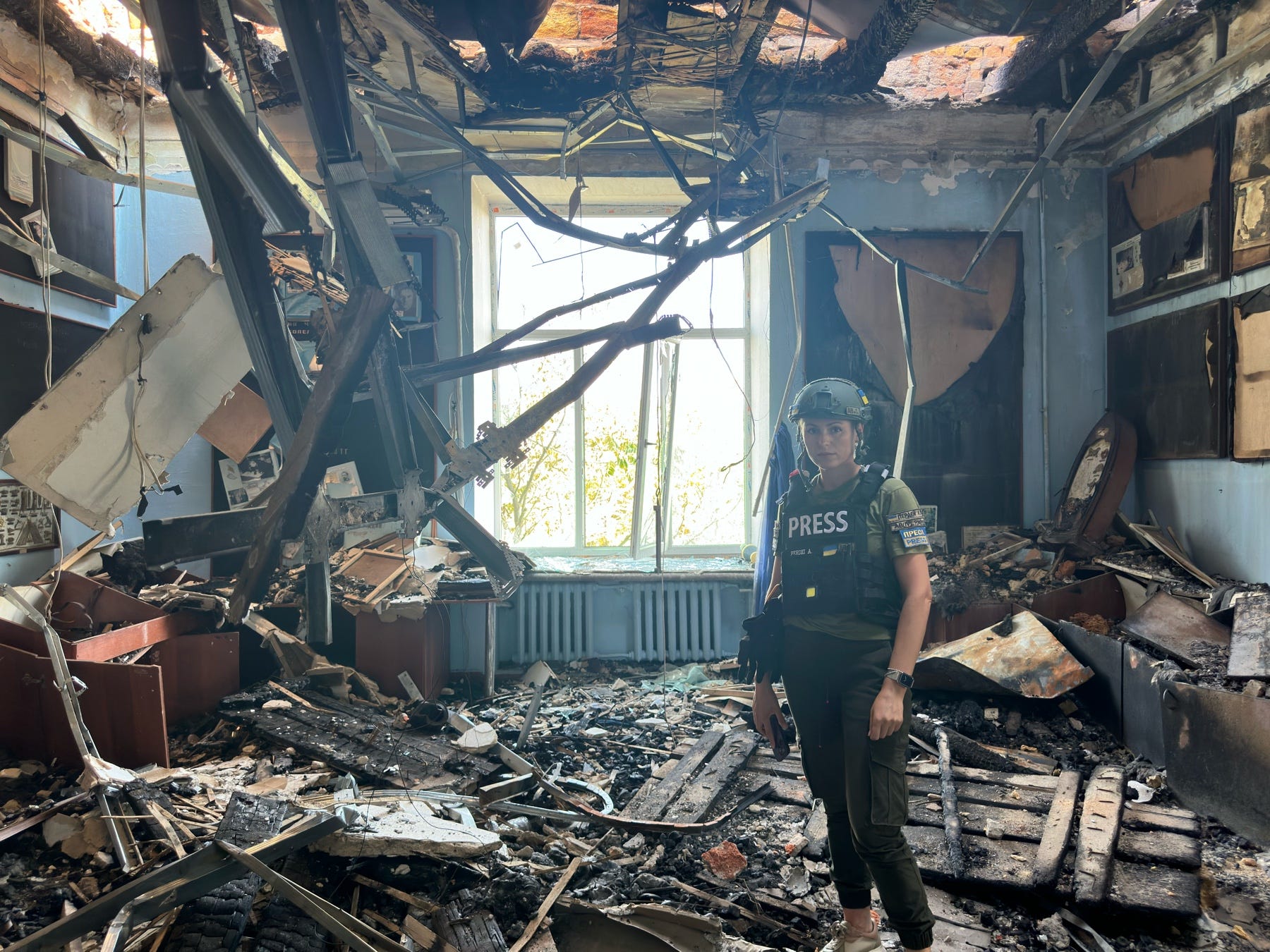
The shell was not eternal but designed to give humanity a century. Russia occupied it, struck it, and forced emergency repairs. In Zaporizhzhia, it replicated the same pattern. In Nova Kakhovka, it demonstrated that even water can be a weapon.
Even before the disaster, Chornobyl embodied a Soviet technological posture radically different from that of the West. The RBMK-1000 reactor of Unit 4 was born within a system in which civilian and military production intersected, contaminated, and often justified each other. Graphite-moderated, light-water-cooled, equipped with pressure channels, and refuelable on-the-fly, the RBMK was powerful, economical, and rapid to build industrially, and, precisely for this reason, intrinsically less protected. Its positive void coefficient meant that, under certain conditions, the loss of water in the channels did not quench the reaction but instead accelerated it; the graphite tips of the control rods could initially increase reactivity precisely when they should have reduced it.
Chornobyl was a disaster engineered within the belly of the Soviet system, that is, within the heart of the technical-political apparatus that Moscow controlled, concealed, and protected. Forty years later, Moscow has repeated those same grave errors, demonstrating that Chornobyl is not an event of the past but the technical, historical, and moral proof of a difference in civilization.
In 1.525 days of war, we recorded over 250 videos from ground zero and wrote more than 1,500 articles.
We are doing our best to provide genuine, first-hand reports from zones where almost no press dares to go. This means living in a kill zone constantly. We take the risk, but without your invaluable support, our voices would remain unheard and silent. Without brave people sharing our articles from afar, they would remain unread. Our reports would go unseen, and our efforts would be lost. There’s still a lot of work to do here, as the people around us are also in no better situation.
We’re renewing our fundraising campaign and thanking everyone who joins us in helping to restore what Russia is destroying. Moving forward with only a small reimbursement for each article from a brave newspaper that believes in us is extremely challenging. That’s why we are grateful to all the kind people who support us and trust in our mission.
Even a small donation helps.
We’ll keep you updated on developments.
Thank you all, dear friends
俄羅斯在切爾諾貝利所破壞的一切
作者:Giorgio Provinciali
翻譯:旺財球球
烏克蘭前線報道
赫爾鬆 —— 1986年4月26日,當切爾諾貝利上空變成紅色時,被釋放到大氣中的放射性物質量相當於廣島與長崎兩次爆炸總量的400倍。那隻是整起災難釋放總量的5%。這場災難源自蘇聯一種與西方迥異的技術姿態——權力文化與對保密的癡迷使其脫離了人類的控製。
隨後人們致力於控製剩餘95%的放射性物質:170噸在超過1200°C高溫下與控製棒、鋯、石墨和沙子熔結成熾熱熔塊的放射性鈾,這股熔塊穿透了建築的每一層、滲入回路,冷卻後在地下形成一種當時未知的物質,科學家稱之為“核熔融物”(Corium)。
這種最初極為堅硬的陶瓷-金屬複合物不斷發生變異和老化,最終通過自發玻璃化和放射性電離分解而化為粉末。
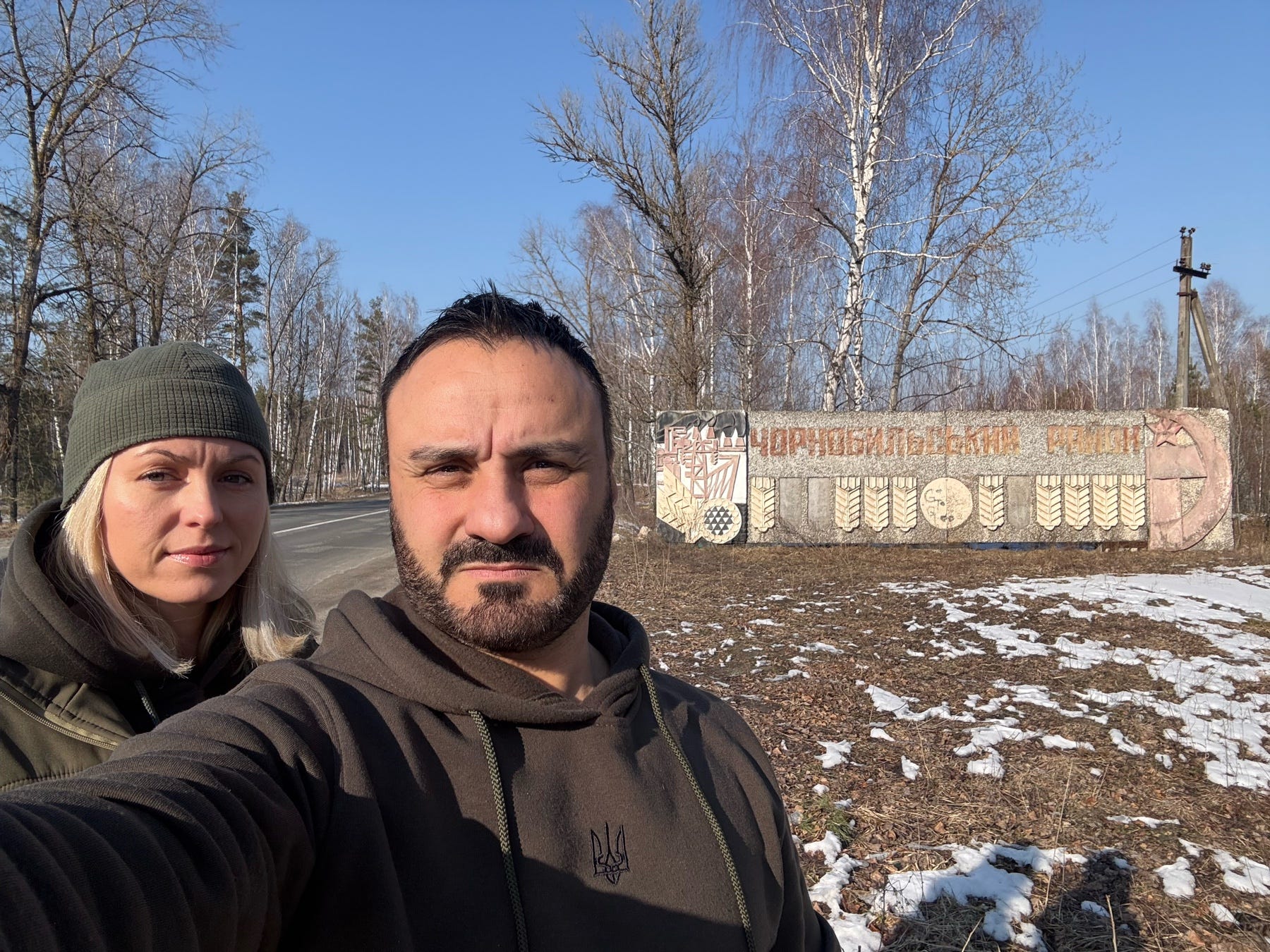
(圖:我和Alla一起前往切爾諾貝利。我們還在這個路牌中提及的另外兩個城市做了報道 —— 版權所有,Giorgio Provinciali)
數以十萬計的“清理者”以犧牲換來了最初的密封石棺——每人隻做大約四十秒的單一操作,隨後返回,而此一番行動所吸收的劑量已相當於人體一年所能承受的最大劑量。
上世紀90年代末,那層防護殼開始老化,造成持續變化的放射性塵埃泄漏的風險,這些粉塵每小時發射300到800倫琴,幾十分鍾內即可致命。
在40個國家的共同努力下,耗資約20億歐元,另加兩倍於估算的物質處置費用,建造了一座設計壽命為一百年的鋼質拱形結構。
世界頂尖的工程技術讓人類稍得喘息,因為“新安全封閉體”並不是一個簡單的屋頂。這為人類爭取了時間。
一百年用於封存被毀反應堆、控製濕度、防止放射性塵埃擴散,並拆除已變得不穩定的蘇聯時期石棺。
(圖:Alla和我從一座2022年俄軍占領切爾諾貝利電廠時被當作防禦工事的公車站做現場報道,那裏在——版權所有,Giorgio Provinciali)
然而隨後人們意識到,幾乎密封的覆蓋導致濕度不足,加速了一種自持鏈式反應(在熱中子體係中,水作為慢化劑,通過熱化減速中子),即臨界現象。在切爾諾貝利305/2號房間裏存放有超過一半核熔融物,傳感器檢測到的輻射強度連無人機和機器人都難以承受。人們試圖蒸發各種物質,但發現蒸汽的過多或驟然去除都會改變中子乘倍因子。為尋求平衡采取了多種工程措施,從而得出一個嚴峻結論:控製災難的時間窗遠比一百年短。
(圖:Alla在拍攝一本書中記載的重要信息 —— 版權所有,Giorgio Provinciali)
2022年,俄軍占領切爾諾貝利核電站,褻瀆了這個已成為全球安全實驗室的區域,破壞了人類為封存莫斯科政權至今所犯下最嚴重錯誤而設下的界限。
駛往基輔的重型履帶車隊揚起放射性塵埃,挖掘戰壕的侵略者揚起了更多塵土,利用電站的防護外殼作為掩護,從中實施攻擊而免受反擊。俄軍以劫持人質的邏輯,不是把建築而是把六座VVER-1000反應堆、其所耗燃料、輸電線路、輔助係統和冷卻池當作人質;隨後在諾瓦·卡霍夫卡大壩被摧毀後,莫斯科又占領了歐洲最大的紮波羅熱核電站,企圖采用相同的做法將其亦變為屏障。
無視四十年的科學成果、國際公共資金、清理者的記憶以及對整片大陸的責任,俄軍於2025年2月14日炸毀了圍封切爾諾貝利核電站的保護罩。
一枚高爆無人機在穹頂上開出一處六米的洞口,導致滲水,再次改變了結構內本已極不穩定的平衡。穹頂外露的保溫層燃燒了兩周,這場故意造成的災難進一步縮短了由同位素衰變速率——而不是政治——決定的安全期限。銫-137和鍶-90的半衰期約為三十年;而鈈-239的半衰期則長達2.4萬年。镅-241從曆史視角看更為穩定,因為它由鈈-241衰變生成:其環境活性將繼續上升在本世紀中葉左右趨於臨界,其半衰期約為432年——也就是說大約四百年內其活性才會減半。
(圖:在我們的報道中,我們常把烏克蘭其餘戰區的戰爭場景比作切爾諾貝利的末世狀態 —— 版權所有,Giorgio Provinciali)
這層圍封並非永恒,而是為人類爭取了一個世紀的時間。俄羅斯占領了它,襲擊了它,並迫使人們進行緊急修複。在紮波羅熱,俄軍做了同樣的事情。在諾瓦·卡霍夫卡,它證明了連水也能成為武器。
即便在災難發生前,切爾諾貝利就已體現出一種與西方截然不同的蘇聯技術取向。4號機組的RBMK-1000反應堆產生於一個民用與軍用生產交織、相互汙染並常以彼此合理化的體製中。石墨慢化、輕水冷卻、壓力通道、即可在運行中換料的設計讓RBMK具有高功率、低成本、便於快速工業化建造的特性,但也因此本質上更不安全。其正空泡係數意味著在某些條件下,通道內水的損失非但不會抑製、反而會加速反應;控製棒石墨端帽在最初應當減小反應性的瞬間卻可能增加反應性。
切爾諾貝利是一場在蘇聯體製腹地醞釀的災難——在莫斯科所控製、隱瞞並保護的技術-政治機器核心內被設計的災難。四十年後,莫斯科卻再次犯下同樣嚴重的錯誤,證明切爾諾貝利並非過去的事件,而是技術上、曆史上和道德上文明差異的一個明證。
(圖:Alla和我一起進入切爾諾貝利區 —— 版權所有,Giorgio Provinciali)
***
在1525天的戰爭中,我們從前線錄製了250多段視頻,並撰寫了1500多篇文章。
我們盡最大努力從幾乎沒有媒體敢進入的地帶進行真實的一手報道,這意味著我們長期生活在“殺傷區”。我們承擔風險,但若沒有你們寶貴的支持,我們的聲音將無從傳出。若沒有遠方的勇敢的人們轉發分享我們的文章,它們將無人問津。我們的報道會被忽視,我們的努力將付諸流水。這裏還有大量工作要做,周圍的人們境況同樣艱難。
我們正在更新籌款活動,感謝每一位加入我們、幫助修複俄羅斯破壞的人們。僅靠一家勇敢的報紙為我們每篇文章支付微薄稿酬以維持前線報道極為困難。因此,我們感激所有支持並信任我們使命的善良人們。
哪怕是小小的捐助也有助益。
我們會持續為你們更新事態進展。
謝謝大家,親愛的朋友們
如果你認可我們的工作,請支持我們
在過去三年裏,自烏克蘭大規模戰爭爆發以來,作為自由撰稿人,我們一直在烏克蘭戰爭的所有前線進行報道…
Paypal捐款鏈接:https://www.paypal.com/pools/c/9oqgW5u5oE
