The War of Repeaters: Drones And Widespread Anti-Aircraft Fire
By: Giorgio Provinciali
Live from Ukraine
Sloviansk — To circumvent the restrictive measures adopted by Starlink and the Ukrainian Ministry of Defense, which prevent them from using internet connectivity via Elon Musk’s satellite constellation, the Russian Federation is now using its own drones as repeaters for a mesh network (in which each drone acts as a node for other devices to connect to). Ukraine has responded in kind, expanding its air defense capabilities to include companies that wish to integrate into the Ukrainian Air Force’s unified command-and-control system to protect themselves and the surrounding territory.
This marks a further qualitative leap in warfare, decentralizing and distributing attacking forces and, consequently, defensive capabilities. Ukraine is attempting to extend air defense beyond the traditional state perimeter without privatizing command, to rapidly expand its defensive capacity without diverting additional resources from combat units deployed in the most critical areas.
By the end of March, the pilot project was operational with at least one company, and 13 other groups were in training. On April 17, Ukrainian Defense Minister Mykhailo Fedorov announced that 19 companies were already involved and that this new approach had already resulted in the downing of a Russian jet drone flying over Kharkiv at over 400 km/h.

This is a crucial point to clarify, because we are not dealing with a “privatization of war” — not even along the lines of the PMCs exploited by the Russian Ministry of Defense — but rather a form of organized militarization of the Ukrainian productive fabric under state sovereignty. Last November, the Kyiv government had already authorized companies in the energy, communications, and transportation sectors to purchase or receive air defense equipment, ensuring that the various groups, appropriately trained and vetted, acted on military orders.
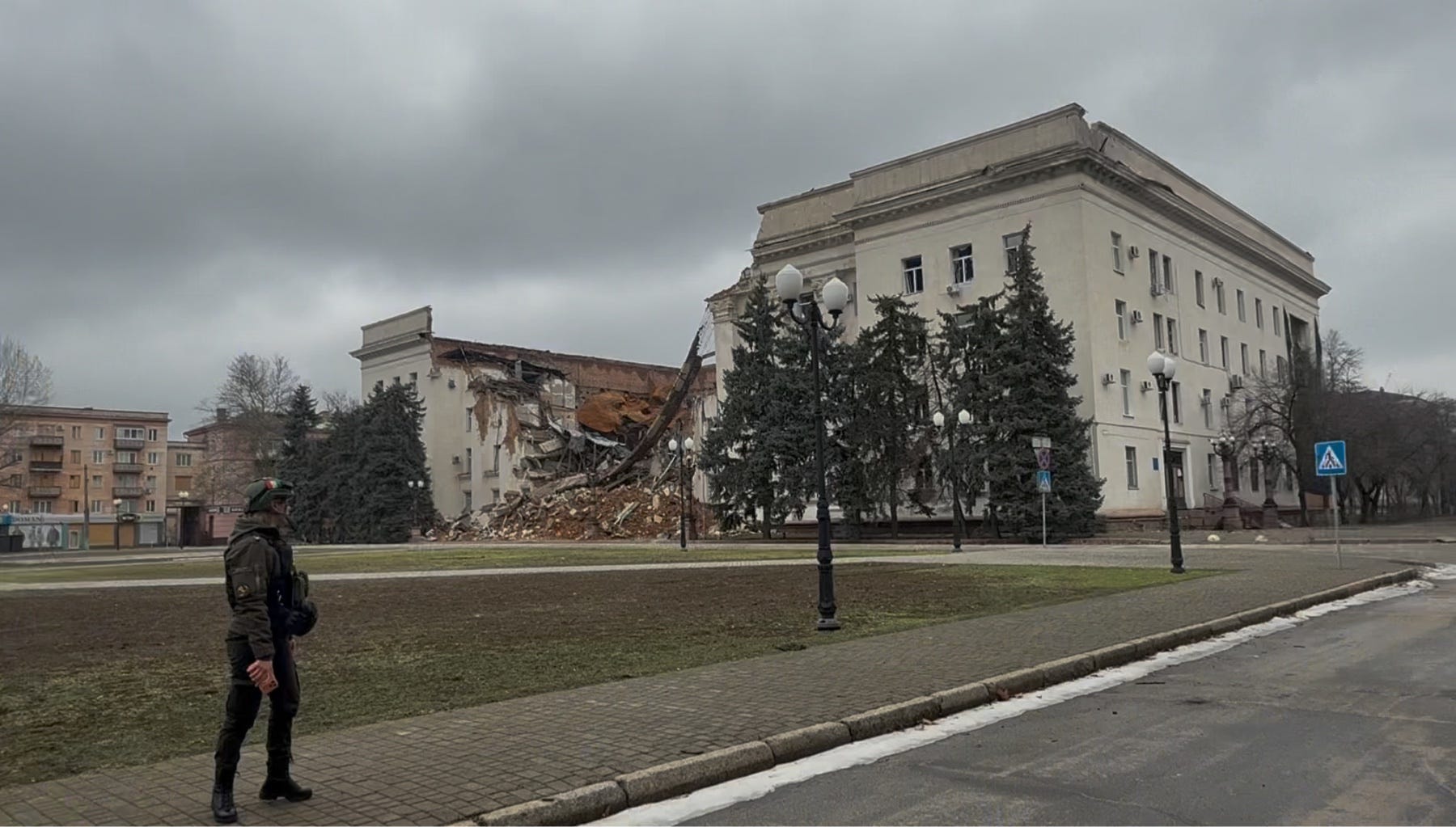
From a multitude of areas in Donbas — including the one I’m reporting from for this article — Alla Perdei and I have shown what happens when the depth of the front collapses: towns with around 12,000 residents still present, like Druzhkivka, are left without water, electricity, a single functioning pharmacy, and a thousand other difficulties that even force rescuers to hide because they’re being deliberately targeted.
The main threat to the cities of Donetsk under Ukrainian control today is posed by KABs: guided aerial and glide bombs, such as the one-and-a-half-ton bomb that yesterday destroyed a kindergarten and damaged at least 13 buildings here in Sloviansk.
This means that adapting Ukrainian anti-aircraft defense is useful but far from sufficient. It is a logical response to the use of Shahed/Geran’/Gerbera/Zala drones — now also equipped with jet propulsion — but it does not replace the need for medium- to long-range defenses that include interceptors, radar, electronic warfare, and coverage against glide bombs.
The objective reality I face in Sloviansk demonstrates almost the opposite: Russia continues to terrorize the cities of Donetsk with systems that require different, much more extensive countermeasures.
However, the downing of a jet drone is a very serious signal, proving that Ukraine is succeeding in building a layered air defense system in which even the lowest levels are improving in quality.
Jet drones are extremely difficult to intercept. They are faster and, in some iterations, feature a more durable chassis and additional guidance and adaptation capabilities. The Russian Federation is improving control of these drones by equipping them with new targeting methods and integrating them into a mesh network, where they can exchange signals, enabling real-time guidance even within Ukrainian territory and reducing dependence on continuous external connections.
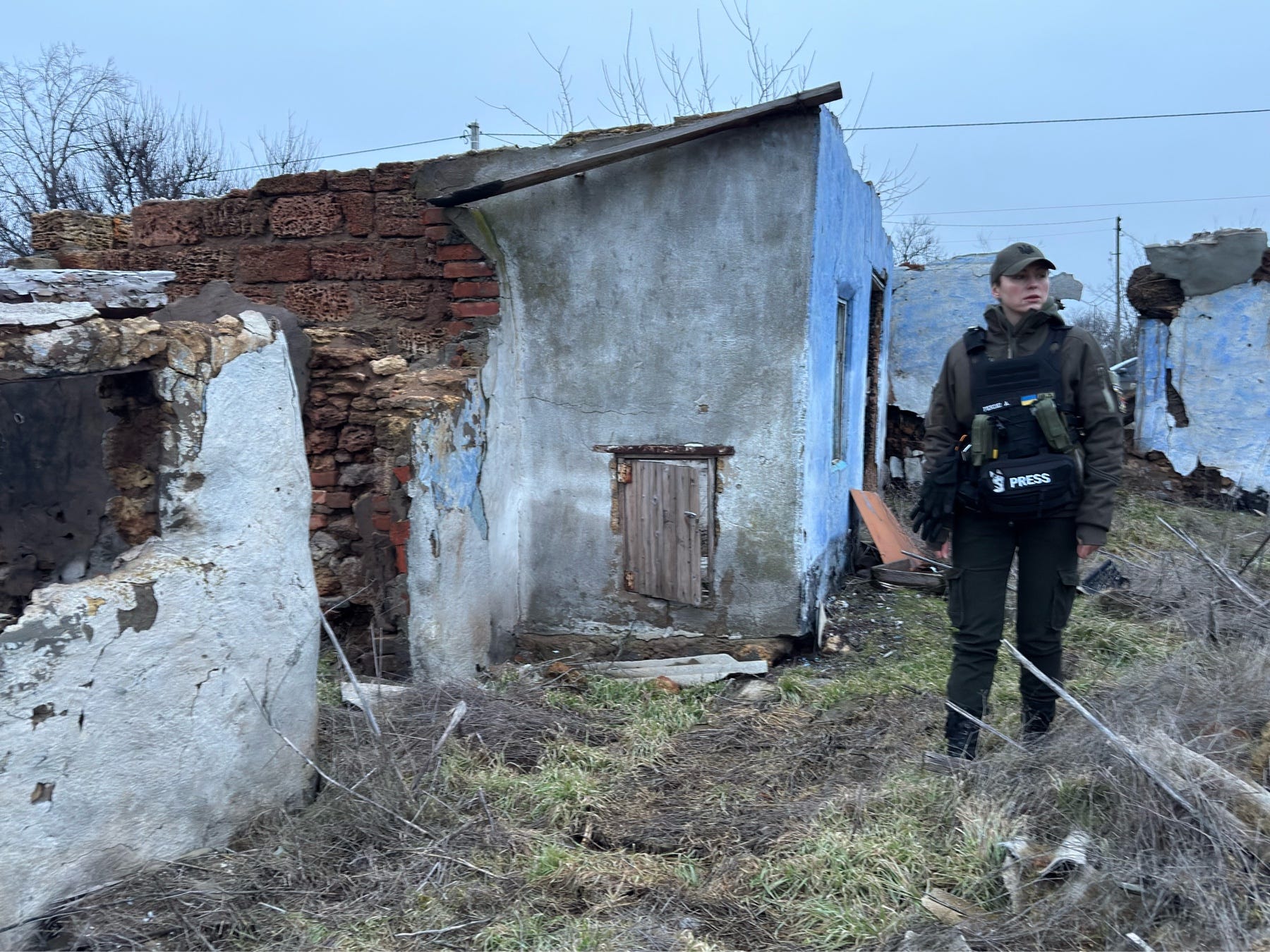
If this trend continues, it will further alter the conceptual geometry of what Alla Perdei and I have called shades of gray, risk gradients that fade as one moves away from the hottest areas within the kill zones.
Relatively “dumb” one-way vectors become part of a distributed and cooperative penetration system. Therefore, having more shooters distributed across the territory will help Ukraine reduce reaction times and increase engagement points near the objectives to be protected.
The war has entered a phase in which private companies, energy networks, logistics, and factories located in what we once called “rear areas” are now part of the battlefield.
That is, an architecture of death in which people continue to live.

In 1.518 days of war, we recorded over 250 videos from ground zero and wrote more than 1,500 articles.
We are doing our best to provide genuine, first-hand reports from zones where almost no press dares to go. This means living in a kill zone constantly. We take the risk, but without your invaluable support, our voices would remain unheard and silent. Without brave people sharing our articles from afar, they would remain unread. Our reports would go unseen, and our efforts would be lost. There’s still a lot of work to do here, as the people around us are also in no better situation.
We’re renewing our fundraising campaign and thanking everyone who joins us in helping to restore what Russia is destroying. Moving forward with only a small reimbursement for each article from a brave newspaper that believes in us is extremely challenging. That’s why we are grateful to all the kind people who support us and trust in our mission.
Even a small donation helps.
We’ll keep you updated on developments.
Thank you all, dear friends
中繼器之戰:無人機與廣域防空火力
作者:Giorgio Provinciali
翻譯:旺財球球
烏克蘭前線報道
斯洛文斯克 — 為規避Starlink與烏克蘭國防部采取的限製措施——這些措施阻止俄羅斯通過埃隆·馬斯克的衛星星座使用互聯網連接,俄羅斯聯邦如今開始使用自有無人機作為中繼器,構建一種網狀網絡,該係統中,每架無人機充當其他設備連接的節點。烏克蘭則以其製,擴展防空能力,允許願意接入烏克蘭空軍統一指揮控製體係的公司加入,以保護自身及周邊地域。
(視頻:Alla與我在烏克蘭赫爾鬆報道 —— 版權所有,Giorgio Provinciali)
這標誌著戰爭的又一次質的飛躍,將攻擊力量與相應的防禦能力去中心化、分布化。烏克蘭正試圖在不私有化指揮權的前提下,將防空延展到傳統國家邊界之外,在不從最關鍵戰區抽調額外兵力的情況下,迅速擴大防禦能力。
截至三月底,試點項目在至少一家企業已投入運行,另有13個團體在接受訓練中。烏克蘭國防部長米哈伊洛·費多羅夫於4月17日宣布,已有19家公司參與,該新方法已成功擊落一架以超400公裏/小時飛越哈爾科夫的俄製噴氣無人機。
(圖:我在俄方摧毀的多處能源基礎設施之一現場報道,這些設施本可從烏克蘭國防部長提出的新方法中獲益— 版權所有,Giorgio Provinciali)
這裏需澄清關鍵一點:這並非“戰爭私有化”——甚至不同於俄國防部所利用的私人軍事公司模式——而是在國家主權框架下,對烏克蘭生產體係進行有組織的軍事化。去年11月,基輔政府已授權能源、通信與交通等領域的公司購買或接收防空裝備,並確保這些經適當培訓與審查的各類主體按軍事命令行動。
(圖:Alla在被俄方摧毀的赫爾鬆行政中心報道 —— 版權所有,Giorgio Provinciali)
從頓巴斯多地(包括我為本文報道所在之處),阿拉·佩爾代伊與我展示了前線縱深崩塌時的情形:像德魯日基夫卡這樣仍有約1.2萬居民留守的城鎮,已無水、無電、沒有一家可用藥房,以及無數其他困難;甚至迫使救援人員不得不躲藏,因為他們被俄軍故意鎖定為攻擊目標。
如今對頓涅茨克受烏克蘭控製城市的主要威脅來自KAB類製導空投與滑翔炸彈,比如昨日在斯洛文斯克摧毀一所幼兒園並損壞至少13棟建築的那枚一噸半的炸彈。
這表明改造烏克蘭防空雖有必要,卻遠不充分。它是對Shahed/Geran/ Gerbera/Zala等無人機(現亦配備噴氣推進)的合理應對,但並不能替代對中遠程防禦的需求——包括攔截彈、雷達、電子戰與對滑翔炸彈的覆蓋。
(視頻:Alla與我在烏克蘭頓巴斯腹地拍攝的影像 —— 版權所有,Giorgio Provinciali)
我在斯洛文斯克所麵對的客觀現實,恰恰幾乎相反:俄羅斯繼續用需要完全不同、規模更龐大的反製手段的係統,對頓涅茨克的城市實施恐嚇打擊。
然而,擊落一架噴氣無人機是非常嚴峻的信號,表明烏克蘭正在成功構建分層防空體係,即便是最基層的防禦質量也在提升。
噴氣無人機極難攔截。它們速度更快,且在某些迭代型號上擁有更堅固的機體與更多製導、適應能力。俄方正通過配備新型製導方式並將其整合進網狀網絡來強化對這些無人機的控製,使其即使在烏克蘭境內也可交換信號、實現實時製導,從而減少對持續外部連接的依賴。
(圖:Alla在烏克蘭赫爾鬆殺傷區報道 —— 版權所有,Giorgio Provinciali)
若此趨勢持續下去,將進一步改變我與阿拉所稱“灰色地帶”的概念幾何結構——即從殺傷區最激烈處向外逐漸淡化的風險梯度。
相對“低端”的單向載體會成為分布式協同滲透係統的一部分。因此,在全境範圍布置更多射手將有助於烏克蘭縮短反應時間,並在需保護目標附近增加交戰點。
戰爭已進入這樣一個階段:那些坐落在我們曾稱為“後方”的私營公司、能源網絡、物流與工廠,如今也成為戰場的一部分。
也就是說,這是一個人們仍在其中生活的死亡架構。
(圖:Alla與我拉在被俄方摧毀的一座加油站報道,該處本可從本文中所述的新型無人機攔截方案中受益 ——版權所有,Giorgio Provinciali)
***
在1518天的戰爭中,我們從前線錄製了250多段視頻,並撰寫了1500多篇文章。
我們盡最大努力從幾乎沒有媒體敢進入的地帶進行真實的一手報道,這意味著我們長期生活在“殺傷區”。我們承擔風險,但若沒有你們寶貴的支持,我們的聲音將無從傳出。若沒有遠方的勇敢的人們轉發分享我們的文章,它們將無人問津。我們的報道會被忽視,我們的努力將付諸流水。這裏還有大量工作要做,周圍的人們境況同樣艱難。
我們正在更新籌款活動,感謝每一位加入我們、幫助修複俄羅斯破壞的人們。僅靠一家勇敢的報紙為我們每篇文章支付微薄稿酬以維持前線報道極為困難。因此,我們感激所有支持並信任我們使命的善良人們。
哪怕是小小的捐助也有助益。
我們會持續為你們更新事態進展。
謝謝大家,親愛的朋友們
如果你認可我們的工作,請支持我們
在過去三年裏,自烏克蘭大規模戰爭爆發以來,作為自由撰稿人,我們一直在烏克蘭戰爭的所有前線進行報道…
Paypal捐款鏈接:https://www.paypal.com/pools/c/9oqgW5u5oE
