In The Cities As At The Front Of War That Is Also Industrial
By: Giorgio Provinciali
Live from Ukraine
Pavlohrad – crushed by bombs, long-range drones, and other Russian missiles, including ballistic missiles, which severely strain Ukrainian defenses – that lack PAC interceptors for Patriot systems and Aster for SAMP/T – now faces the threat of loitering munitions carried by Geran’ and Shahed, which, acting as mother-drones, release dozens of them into the air every day.
These aren’t just reconnaissance tools or spy balloons but actual flying mines that, once released, settle on the ground and remain there until the intended target activates its attack procedure as it passes by. The drone then rises into the air and slams into the target, destroying it.
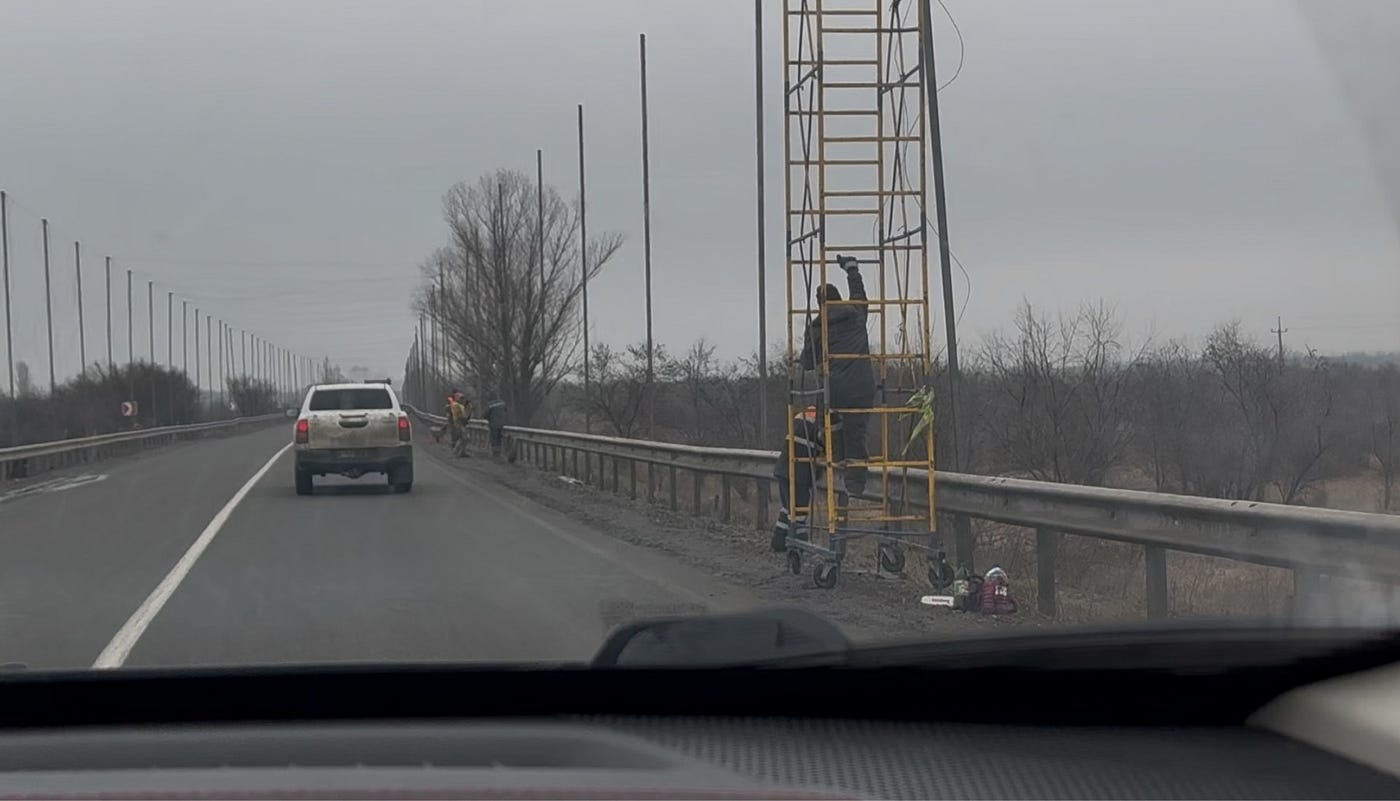
For this reason, Ukrainian technicians are braving danger, cold, and weather to protect at least the main road carrying logistics to the Pokrovsk front. Along that route, villages like Dmytrivka, Mykolaivka, and Petropavlivka are daily bombarded by all kinds of Russian drones, so much so that drivers must anxiously scan not only the road but also its edges and the sky.
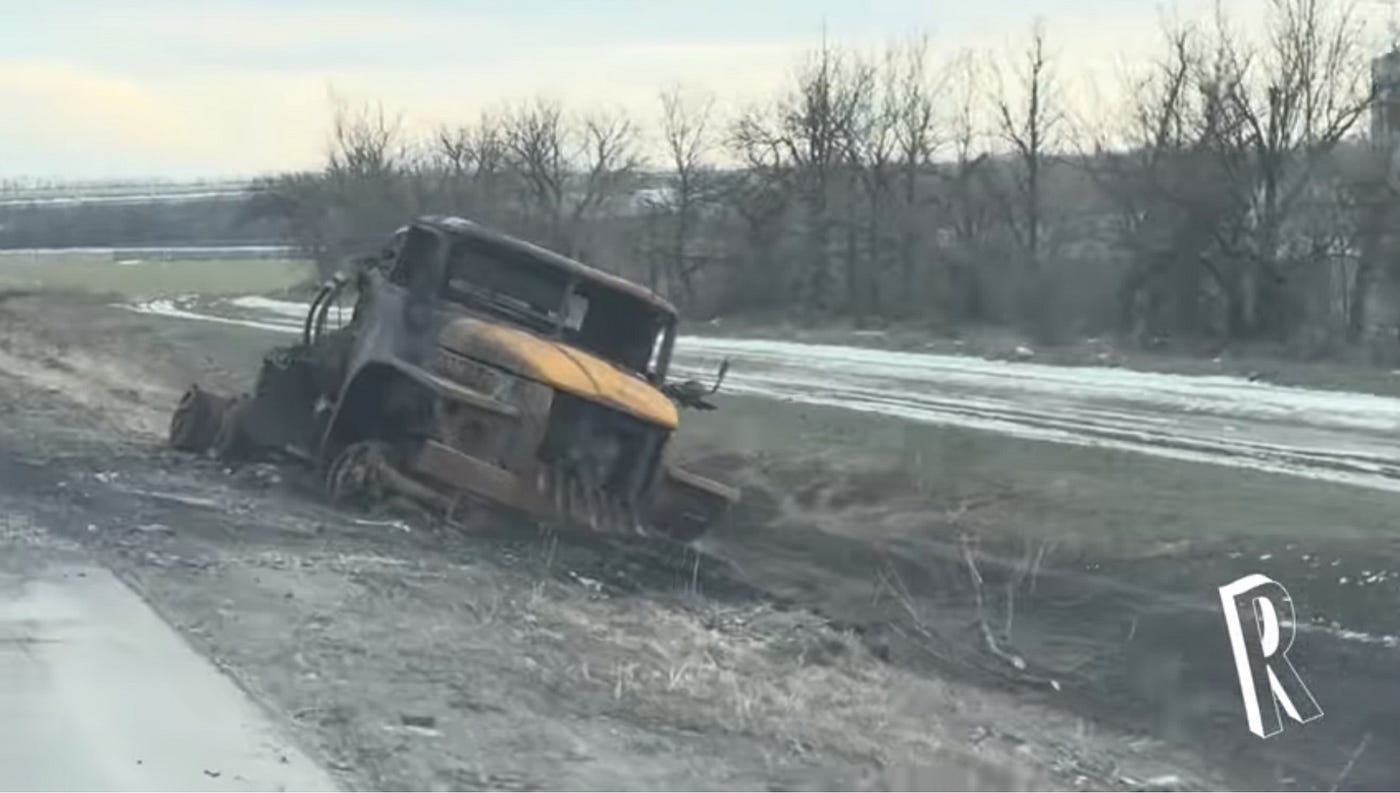
The dozens of burned-out vehicle carcasses along the road are a grim reminder of a horrendous end decided by digital killers rather than soldiers. Keeping cities like Pavlohrad, located about a hundred kilometers from the kill zone around Pokrovsk, under constant threat is the only thing that truly remains: technology.
Russian troops remain bogged down on that side of the road, about fifty kilometers far from where they were 12 years ago, but the tools they have at their disposal allow them to achieve objectives that were unthinkable just a few months ago.
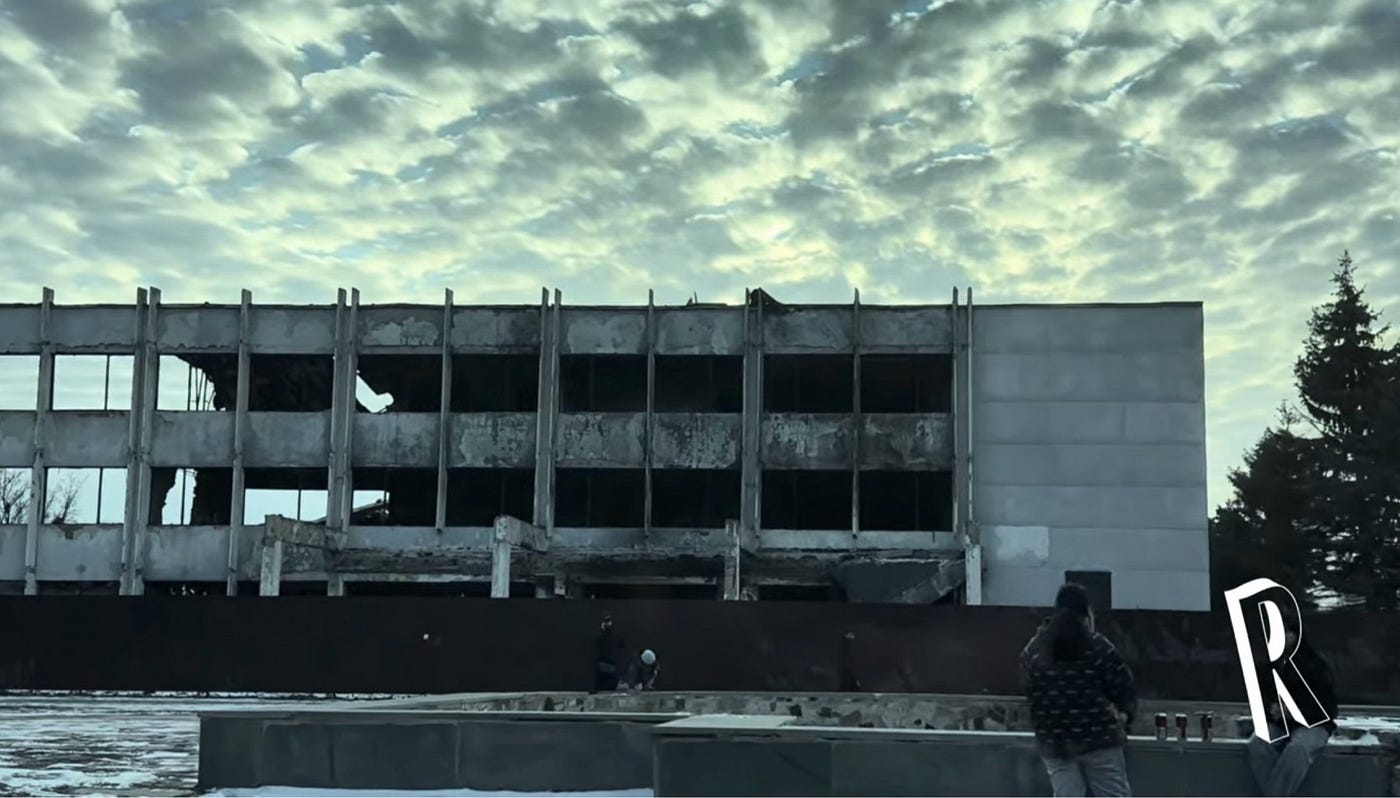
A simple breath of air around Pavlohrad makes this clear. The acrid smell of explosives mingles with the scent of coal, as targeted Russian attacks on Ukraine’s energy infrastructure have forced a reorientation toward that energy source. As a result, coal is now distributed free of charge to residents of districts like those mentioned above, so they can heat their homes. Very few buildings in the center of Pavlohrad are still intact: most have facades peeled by shrapnel or eroded by direct hits. The glass in windows and shopfronts has mostly been replaced with plywood or boarded up with wooden boards.
What, according to the old conception of military maneuvers, we would have called the «front line», has shifted far less than the Russian narrative suggests. The capacity for technological projection has instead grown exponentially. This creates a paradigmatic transformation, clearly visible in Pavlohrad, where the concept of line has been extended to that of space.
The smell of coal mixed with explosives further expands this representation of modern warfare on a temporal scale: forced energy regression is, in fact, an attack on progress, not just infrastructure.
Targeting energy means rolling back development to gain a technological advantage. Twenty-first-century warfare is therefore also industrial.
Consistent with our direct experience at the front, in rear-line cities like Pavlohrad, we perceive how the non-linearity of modern warfare implicitly introduces a break with the classic pattern: territorial advance is now marginal compared to technological expansion.
To extend the radius of death, stratify emergencies, saturate defenses, and assert technologically, a soldier no longer needs to shoot. A remote operator or even an algorithm suffices. Innovation is thus targeted to slow it down: Russian bombs aim to deny energy to slow growth.
Pavlohrad has never been physically reached by any Russian soldier: it has been incorporated into the operational space of industrial warfare. Similarly, while Moscow’s troops have remained bogged down in the same plains of Donbas for over a decade, technology is reshaping warfare, progressively transforming every Ukrainian city into different zones of the same front.
The ongoing blackouts severely damaged our house’s heating system in Western Ukraine while we were in the Donbas.
Without electricity, the pump couldn’t circulate the liquid while the fire was lit. As a result, the system caught fire, and the whole house was at risk of burning. Fortunately, it did not, but the whole system needs to be changed, and the house needs to be restored. Tubes are all bent, walls are blackened by haze, and the heating system doesn’t work, requiring an entirely new system.
We are doing our best since Alla’s parents live there, but there’s still a lot to work on here, too, as the people around us are in no better situation.
We’re renewing our fundraising campaign and thanking everyone who joins us in helping us restore what Russia is destroying. Even a small donation helps. We’ll keep you updated on developments.
Thank you all, dear friends
城市:亦為工業化戰爭的前線
作者:Giorgio Provinciali
翻譯:旺財球球
烏克蘭前線報道
帕夫洛赫拉德——這裏被炸彈、遠程無人機以及其他俄方導彈(包括彈道導彈)摧毀,嚴重消耗了烏克蘭的防禦力量;烏方缺乏用於“愛國者”體係的PAC攔截器和用於SAMP/T的Aster,如今還麵臨由格蘭和沙赫德攜帶的巡航/滯空彈藥的威脅,這些“母體”無人機每天都會投放數十枚此類武器。
這些並非單純的偵察工具或間諜氣球,而是真正的飛行地雷:一旦釋放便落地潛伏,直到目標經過時觸發攻擊程序。無人機隨即起飛,撞擊目標並將其摧毀。
(圖:一名烏克蘭技術人員在烏克蘭帕夫洛赫拉德通往波克羅夫斯克的道路沿線搭建反無人機通道 ——版權所有,Giorgio Provinciali)
因此,烏克蘭技術人員冒著危險、嚴寒與惡劣天氣,守護著至少通往波克羅夫斯克前線的主要後勤運輸幹道。在那條路線上,德米特裏夫卡、米科拉伊甫卡和彼得羅帕夫利夫卡等村莊每天都遭到各種俄製無人機轟炸,以至於司機們不得不緊張地不僅盯著路麵,還要警惕路邊和天空。
沿路成堆燒焦的車輛車殼,慘烈地提醒人們這是由數字殺手而非士兵裁決的可怕結局。讓像帕夫洛赫拉德這類距離波克羅夫斯克周邊“殺傷帶”約百公裏的城市始終處於威脅之下的,唯有技術。
俄軍在那條路的另一側仍然陷在原地,距離十二年前他們的位置約有五十公裏,但他們手中的工具使他們得以實現數月前還不可想象的目標。
在帕夫洛赫拉德隨便吸一口氣就能感受到,刺鼻的炸藥氣與煤炭的氣味交織在一起——因為俄軍針對烏克蘭能源基礎設施的定點攻擊,迫使烏克蘭向煤炭能源回流。因此,煤炭如今被免費分發給上述地區的居民,以便他們取暖。帕夫洛赫拉德市中心很少有建築仍完好:大多數立麵被彈片剝落或被直接命中風化破損。窗戶與店麵玻璃大多被膠合板或木板替代並封堵。
按舊有的軍事機動作戰觀念,我們所稱的“前線”並未像俄方敘述所說的那樣大幅後移。反倒是技術投射的能力呈指數級增長。這帶來了範式變革,在帕夫洛赫拉德尤為明顯:線的概念被拓展為空間的概念。
煤與炸藥混合的氣味,在時間維度上進一步擴展了對現代戰爭的表征:被迫的能源倒退,實際上是一種對進步的打擊,而不僅僅是對基礎設施的破壞。針對能源就是通過回退發展來獲得技術優勢。因此,二十一世紀的戰爭也是工業性的。
(圖:烏克蘭帕夫洛赫拉德通往波克羅夫斯克路邊的一輛汽車殘骸 ——版權所有, Giorgio Provinciali)
根據我們在前線的直接經曆,在像帕夫洛赫拉德這樣的後方城市中,我們能感知到現代戰爭的非線性隱含地打破了經典模式:相比技術擴張,領土推進已變得邊緣化。
為了擴大殺傷半徑、分層應急、飽和防禦並實現技術上的壓製,士兵不再需要開火。一個遠程操作者甚至一個算法就足夠了。創新本身因此成為被針對的對象以遏製其發展:俄方的炸彈旨在切斷能源以拖慢增長。
(圖:我在烏克蘭帕夫洛赫拉德拍下的這張照片 ——版權所有,Giorgio Provinciali)
帕夫洛赫拉德從未被任何俄軍士兵實際占領:它已被納入工業化戰爭的作戰空間。同樣,盡管莫斯科軍隊在頓巴斯的平原上滯留已逾十年,技術正在重塑戰爭,逐步將每一座烏克蘭城市轉變為同一條戰線的不同戰區。
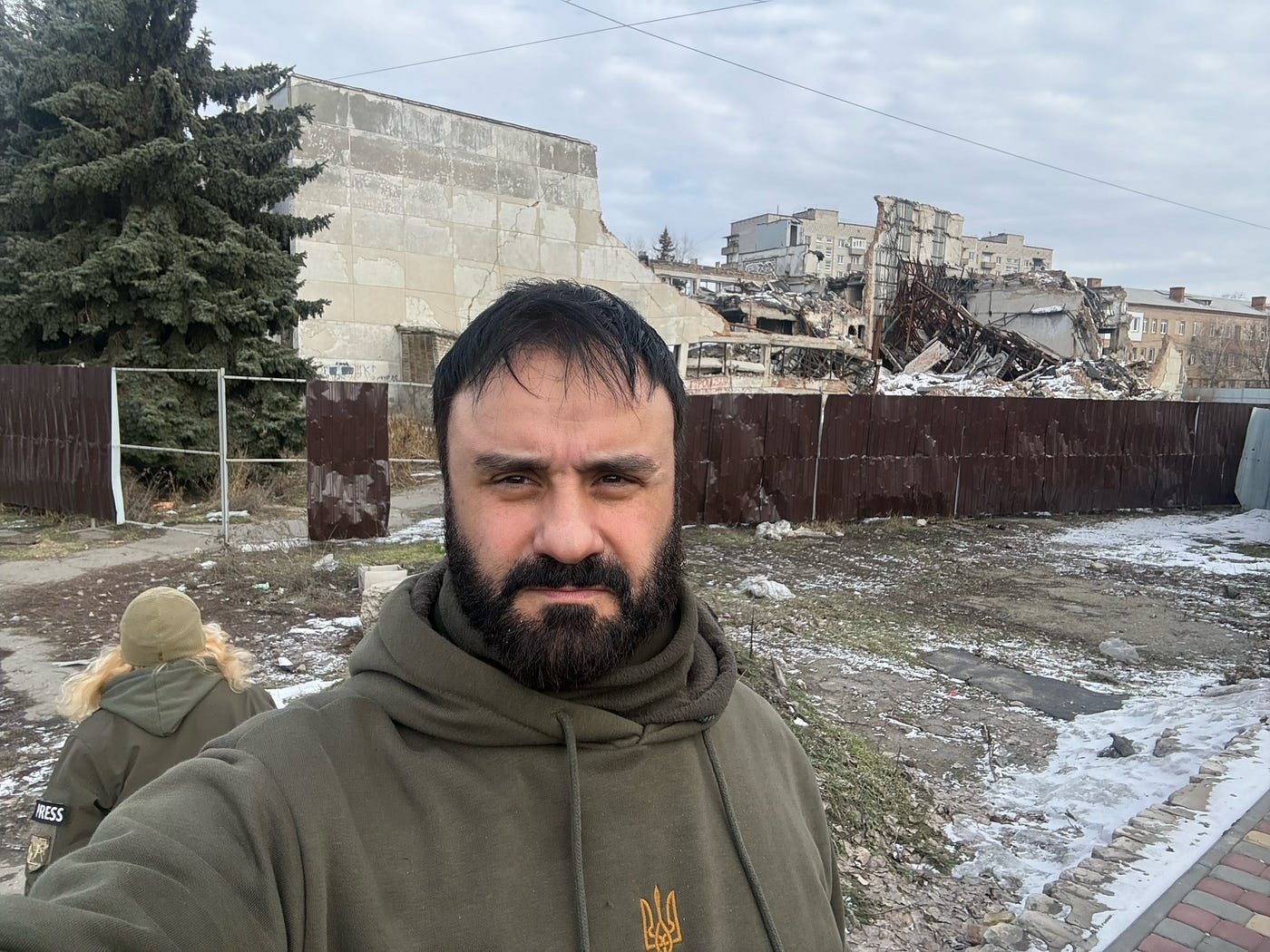
(圖:我與Alla在烏克蘭帕夫洛赫拉德為本文進行報道 ——版權所有,Giorgio Provinciali)
***
持續的停電嚴重損壞了我們在烏克蘭西部的家中的供暖係統,而我們當時就在頓巴斯。
沒有電,點著的爐火無法通過水泵循環熱水。結果,係統起火,整個房子麵臨著燒毀的風險。幸而未被燒毀,但整個係統需要更換,房子也需要修複。管道都是歪的,牆壁被煙霧熏黑,供暖係統無法正常工作,需要徹底更換。
我們正在盡最大努力,因為Alla的父母住在那裏,但這裏還有許多工作要做,周圍的人處境也好不到哪兒去。
我們正在重啟籌款活動,感謝每一位支持我們修複被俄羅斯摧毀一切的朋友。即使是小額捐款也有幫助。我們會及時更新進展。
感謝大家,朋友們。
如果你相信我們的工作,請支持我們
在過去的三年裏,我們一直在烏克蘭戰爭的各個前線進行報道……
https://www.paypal.com/pools/c/9mFvpzKUrU
