風蕭蕭_Frank
以文會友



克裏斯·梅森:斯塔默的“中國重啟”政策揭示了他的外交政策
Chris Mason: What Starmer's China reset tells us about his foreign policy
Chris Mason Political editor, Shanghai
克裏斯·梅森,BBC政治編輯,上海
英國新聞協會(PA Media)報道,英國首相基爾·斯塔默於2026年1月30日訪問了位於中國上海的豫園。本周首相訪華戰略的核心在於,一些人所說的中國經濟正在“向上看”。
他們的意思是,中國是一個受到嚴格控製的國家,中國共產黨無處不在。因此,要實現重大變革,高層必須發出清晰明確的信息,而一旦信息清晰,人們的觀念或許就會發生重大轉變。
唐寧街希望基爾·斯塔默爵士為期三天的訪問能夠引起關注,其中包括在北京會見習近平主席和李克強總理,以及隨後訪問上海。
此次訪問期間,政界和商界人士的握手寒暄並不少。從基爾·斯塔默爵士的角度來看,初步跡象似乎是積極的。正如我們的駐華記者勞拉·比克爾報道的那樣,中國官方媒體——中共的喉舌——在其30分鍾的晚間新聞節目中,用了18分鍾的時間來報道總理與總統會晤當天的訪問。
我采訪過的隨總理出訪的體育和文化機構以及企業都希望,這次訪問能成為一個重要的契機,為他們開啟新的機遇。
“隻要這不是一次性的訪問就行,”一位人士對我說。總理的官方發言人告訴我們,這並非一次“一次性”訪問。與此同時,隨著一連串西方領導人的??到訪,中國可以欣喜地看到自身的重要性。
法國總統埃馬紐埃爾·馬克龍和加拿大總理馬克·卡尼最近都訪問了中國。卡尼很快就體會到了,如果特朗普總統認為某個國家正考慮與北京走得太近,這樣的訪問在白宮會引發怎樣的反響。簡而言之:反響很差。
基爾·斯塔默爵士也曾有過類似的經曆,隻不過程度較輕。當時,特朗普總統表示,英國與中國做生意“非常危險”。在總統訓誡的“裏氏震級”上,首相團隊認為這算是小事一樁,尤其是在隨後的幾次交鋒中,特朗普稱習近平為“朋友”。
斯塔默爵士在接受我的采訪時補充道,“簡單地說我們會無視”中國是愚蠢的。在過去幾天漫長的飛行和工作中,我看到了首相在對華立場上的堅定信念。他顯然覺得荒謬,這次訪問與他的前任特蕾莎·梅2018年的上次訪問之間竟然隔了八年。他認為這八年白白浪費了,想要彌補失去的時間。而且,他似乎很樂意指出與保守黨之間的分歧。保守黨領袖凱米·巴德諾克前幾天告訴BBC,如果她現在是首相,她就不會來英國。
中國解除對英國議員和貴族的製裁,斯塔默表示希望習近平主席訪問英國。英國表示,中國將放寬對英國遊客的旅行限製。醫療保健、簽證和威士忌:英國和中國從斯塔默的訪問中獲得了什麽?那麽,我們能從基爾·斯塔默爵士取得的成就中學到什麽呢?
雙方的寒暄和熱情洋溢的言辭層出不窮。這是因為,正如我之前提到的,這兩者都是“經濟前景光明”的動力。此外,還有一些具體的協議:英國向中國出口威士忌的關稅減半,以及取消2021年對部分議員實施的製裁。隨後,一項提議被提出,但尚未落實。首相表示,英國遊客在中國停留30天以下無需簽證的規定將被取消。但中國政府表示,他們隻是在“積極考慮”此事。
基爾·斯塔默爵士向我堅稱這項提議將會實現,但也承認尚未確定生效日期。“我們正在取得進展,”他說。
負責談判細節的部長和官員們希望,隨著兩國關係更加緊密和融洽,雙方能夠逐步擴大合作帶來的利益。但或許難怪有些人對這種“融洽”感到不安。
批評人士認為,中國根本就是一個不可信賴的國家。他們指出人權侵犯問題,例如維吾爾族人的困境,以及香港民主派媒體大亨黎智英被監禁一事。其他人則談到中國的網絡攻擊,或者英國軍情五處在聖誕節前向議會發出警報,稱中國在威斯敏斯特從事間諜活動。
安全部長丹·賈維斯將其描述為“中國秘密且蓄意幹涉我國主權事務的企圖”。
為了說明這種不信任,我此行遇到的每個人,從政府官員到企業和文化代表團成員再到記者,都比我以往任何一次旅行都采取了更多的電子安全防範措施。大多數人都持有臨時許多人的電話號碼都被取消了,而且他們把常用的電子設備都留在了家裏。
如此看來,兩國關係正在升溫,這真是一個獨特的背景。
英國首相基爾·斯塔默爵士在北京人民大會堂出席2026年英中貿易全國委員會會議並發表講話。此次訪問期間,他有來自英國企業和文化機構的代表陪同。在過去近19個月的任期內,我一直關注著首相在國內和國外的行動。如今,他終於闡述了自己的外交政策願景,並開始將其付諸行動和訪問。
“我們必須參與到這個動蕩的世界中來,”這是我與他交談時他總結自己的方針。“我認為,我從未見過國際局勢如此直接地影響到國內事務。”
批評人士因為他頻繁出訪國外而稱他為“從不在國內的基爾”,這讓他感到既惱火又惱火。他曾多次試圖阻止此次訪問,反複強調海外事件會影響國內生活成本。甚至在人民大會堂與習近平主席會談時,他也提到了超市的物價。
基爾·斯塔默爵士一直尋求與特朗普總統保持密切關係,並且至少目前如此。這得益於他謹慎的公開言論,以及僅在他認為絕對必要的情況下才批評總統,例如最近就格陵蘭島問題以及在阿富汗傷亡的英軍士兵問題。他稱英國在脫歐後已經“重置”了與歐盟的關係,並與印度達成了貿易協議。而現在,他卻身處中國。
不可避免地,如果他過於偏向某一方,就會限製他在其他方麵的選擇。正如他向呼籲重新加入歐盟關稅同盟的工黨同僚指出的那樣,如果英國重新加入歐盟關稅同盟,那麽與其他國家達成的貿易協議將不複存在。
與中國走得太近,就等著承受白宮的嚴厲訓斥吧。權衡利弊的因素不勝枚舉。
“我是一個務實主義者,一個英國式的務實主義者,運用常識,”首相在飛機上告訴我們,並表示他的願望是 “讓英國重新麵向世界”。
他的策略是向外拓展,多方向發展,循序漸進。
Chris Mason: What Starmer's China reset tells us about his foreign policy
Chris Mason Political editor, Shanghai
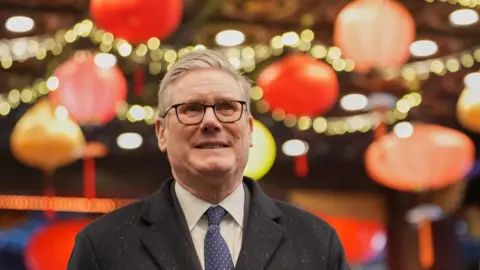 At the heart of the strategy behind the prime minister's visit to China this week is what some describe as China's "looking up economy".
What they mean by this is this is a tightly controlled state where the Chinese Communist Party is ever present. So, to deliver significant change the message from the top has to be abundantly clear, and when it is big shifts in outlook might then follow.
Downing Street hopes Sir Keir Starmer's three-day visit, including meeting President Xi and Premier Li in Beijing and a subsequent trip to Shanghai, will be noticed.
There has been no shortage of political and corporate glad-handing.
The early indications, from Sir Keir's point of view, appear positive.
As our China correspondent Laura Bicker has reported, Chinese state media, the mouthpiece of the Communist party, spent 18 minutes of its flagship 30-minute evening bulletin discussing the prime minister's visit on the day he met the president.
And of the sporting and cultural organisations I have spoken to that have accompanied the prime minister on this trip, as well as the businesses, there is a hope this could be an important moment - that opens up new opportunities for them.
"As long as this isn't a one-off," one put it to me. This was not a "one and done" visit, the prime Minister's official spokesman told us.
China, meanwhile, can revel in the reality that it matters, as a parade of Western leaders pass through.
French President Emmanuel Macron and Canadian Prime Minister Mark Carney have both visited recently.
Carney was to find out shortly afterwards how such a visit can go down in the White House if President Donald Trump reckons a country is considering getting too close to Beijing. The short answer: not very well.
Sir Keir had his own, more minor taste of that, when President Trump said it was "very dangerous" for the UK to do business with China.
On the rhetorical Richter scale of presidential admonishments, this was seen by the prime minister's team as pretty minor, not least because later in the same exchanges Trump described Xi as a "friend".
Sir Keir added, in an interview with me, that "it would be foolhardy to simply say we would ignore" China.
Over the last few days of long flights and long days, I have seen a conviction in the prime minister's case on China. He clearly finds it absurd that there was an eight-year gap between this visit and the last one by one of his predecessors, Theresa May, in 2018.
He sees these as wasted years and wants to make up for lost time. And he sees a dividing line with the Conservatives he appears happy to point out. Tory leader Kemi Badenoch told the BBC the other day that were she prime minister now, she would not have come on this trip.
So what can we take from what Sir Keir has managed to achieve?
There has been no shortage of schmoozing and warm words. That is because both are fuel in this "looking up economy" I mentioned.
Then there are the concrete agreements: the halving of tariffs, or import taxes, on whisky sold by the UK to China and the removal of sanctions imposed on some parliamentarians back in 2021.
And then there was an idea announced, but not yet delivered. The prime minister said the requirement for British visitors to need a visa to visit China for under 30 days would be scrapped. But the Chinese government said it was something they were merely "actively considering."
Sir Keir insisted to me it will happen, but acknowledged there was no start date agreed. "We are making progress," he said.
Ministers and the officials working on the minutiae of the negotiations are hopeful there can be a step-by-step ratcheting up of dividends associated with a closer, warmer relationship.
But perhaps little wonder some are queasy about this warmth. Critics say China is simply a state that cannot be trusted.
They point to human rights abuses, such as the plight of the Uyghurs and also to the jailing in Hong Kong of Jimmy Lai, the pro-democracy media tycoon.
Others talk about Chinese cyber attacks or MI5 issuing an alert to parliament before Christmas over Chinese spying in Westminster.
Security minister Dan Jarvis described that as a "covert and calculated attempt by China to interfere with our sovereign affairs."
And to illustrate that lack of trust, everyone I have encountered on this trip, from government officials to the corporate and cultural delegation to journalists, have taken more electronic security precautions than on any other trip I have been on. Most are on temporary phone numbers and many have left their usual digital devices at home.
Quite the backdrop, then, for a relationship being warmed up.
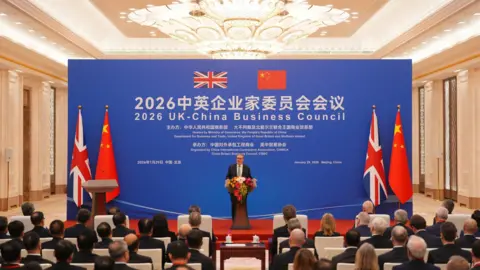 Representatives from British businesses and cultural institution accompanied Sir Keir on the visit
But having followed the prime minister, at home and abroad, for the nearly 19 months of his time in office, he has now set out his vision for foreign policy - and begun to match it with actions and visits.
"We have to engage with this volatile world" is how he summarised his approach when I spoke to him. "I don't think I have known a time when what is happening internationally is impacting what is going on back home so directly."
He is stung and irritated by the label lobbed at him by critics who describe him as "never here Keir" because of the number of foreign trips he does.
He has notably tried to push back on this trip, repeatedly talking about how events overseas have a bearing on the cost of living at home. He even made a reference to prices in the supermarkets when he was talking to President Xi in the Great Hall of the People.
Sir Keir has sought a close relationship with President Trump and secured it. For now at least. This is grounded in being judicious in his public remarks and only criticising the president when he thinks it is absolutely essential, such as recently over Greenland and the British troops killed and injured in Afghanistan.
He describes the UK as having "reset" its relationship with the European Union post-Brexit and has done a trade deal with India. And now, here he is in China.
Inevitably, if he leans too far in one direction, it limits his options in another. Rejoin the EU's customs union, and those trade deals with others would be gone, as he points out to his Labour colleagues who have called for just that.
Be seen to get too close to China, and prepare for the verbal hairdryer from the White House.
The trade-offs are legion.
"I'm a pragmatist, a British pragmatist, applying common sense," the prime minister told us on the plane, saying his desire was to "make Britain face outwards again."
Outwards and in multiple directions is his approach, moving incrementally.