
Is There A Red-Line To Non-Voters?不投票者有無紅線?
原文鏈接:https://medium.com/@giorgioprovinciali/is-there-a-red-line-to-non-voters-0c9e7dde88a0?sk=a662d9f0aa8ffa281cb5e10746548fb1
Is There A Red-Line To Non-Voters?
By: Giorgio Provinciali
Live from Ukraine
Donald Trump is the first criminal President of the United States, convictedon 34 charges. Despite this being widely known, along with suspicions of his shady ties to some of the most serious criminals on earth, some still voted for him. Worse, some ignored the warning signs and did nothing to stop their country from falling into the hands of a criminal.
The recent suspicions that he might manipulate the upcoming midterm elections, or even prevent them at all, were made clear by The Guardian in an article published a few hours ago, which explains how Trump and his administration could exploit a series of interconnected national emergencies as excuses to avoid holding regular elections. This would deny not only his supporters the chance to repent but also those who abstained from voting in the last election the right to vote in order to help correct the previous disaster they helped create.
With a declining approval rating – most polls place him at 36% – Donald Trump continues to fall in prominence, challenging the most unpopular presidents in U.S. history, such as George W. Bush at the end of his term and Harry Truman, who even fell below 30%.
All this makes the behavior of many Americans in the last elections even more serious.
In the latest episode of History in the Making: The War in Ukraine, host Mark McNamee did something rare and valuable. He turned to his own brother, Dave McNamee – a successful, college-educated, middle-aged Trump voter from the suburbs of Cleveland, Ohio – and a panel of six similar Trump supporters, to answer a flood of questions from bewildered Europeans. The episode, titled “Is There a Red Line for Trump Voters?”, dives deep into January 6th, the erosion of democratic norms, immigration enforcement, foreign policy, and above all else: what it would take for these voters to finally walk away.
As one of the Europeans whose questions were included in that conversation, I listened carefully.
I am not angry with those who voted for Trump.
I know that might sound surprising coming from someone who has spent years observing what wars look like when American foreign policy loses its backbone – when weapons shipments slow down, when alliances are viewed as liabilities, and when the phrase “America First” lands on a frontline like a kind of sentence.
But no, my anger is not directed at Trump voters.
They are, after all, roughly one in four Americans—twenty-five percent of the population. A minority—indeed, a significant one—but still a minority. Incomprehensible to my standards, formed in a different political culture, shaped by a different kind of history. I may find them incomprehensible, yet I can still recognize the math: they are not the majority.
They did not decide this alone.
What truly poisons my experience – and I think about it every single day, from wherever I happen to be standing when the news comes in – is the other number. The one that doesn’t get talked about with the same urgency. One in two Americans did not vote. Fifty percent. Double the Trump electorate. People who looked at the ballot, looked at the stakes, and decided their absence was an option they could afford.
It wasn’t.
I want to be precise about this, because precision matters when you’re talking about consequences that extend far beyond any single country’s borders.
The decision not to vote in the United States is not a private act. It is not a form of protest that stays contained within the political system that produced it. It radiates outward. It determines, in ways both direct and structural, what happens to people who never had a vote to cast in the first place – people who are nonetheless living inside the consequences of that non-decision every day.
Those people exist. I’ve met them. Some of them are fighting. Some of them are not fighting anymore.
Staying home, or treating the ballot as a luxury protest – a way to show dissatisfaction with the available options – is a position that only makes sense if you believe the outcome is someone else’s problem.
Americans, of all people, cannot believe that.
The United States is not a country whose internal politics stay internal. The economy they influence, the military power they hold, the alliances they honor or abandon – these are not just domestic issues. Thanks to American influence, they are global concerns.
For Americans, voting is not only a right. Under certain historical conditions, it becomes a duty.
A non-vote in the United States never stops at the water’s edge. It does not remain confined to the price of groceries, the noise of television pundits, or the emotional fatigue of yet another election cycle. Its effects reach battlefields, alliances, sanctions regimes, military deliveries, diplomatic choices, and the survival chances of people fighting every day to stay alive and free.
To know this—and everyone who stayed home knew it because they had already experienced one Trump term—and still view abstention as a form of political expression: that, to me, is unforgivable.
Not strategically unforgivable. Morally unforgivable. The kind of unforgivable that doesn’t soften over time because the consequences don’t soften either.
This message, then, is not primarily aimed at the minority who actively supported Trump.
To them, I have just two questions—and since I am an engineer, I will frame them in technical terms. If we think of a political system as a structure with defined margins of tolerance, observing the inertia of non-voters makes it necessary to test the viability of the supporting structure itself. Two questions directly address this test: one about tolerance, and one about the breaking point.
? What aspect of Donald Trump makes you most uncomfortable, yet you are still willing to tolerate?
? What would it take – what specific event, policy, or line crossed – for you to stop supporting him?
These questions — one of which appears in the title of that podcast episode— are aimed at those who, with some level of awareness, have deliberately chosen to support this direction. That takes a kind of commitment. I want to understand its limits.

But the central message here is addressed to the much larger number of Americans who, by staying home, helped decide the outcome anyway. Not because they loved him. Not because they defended him. But because they behaved as though the consequences of their absence would fall on no one.
They fall on soldiers. They fall on civilians. They fall on countries that rely on American consistency and instead encounter American indifference. They fall on those who do not have the privilege of treating politics as mere mood, posture, or performance. They fall on those who bear the consequences in rubble, blood, occupation, bombardment, and the slow wear of democratic neglect.
Too often, American political culture treats voting as a form of personal expression. From a distance – where history hits not as debate but as a shockwave – it appears different. It looks like power. And power that avoids responsibility is one of the most dangerous forces in the world.
When you live in the most powerful nation on earth, not choosing is still a choice. It has global consequences, and others may pay for it with their future, safety, or lives.
You might call it disillusionment. You might call it a protest. You might call it exhaustion. But the world still has to deal with the consequences.
Democracies don't fail just because some people choose the dangerous candidate. They also fail because too many others persuade themselves that standing aside is innocence.
It is not innocence.
It is participation by absence.
And when the consequences are this large, this foreseeable, and this global, that absence becomes unforgivable.
We are doing our best to provide genuine, first-hand reports from zones where almost no press dares to go. This means living constantly in a kill zone. We take the risk, but without your invaluable support, our voices would remain unheard and silent. Without brave people sharing our articles from afar, they would remain unread. Our reports would go unseen, and our efforts would be lost. There’s still a lot of work to do here, as the people around us are also in no better situation.
We’re renewing our fundraising campaign and thanking everyone who joins us in helping to restore what Russia is destroying. Moving forward with only a small reimbursement for each article from a brave newspaper that believes in us is extremely challenging. That’s why we are grateful to all the kind people who support us and trust in our mission.
Even a small donation helps.
We’ll keep you updated on developments.
Thank you all, dear friends
不投票者有無紅線?
作者:Giorgio Provinciali
翻譯:旺財球球
烏克蘭前線報道
唐納德·川普是美國首位被定罪的總統,共34項罪名成立。盡管這一事實眾所周知,而且他與地球上一些最嚴重的犯罪分子有可疑關聯一並廣為人知,仍有人投票支持他。更糟的是,有些人無視明顯的警示,未采取任何行動阻止他們的國家落入一個罪犯之手。
《衛報》數小時前發表的一篇文章清楚指出:川普可能操縱即將到來的中期選舉,甚至徹底阻止選舉的猜測並非空穴來風。文章解釋了川普及其政府如何可能利用一係列相互關聯的國家緊急狀態作為借口,避免按常規舉行選舉。這不僅剝奪了其支持者悔改的機會,也剝奪了上次選舉中棄權者重新投票、以糾正他們所促成災難的權利。
在持續下滑的支持率中——大多數民調顯示他僅為36%——唐納德·川普的聲望持續下降,與美國曆史上最不受歡迎的總統比肩,例如任期末的喬治·W·布什和甚至跌破30%的哈裏·杜魯門。
所有這些都使得許多美國人在上次選舉中的行為更顯嚴重。
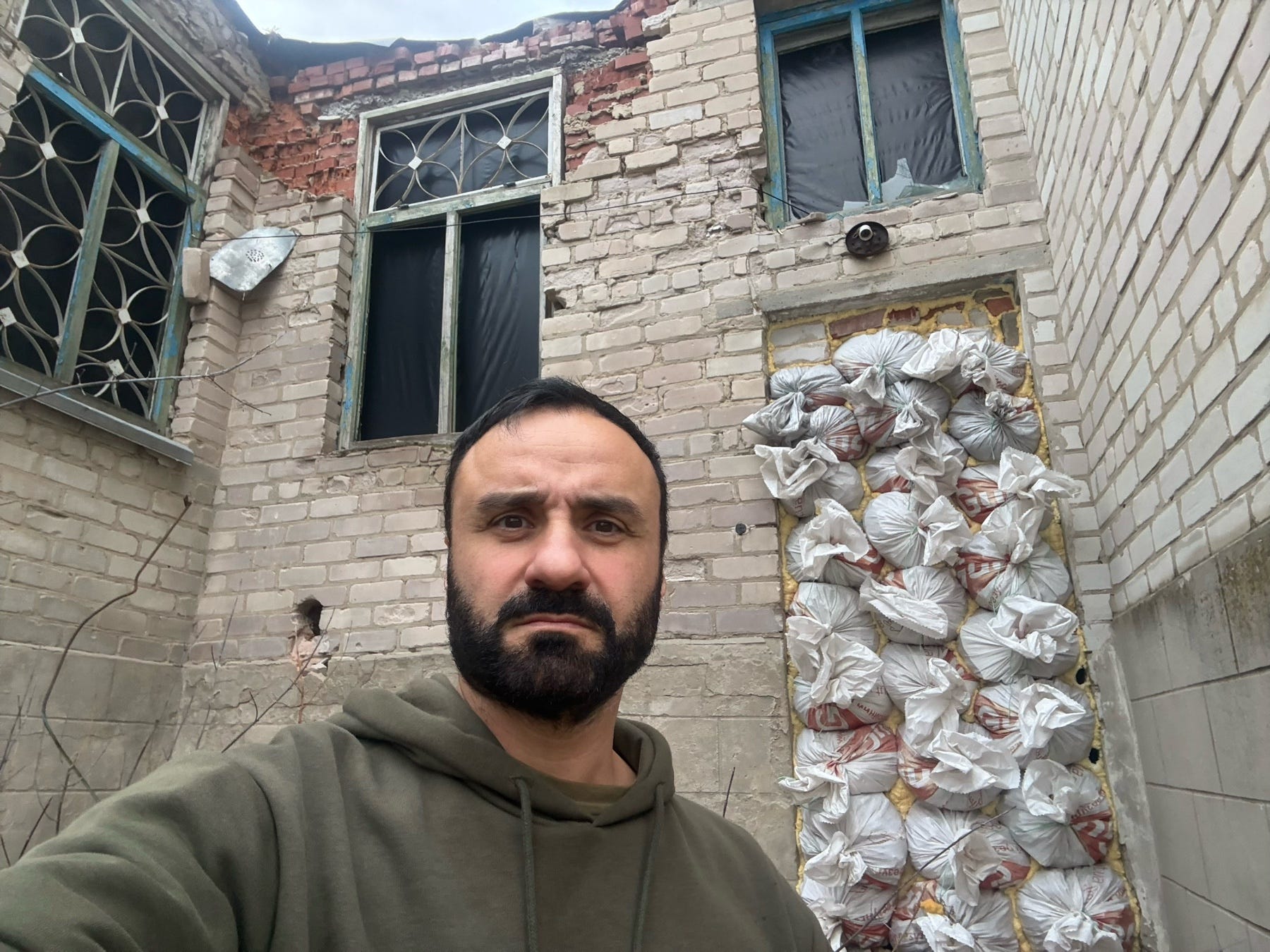
(圖:我在烏克蘭頓涅茨克州頓巴斯一個叫澤萊尼的小村莊報道——版權所有,Giorgio Provinciali)
在最新一集《曆史的形成:烏克蘭戰爭》中,主持人馬克·麥克納米做了一件罕見而有價值的事:他找來自己的兄弟戴夫·麥克納米——一位居住在俄亥俄州克利夫蘭郊區、受過大學教育且事業有成的中年川普支持者——以及六位類似背景的川普支持者,來回答一眾困惑的歐洲人提出的問題。該集名為“川普選民有無紅線?”,深入討論了1月6日、民主規範的侵蝕、移民執法、外交政策,以及最重要的:這些選民要怎樣才會最終放棄支持川普。
作為其中一位提問的歐洲人,我認真聽了整期節目。
(圖:本文中提到的《正在形成的曆史:烏克蘭戰爭》這一集的鏈接)
我並不憤怒於那些投票給川普的人。
這也許聽來令人驚訝,尤其是來自一個多年親眼目睹當美國外交政策失去脊梁時戰爭模樣的人:當武器供應放緩、同盟被視為負擔、“美國優先”口號像判決一樣砸在前線上的人。
然而,我的憤怒並不針對川普的選民。
畢竟,他們大約占美國人口的四分之一——25%。是少數派,確實是重要的少數,但終究是少數。對我而言他們或許難以理解,源於我們生活於不同的政治文化中、受不同的曆史經驗塑造。我可以認為他們難以理解,但數學是清楚的:他們不是多數。
結果並非隻由他們決定。
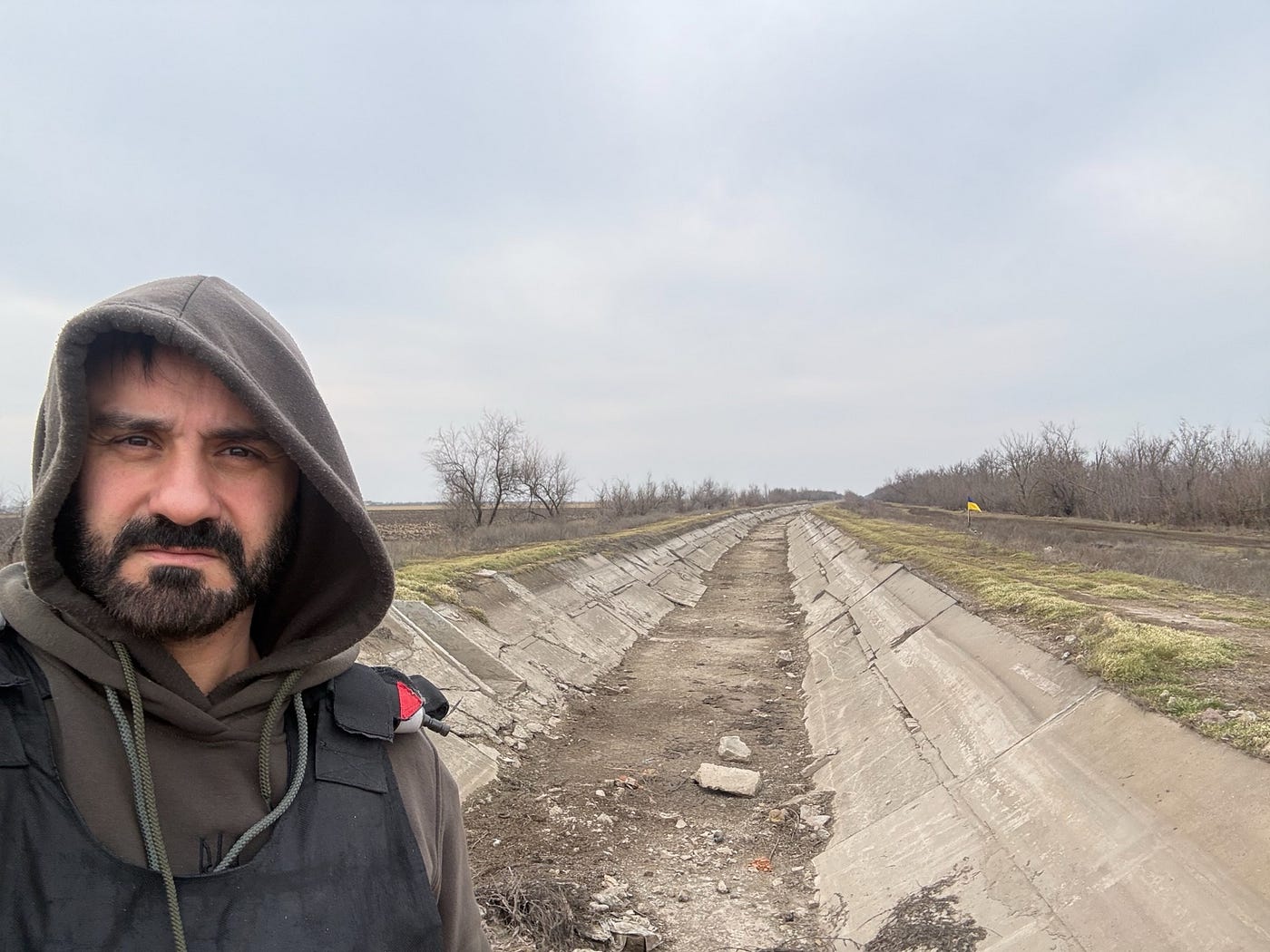
(圖:我與 Alla 在從赫爾鬆州到進入尼古拉斯護城河報道,2022年俄軍曾被烏克蘭守軍阻止在那裏——版權所有,Giorgio Provinciali)
真正讓我痛心的,是另一個數字——我每天都會思考這一點,無論正在何處采訪。那個未被以同等緊迫性討論的數字:每兩名美國人中就有一人沒有投票。50%。是川普選民人數的兩倍。那些人看著選票、看著事態的風險,卻決定缺席的人,認為他們可以承擔不投票的代價。
事實並非如此。
我要說的精確一些,因為在談論影響遠超一個國家邊界的後果時,精確至關重要。
在美國,不投票並非私事。它不是一種局限在產生它的政治體係內的抗議形式。它向外輻射,以直接和結構性的方式決定那些無投票權但每天卻要承受該不作為後果的人們的命運。
那些人確實存在,我遇見過他們。有的人還在戰鬥,有的人再也無法戰鬥。
待在家中,或把選票視為一種奢侈的抗議——用來表達對候選人不滿的一種方式——隻有在你相信結果將由他人承擔時才說的通。
美國人,尤其不能這樣想。
美國不是一個內政隻留在國內的國家。美國影響的經濟、他們掌握的軍事力量、以及支持或背棄的同盟——這些都不是國內問題。由於美國的影響力,它們也是全球性問題。
對美國人而言,投票不僅是一項權利。在特定曆史條件下,它更成為一種責任。
在美國,不投票的影響從不會止步於海岸線。它的影響不局限於食品價格、電視政論的喧囂,或另一次選舉周期帶來的情緒疲憊。其影響延伸至戰場、聯盟、製裁製度、軍備交付、外交選擇,以及那些每天為生存與自由而戰的人們的生存幾率。
那些選擇不去投票的人都知道這一點,因為他們已經經曆過一個川普任期;但他們卻仍將棄權視為一種政治表達:對我來說,這是不可原諒的。
不是從戰略上不可原諒,而是從道德上不可原諒。這種不可原諒不會隨時間而軟化,因為後果也不會軟化。
(圖:在切爾尼希夫州 尼日恩拍攝的前線影像——版權所有,Giorgio Provinciali)
因此,這篇文章並非主要針對積極支持川普的少數人。
對他們,我隻有兩個問題。既然我是工程師,我就用技術術語來表述:如果我們把政治體係視為一個具有明確容限的結構,觀察不投票者的慣性就有必要去測試該支撐結構本身的活性。兩個問題直接指向這一測試:一個關於容忍度,另一個關於斷裂點。
- 川普的哪個方麵最讓你不安,但你仍願意容忍?
- 要發生什麽——什麽具體事件、政策或越線行為——才能讓你停止支持他?
這些問題(其中一題也出現在那期播客標題中)針對的是那些在某種程度上心知肚明卻仍選擇支持的人。那是一種承諾。我想了解這承諾的極限。
(圖:Alla 與我在尼古拉耶夫一座已成為殺傷區的村莊報道。拍下照片後數秒,一架 FPV 無人機開始追擊我們。烏克蘭沿著第聶伯河的防線就在我們麵前——版權所有,Giorgio Provinciali)
但這裏的核心信息是寫給數量更龐大的那部分美國人的,他們通過不去投票而實際上參與了決定。不是因為他們熱愛他,不是因為他們為他辯護,而是因為他們的表現的好似他們缺席不會有任何後果。
後果落在士兵身上。落在平民身上。落在那些依賴美國一貫性的國家身上,卻遭遇美國無視。落在那些無法把政治當作情緒、姿態或表演的人身上。落在那些承受著廢墟、鮮血、占領、轟炸以及民主被忽視帶來的漸進消耗的人身上。
美國政治文化常常把投票視為一種個人表達。從遠處看——曆史以衝擊波而非辯論的形式到來時——情形不同。它看起來像權力。而回避責任的權力是世界上最危險的力量之一。
當你生活在世界上最強大的國家時,不作選擇仍然是選擇。它具有全球影響,別人可能會用他們的未來、安全或生命為此買單。
你或許稱之為幻滅,或稱之為抗議,或稱之為疲憊。但世界仍需承擔其後果。
民主之所以失敗,不僅因為一些人選擇了危險的候選人,還因為太多人自欺欺人的認為“置身事外即是無辜”。
但那不是無辜。
那是以缺席參與。
而當後果如此重大、如此可預見、如此全球化時,這種缺席便變得不可原諒。
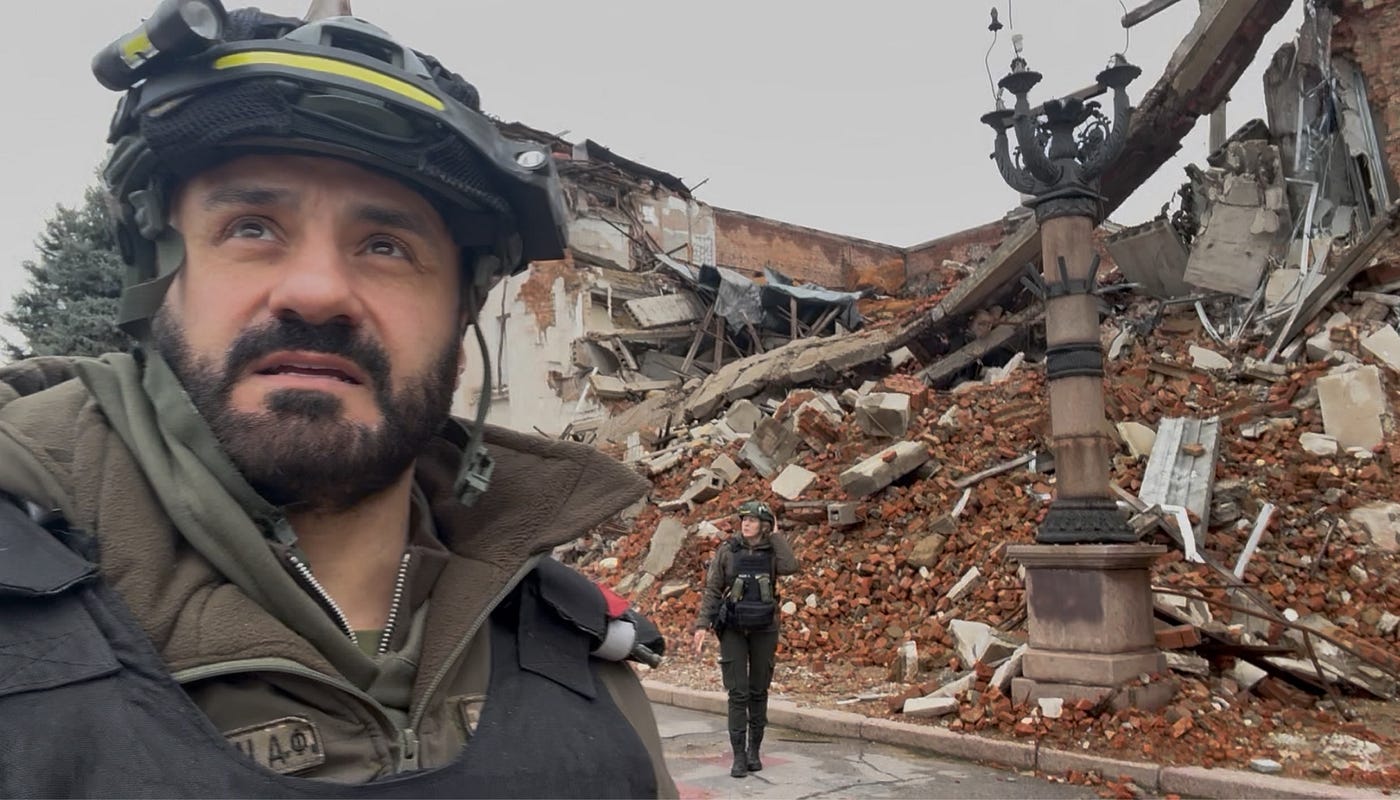
(圖:Alla 與我在烏克蘭赫爾鬆行政大樓廢墟中報道我們都向上看,害怕上方盤旋的無人機會發現我們——版權所有,Giorgio Provinciali)
***
我們盡最大努力從幾乎沒有媒體敢進入的地帶進行真實的一手報道,這意味著我們長期生活在“殺傷區”。我們承擔風險,但若沒有你們寶貴的支持,我們的聲音將無從傳出。若沒有遠方的勇敢的人們轉發分享我們的文章,它們將無人問津。我們的報道會被忽視,我們的努力將付諸流水。這裏還有大量工作要做,周圍的人們境況同樣艱難。
我們正在更新籌款活動,感謝每一位加入我們、幫助修複俄羅斯破壞的人們。僅靠一家勇敢的報紙為我們每篇文章支付微薄稿酬以維持前線報道極為困難。因此,我們感激所有支持並信任我們使命的善良人們。
哪怕是小小的捐助也有助益。
我們會持續為你們更新事態進展。
謝謝大家,親愛的朋友們
如果你認可我們的工作,請支持我們
在過去三年裏,自烏克蘭大規模戰爭爆發以來,作為自由撰稿人,我們一直在烏克蘭戰爭的所有前線進行報道…
Paypal捐款鏈接:https://www.paypal.com/pools/c/9nxoMcbYLF
WENXUECITY.COM does not represent or guarantee the truthfulness, accuracy, or reliability of any of communications posted by other users.
Copyright ©1998-2026 wenxuecity.com All rights reserved. Privacy Statement & Terms of Use & User Privacy Protection Policy
